The roar of a fire is one of the most terrifying sounds known to humanity. Historically, we fought this threat with simple alarms and fast human action. However, the 21st century offers a powerful new ally: Artificial Intelligence (AI). This is a huge change. It is much more than a new smoke alarm. Rather, this technology shifts how we deal with risk. In fact, Smart Fire Safety AI completely changes the equation. We stop reacting to fires. Instead, we start preventing them.
Consequently, smart fire safety is real now. Instead, this is a vital, available tool for everyone. This powerful tool saves lives and billions in assets across the globe. Therefore, you must understand this technology. This applies to building managers, safety teams, and emergency crews. In this article we explore intelligent fire defence. It explains how AI uses data. This predicts risks and makes fast, life saving decisions.
The Limitations of Traditional Fire Safety Systems
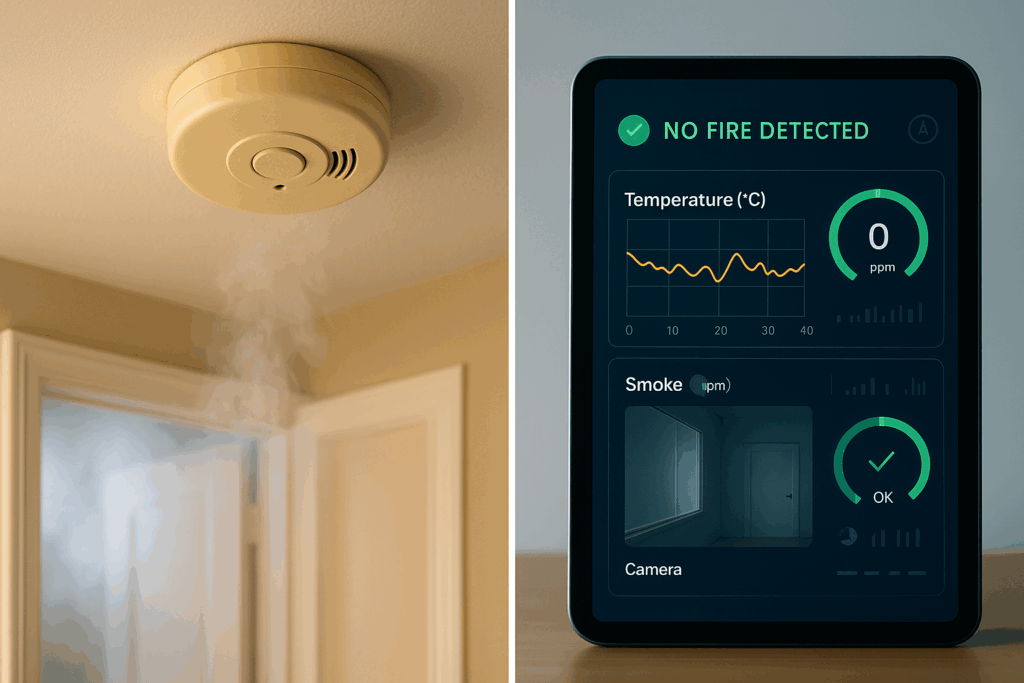
Standard fire safety tools were reliable for years. But they are limited. Generally speaking, conventional fire alarms and detectors use two main triggers. They look for smoke particles (ionisation and photoelectric) or a high temperature (heat detectors). These systems work, but they suffer from major flaws.
Firstly, they react too late. That is to say, they only sound the alarm after a fire is established. The fire must make enough smoke or heat. Furthermore, this time lag is crucial. It is often just minutes long. These minutes decide if it is a small fire or a huge disaster. Moreover, modern materials fuel fires that burn hotter and spread faster. This factor makes the time lag even more dangerous.
Secondly, traditional detectors cause many false alarms. For example, steam from a shower, burnt food, or dust can easily set them off. False alarms are annoying. In fact, they create “alarm fatigue.” This makes people and rescuers less careful. They respond slower to real dangers. Therefore, too many false calls hurt the whole system.
Thirdly, conventional systems work alone. In other words, a smoke alarm cannot “talk” to the ventilation system or the sprinklers. Consequently, no one has a full picture of the danger. This slows down all decision making. As a result, this poor communication causes high costs and delays.
The AI Revolution: Moving from Detection to Prediction with Smart Fire Safety AI
Smart Fire Safety AI flips the whole script. Specifically, AI uses machine learning (ML) programs. These programs analyse huge amounts of complex data. They find subtle patterns a person would miss. A simple sensor would ignore these patterns. AI finds the conditions that start a fire, not just the fire itself.
Smart Fire Safety AI: How Machine Learning Sees the Invisible
Machine learning powers smart fire safety. To clarify, AI models learn from millions of facts. These facts include:
- Historical fire reports (causes, locations, how fast they spread).
- Data from non fire events (steam, dust, cooking) to rule out false alarms.
- Real time data from sensors (heat, CO2, humidity).
- Building specific details (layout, schedules).
Consequently, an AI system does not just measure smoke. Rather, it looks at several things at once. It checks for a slow heat rise in a server room. The AI then looks for a sudden drop in air moisture. It checks for a light flicker from a nearby camera. In this way, the system calculates a risk score. It sounds a clear alarm only when the patterns show a true fire risk. This greatly reduces false alarms. The system provides real, helpful early warnings.
Computer Vision: The Camera That Cares
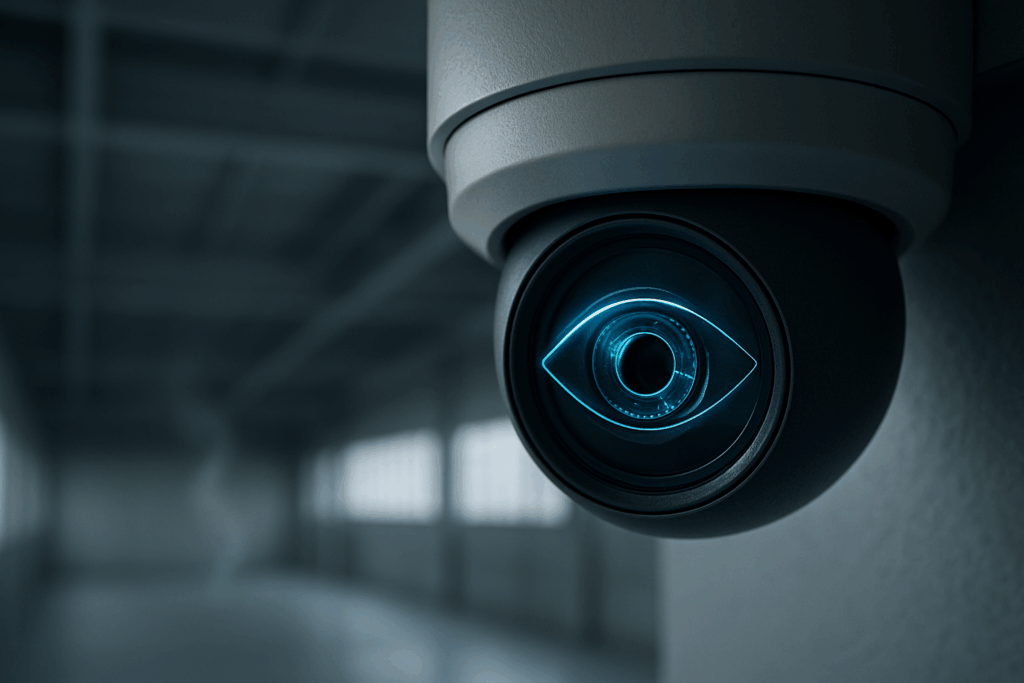
Computer Vision is a major advance in Smart Fire Safety AI. We build it into standard security cameras. This is crucial because cameras already exist in high risk areas. However, they lacked the intelligence to join the fire defense network before now.
Now, however, an AI program watches the camera feed 24/7. It instantly recognises the shape and heat sign of smoke and fire. Specifically, studies show that AI systems find the first wisp of smoke or flash of flame much faster than a person watching the same screen.
Furthermore, these cameras are huge assets in large, open spaces. These spaces include warehouses, tunnels, and wild areas near cities. For instance, in California, AI powered cameras found up to 40% of wildfires before any person called the emergency services, letting crews act quickly in the first few minutes. Therefore, this quick action stops small incidents from becoming huge disasters.
Smarter Response: AI’s Role in Incident Management
The benefits of Smart Fire Safety AI go past just finding the fire. In fact, they change the entire emergency response. This makes firefighting safer and much more effective.
Real Time Evacuation Optimisation using Smart Fire Safety AI
Every second matters in a tall or complex building. Traditionally, escape routes are fixed. You follow the closest sign. But, what if that exit is blocked? What if it leads towards the fire?
In contrast, AI driven systems process real time data. They know the fire’s exact spot, its speed, and the smoke level. Then, they quickly reroute people. They use smart signs and phone alerts. Furthermore, these systems watch crowd density in stairwells. This prevents dangerous jams. Consequently, this smart routing guides people to the quickest, safest exit right then. This feature is vital in crowded or dangerous buildings.
Predictive Maintenance: Stopping Fires Before They Start with Smart Fire Safety AI
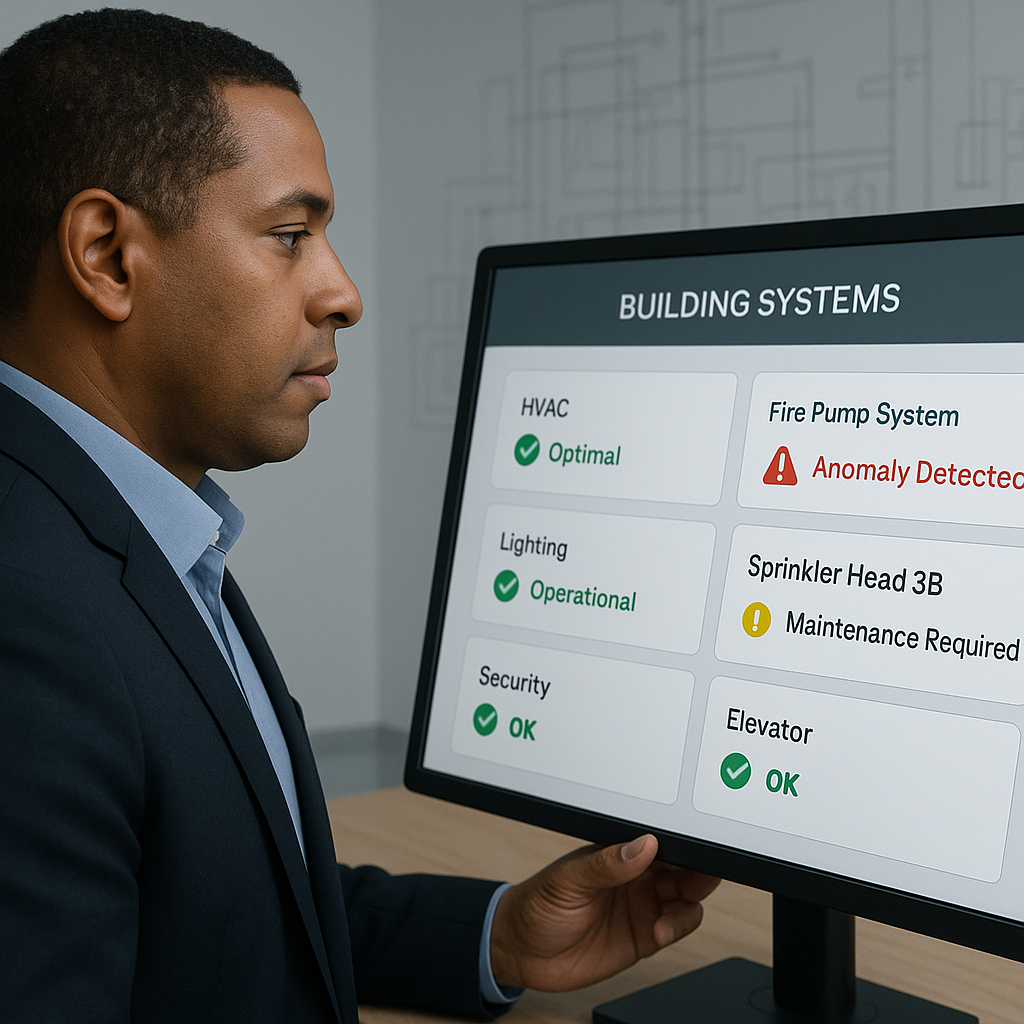
Smart Fire Safety AI helps save lives by fixing things before they break. Generally speaking, fire equipment (pumps, sprinklers) must work perfectly during a crisis. But parts can fail silently over time.
To solve this problem, AI uses sensor data. It checks the working status of every piece of equipment. For example, a smart pump sensor might find a small vibration or a slight pressure drop. This means a breakdown is near. Therefore, the AI flags this problem weeks before the pump would fail during a fire. We call this predictive maintenance. As a result, building managers can fix or change the part during a normal service call. This keeps the system always ready. This proactive method lowers the risk greatly.
Integrated Command and Control
AI works as the smart brain for a building’s safety network. Specifically, when AI confirms an alarm, it instantly contacts many systems:
- HVAC: The system automatically shuts off air flow in the danger zone. This starves the fire and slows smoke spread.
- Access Control: Doors unlock automatically for escape. They can also lock to keep people out of dangerous areas.
- Emergency Services: Rescuers get a detailed, real time digital copy of the building. This shows the fire’s spot, its size, and where it will go next. Consequently, they use their resources with perfect accuracy.
Moreover, Smart Fire Safety AI provides better data and speed. No human team could coordinate this fast alone.
Challenges on the Horizon for Smart Fire Safety AI
The benefits are clear. Still, using Smart Fire Safety AI brings some challenges.
Data Quality and Bias for Smart Fire Safety AI Systems
Firstly, Data Quality and Bias is a challenge. To elaborate, AI systems are only as good as the data they learn from. For example, if a system learns mostly from office building data, it may struggle. It might not predict risks well in a factory or old building. Therefore, making sure the training data is wide and accurate remains a constant job.
Cost of Implementation for Smart Fire Safety AI
Secondly, the Cost of Implementation can be high. Specifically, preventing fires saves a lot of money later. But the starting cost can be big. This covers new sensors, better cameras, and the central AI computer. This is especially true when upgrading older buildings.
Human Oversight and Smart Fire Safety AI
Finally, and most importantly, we must talk about Human Oversight. Ultimately, people must make life critical choices. This includes unlocking a door or starting the water system. Consequently, the industry needs clear rules. These rules ensure AI only helps human experts. AI gives data and advice. It should not have the final decision over life safety. The technology is a tool. It does not replace skilled people.
The Future of Fire: Prevention is the New Protection

Looking forward, Smart Fire Safety AI will offer even more amazing things. For instance, we will see:
Smart Fire Safety AI in Miniaturisation and IoT Integration
- Miniaturisation and IoT Integration: Tiny, low cost AI chips will be placed right into materials and appliances. They will check themselves for defects that could cause a spark.
Advanced Digital Twins for Smart Fire Safety AI
- Advanced Digital Twins: These are super realistic computer models of buildings. They run continuous, real time fire tests. They always find the quickest and safest escape paths as danger changes.
Wider Adoption in Homes
- Wider Adoption in Homes: Cheap, self learning home systems will become normal. These can tell the difference between a smoky oven and a real electrical fire. This will greatly reduce deaths in homes.
The story of fire safety is entering its most exciting part. Historically, we built walls to keep the fire out. Today, we build intelligence into the walls themselves. Therefore, the work of human experts and Smart Fire Safety AI together promises a safer future. We will not just fight fires; we will prevent them.