Building Safety Jobs: Your Quick Start Guide to Tech, AI, and Data
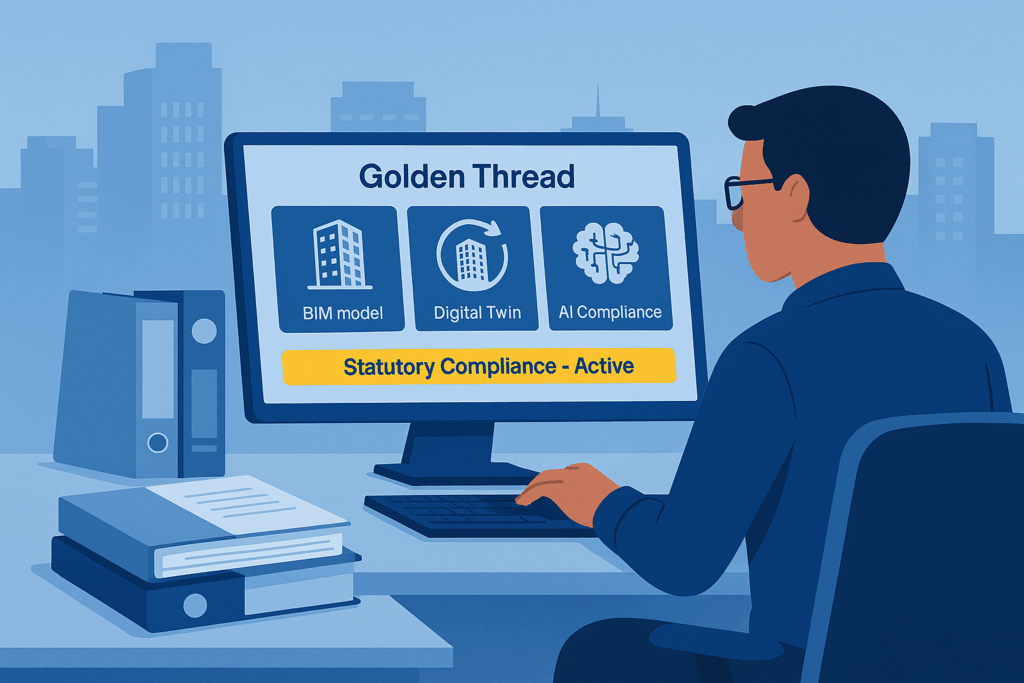
The Building Safety Act (BSA) changed the law and, Statutory Compliance was digitised. The “Golden Thread” is the legal mandate. It pushes all BSMs away from paper. Instead, they move into digital systems. The future of Building Safety Jobs lies not in avoiding tech. In fact, it lies in mastering it.
Digital tools like BIM, Digital Twins, and AI are not futuristic. Rather, they are essential infrastructure. They show risk ownership. Also, they ensure public safety in high-rise buildings (HRBs).
This guide prepares you for the digital shift. It shows how tech will reshape your job. This includes inspections and data management. Thus, the definition of competence changes for Building Safety Jobs.
Section 1: Digital Tools Driving Compliance in Building Safety Jobs
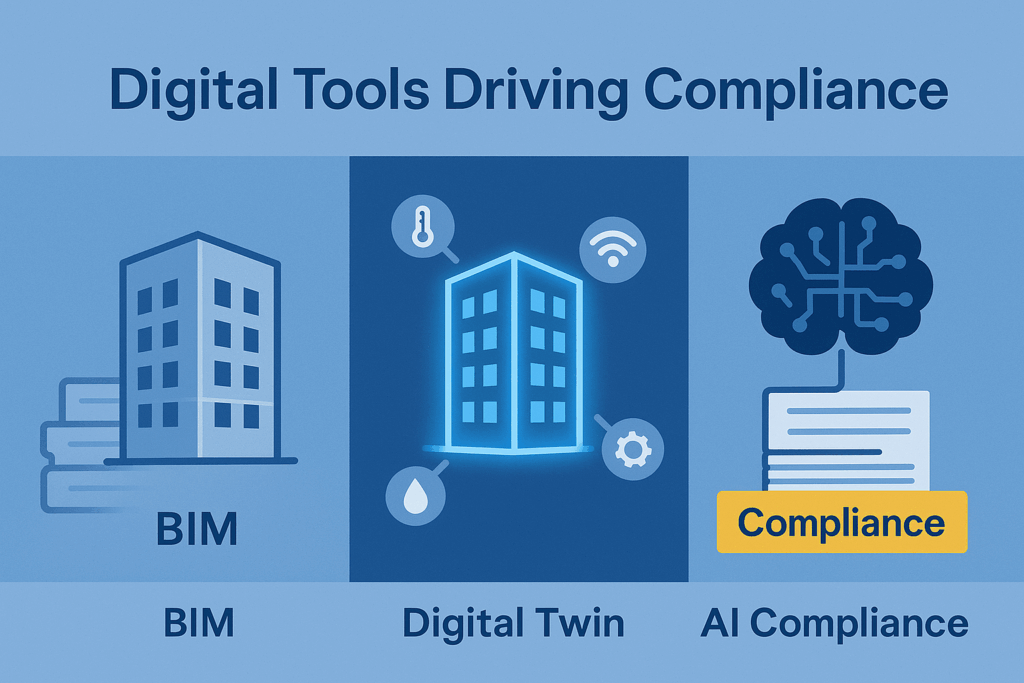
The BSA’s main challenge is data integrity. So, this must be achieved across a building’s entire life. Therefore, these three digital tools are central to managing this for future Building Safety Jobs.
1. Building Information Modelling (BIM)
BIM is a 3D modelling process. It creates a detailed digital image. The industry used BIM in design. But, BIM is now essential for operations.
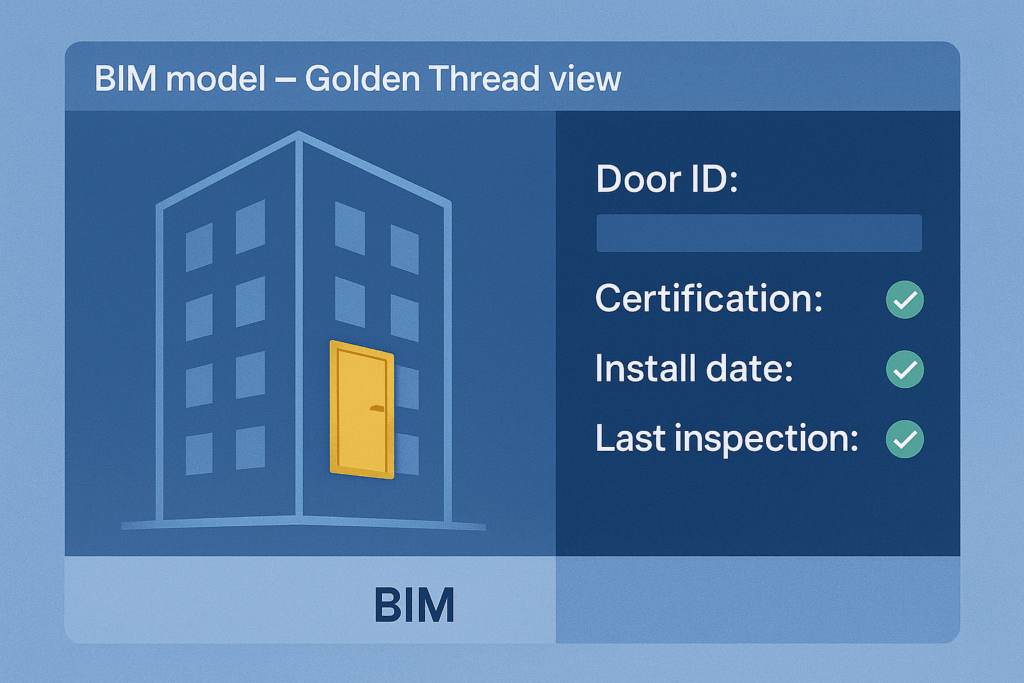
BIM for the BSM: You relied on blueprints in the past. Now, a BIM model allows clicking on a fire door. You instantly access its full history. Static data turns into a living asset.
The Golden Thread and BIM: The BIM model becomes the home for the Golden Thread. Every certificate is logged against the asset within the model. This makes version control simple. Proof that the ‘as-built’ environment matches the digital record is provided.
Actionable Tip: If your firm uses BIM, know how to use the 3D model. Then, you should easily run reports on specific assets.
2. Digital Twins and Real Time Risk Monitoring for Building Safety Jobs
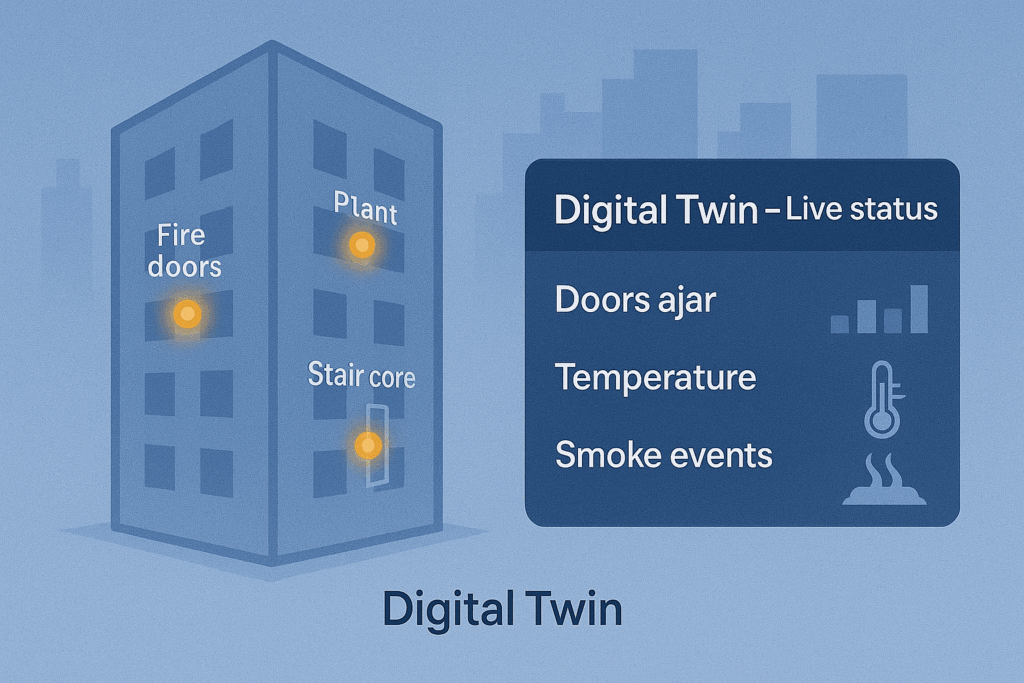
A Digital Twin is a virtual copy. The system continuously feeds it live data from sensors. Typically, this is done via smart tags.
Digital Twins for Safety: A Digital Twin actively monitors performance. For example, sensors in fire doors report usage. Also, they report if doors are left ajar. Sensors monitor temperature or smoke in real-time.
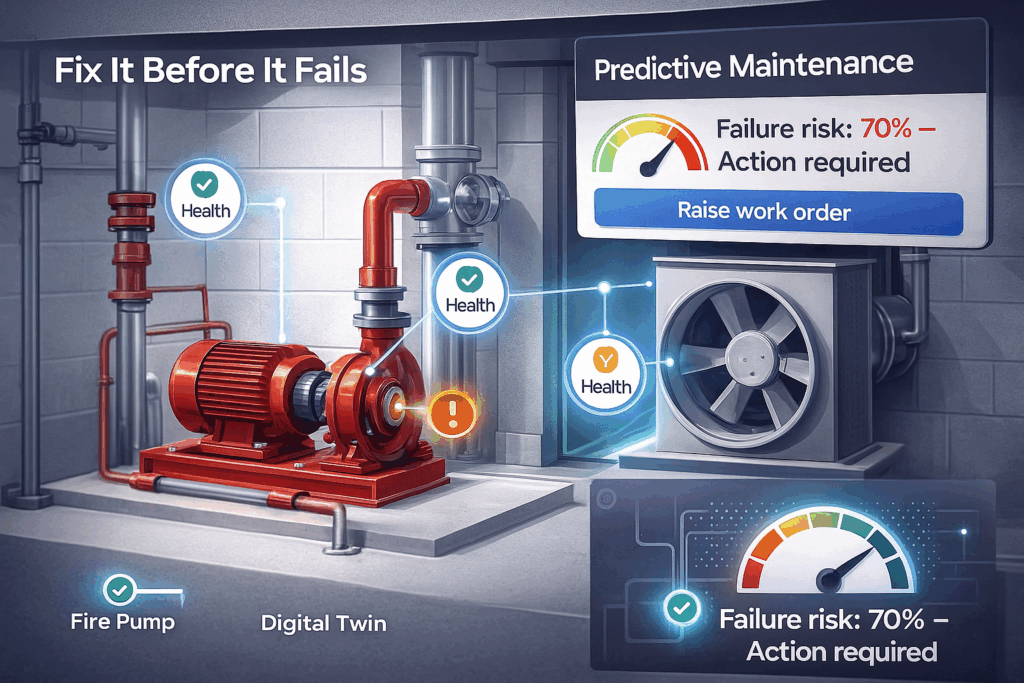
Proactive Maintenance: This tool moves the BSM to predictive maintenance. If a sensor detects vibration, the Digital Twin predicts failure. Then, the BSM issues a work order right away. Both risk and cost are reduced. This directly supports the proactive ethos required by the HSE.
Impact on the Safety Case Report: Live data provides strong evidence. Hence, the system shows continuous risk mitigation.
3. AI Compliance and Data Assurance Software
AI is not about robots. Instead, it uses algorithms. And, these process huge amounts of data faster than humans.
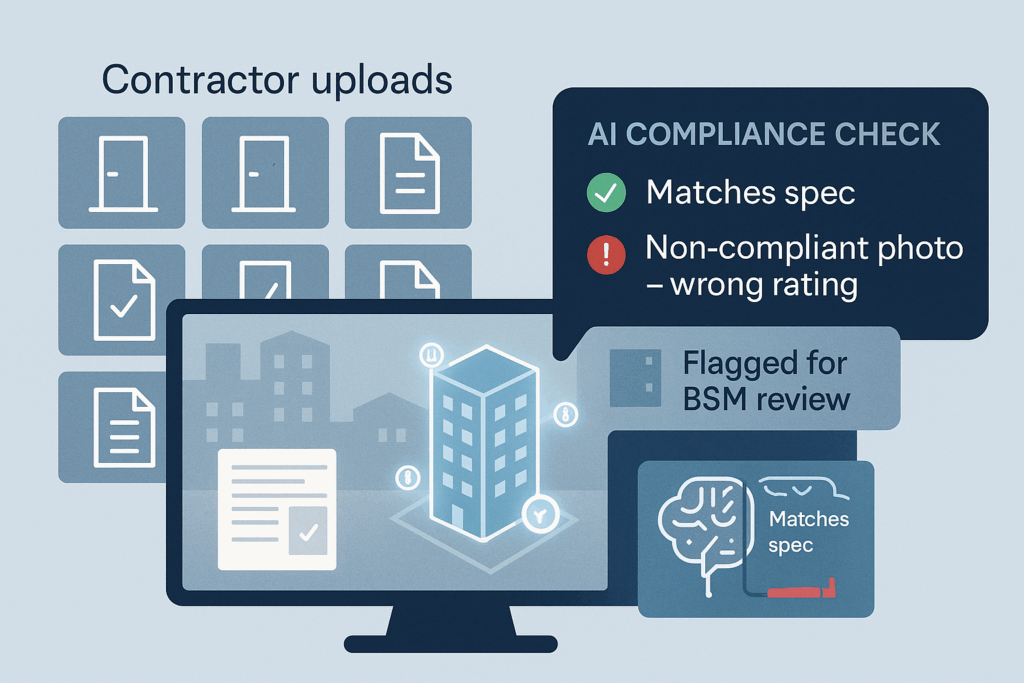
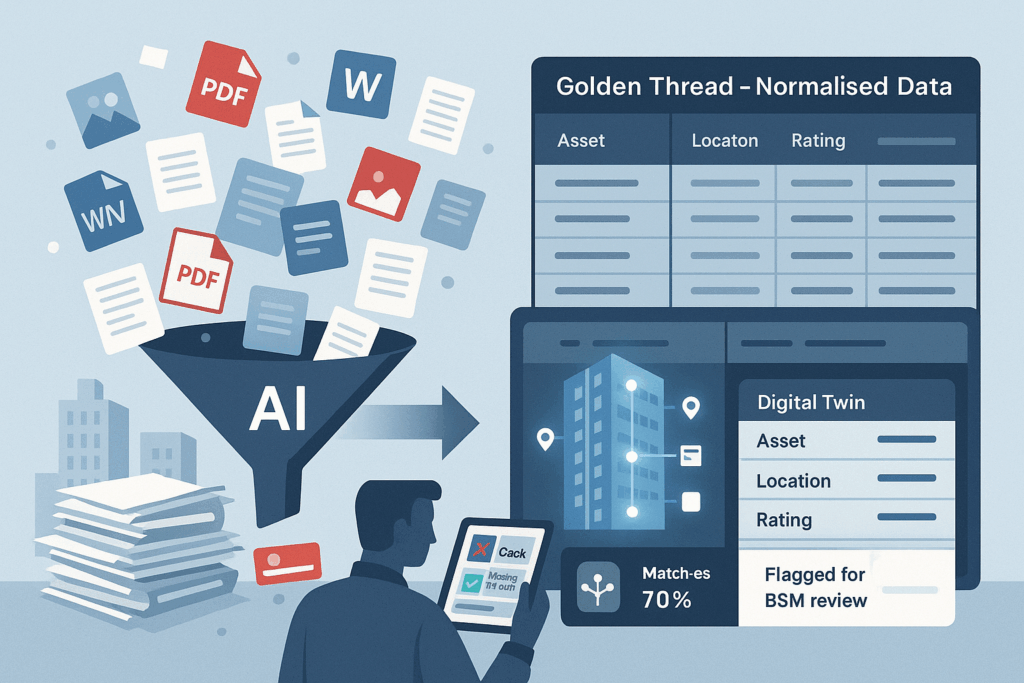
Data Integrity Auditing: AI software automatically compares reports against legal standards. If a contractor uploads a photo that does not match the required spec, the AI flags the error right away. The system ensures compliance.
Document Search: AI quickly searches millions of documents. Then, it compiles evidence for the Golden Thread. In short, the process turns months of work into minutes.
Section 2: How AI is Reshaping Inspection and Maintenance in Building Safety Jobs
AI is rapidly changing the maintenance cycle. The industry is automating low value tasks. Furthermore, the BSM’s role shifts to oversight.
1. AI Driven Inspections
Traditional inspections are hard work. Yet, they rely on human judgment, which is inconsistent.
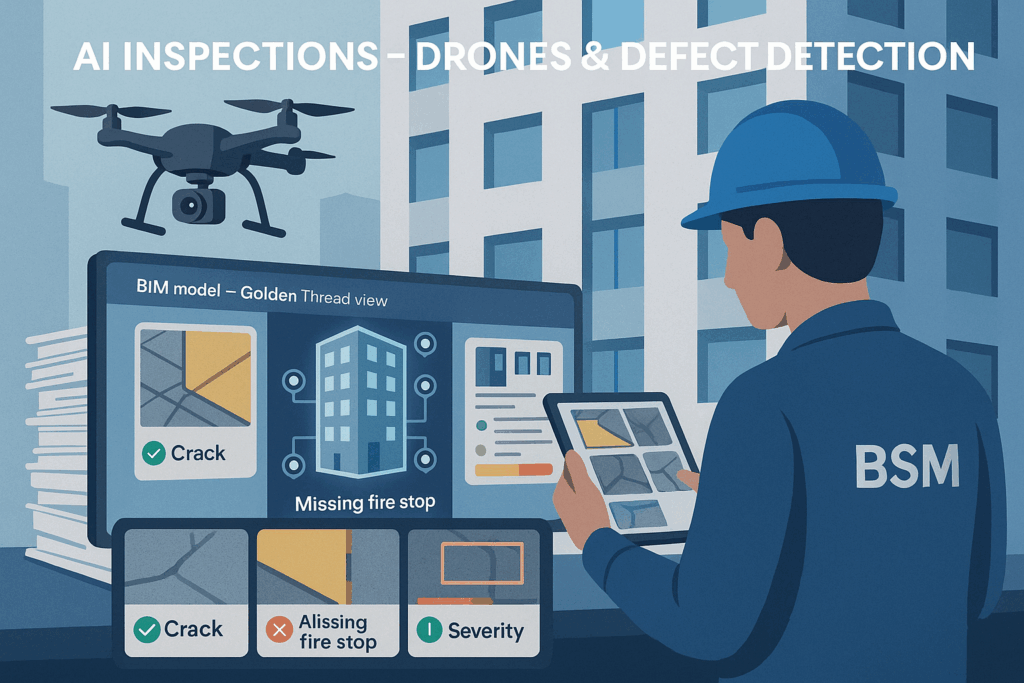
Drone and Robotics: Drones with cameras inspect hard to reach areas. This is true for roofs and walls (EWS). AI analyses the footage. Then, it spots defects like cladding damage.
AI Interpretation: Instead of a person reviewing hours of video, AI is trained on defect photos. The system automatically finds the defect. This is done with a severity score. As a result, defect reporting accelerates.
The BSM’s Role: Your job shifts from physical inspection. Instead, you verify AI findings. Then, you prioritise the resulting repair work.
2. Predictive Maintenance
AI uses data and specs. Thus, it predicts when an asset will fail.
Optimising Remediation: If a fire pump has a 70% chance of failure, AI alerts the BSM to replace it now. So, the BSM prevents a safety failure. This move is key for showing proactive risk ownership.
Enhanced FRA: AI processes raw data. Then, it assigns a dynamic risk score. This helps the BSM and the Principal Accountable Person (PAP) allocate resources where risk is highest. They give priority attention to vulnerable assets. The FRA becomes a living document.
3. Streamlining the Golden Thread Management
AI is taming the biggest administrative headache, the Golden Thread.
Data Normalisation: Contractors often submit various report formats. AI uses NLP to read these. Then, it extracts key data. The system automatically formats the data.
Compliance Verification: When a contractor completes work, the AI checks the certificate. If the new fire door has a 60 minute rating, but 90 minutes are required, the AI blocks the sign off. The system enforces compliance.
Section 3: Upskilling for the Digital BSM in Building Safety Jobs
Skills are shifting. They move from building knowledge to data literacy. To remain relevant in Building Safety Jobs, you must prioritise upskilling in these three areas.
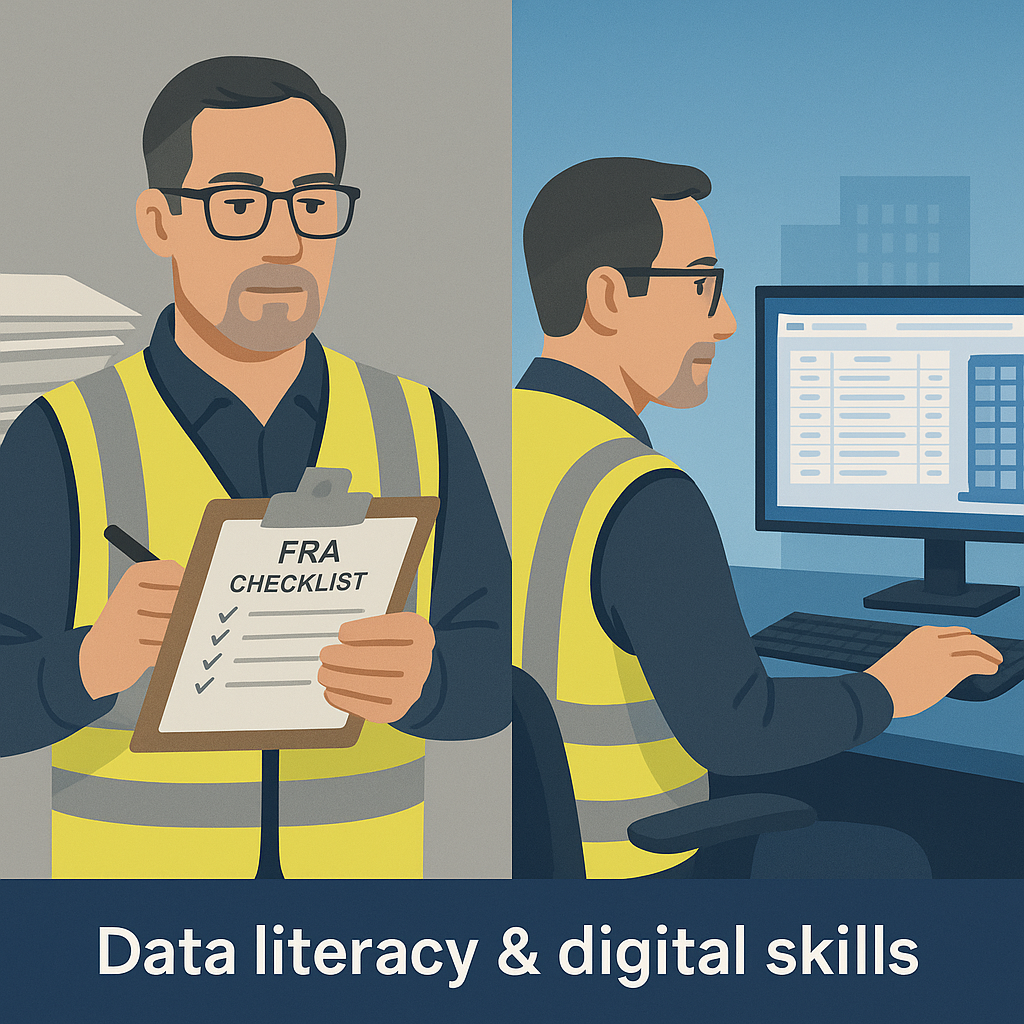
1. Data Literacy and Analysis
Data is the lifeblood of the Golden Thread. So, the modern BSM must be able to use data to inform decisions.
What to Learn: Focus on understanding database principles. Also, you must be able to read AI system outputs.
Actionable Step: You should take online courses. Then, learn to create pivot tables. Because, this helps track key metrics.
2. Mastering Digital Management Systems
Paper records are ending. Hence, competence now means fluency in safety software.
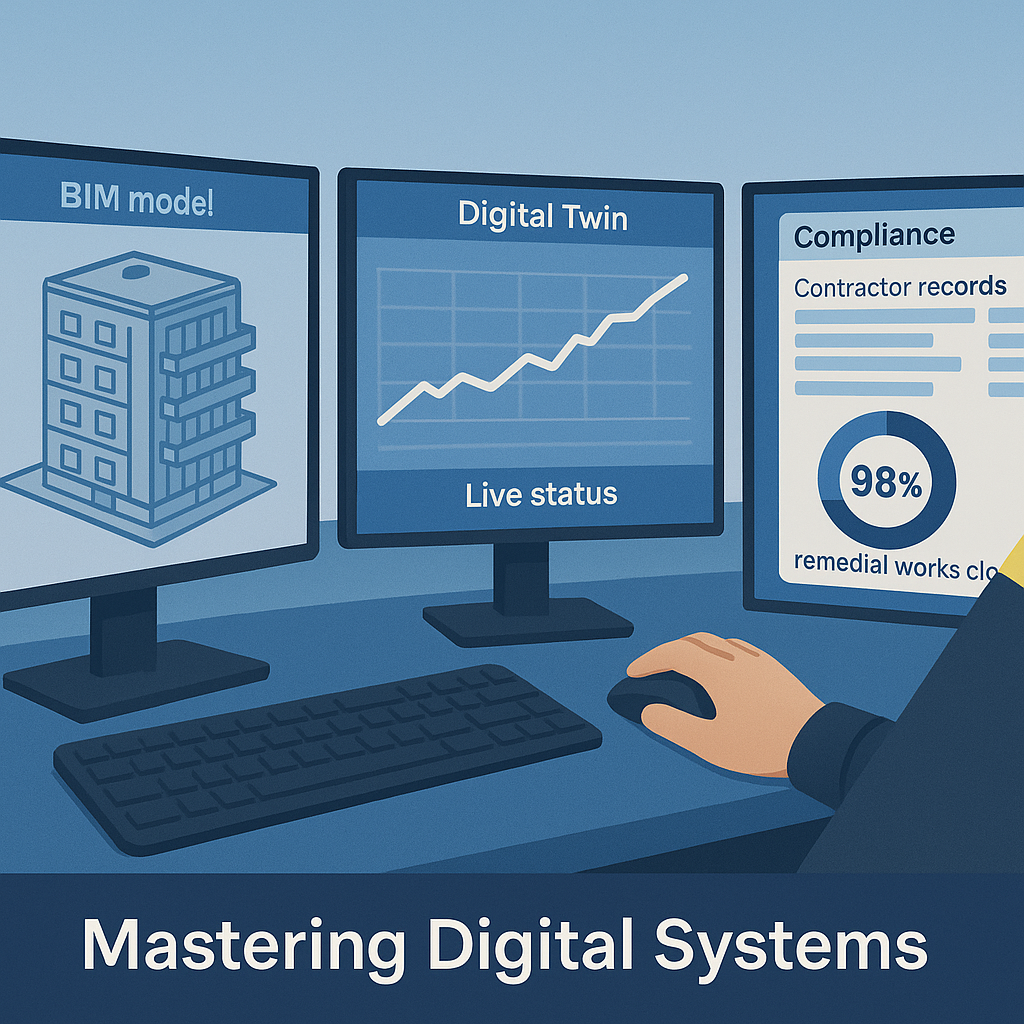
BIM/Digital Twin Navigation: You should seek training on viewing BIM software. The same is true for any Digital Twin platform. You must query the model to extract data.
Specialised Compliance Software: You must become good at asset management software. This includes those that manage contractor records.
Actionable Step: In job interviews, specify how you used software to improve compliance. For example, say “I used our platform to cross reference all remedial works, resulting in a 98% closure rate.”
3. Understanding Digital Safety
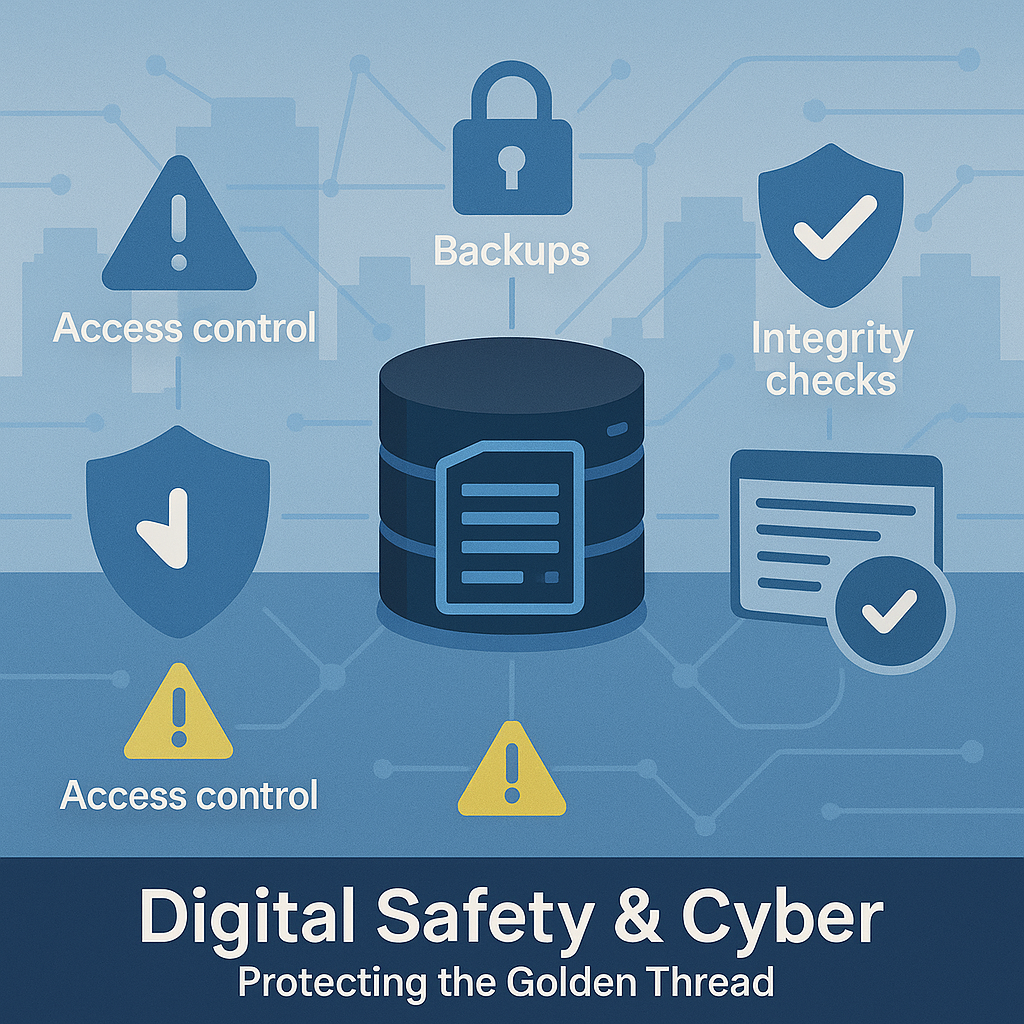
The shift to digital introduces new risks. Specifically, these are cyber threats to the Golden Thread.
Data Integrity Responsibility: The BSM is responsible for ensuring the data is secure and accurate. Also, learn basic principles of data governance.
Ethics of AI: You must understand AI limits. As the human in the loop, the BSM must always take ultimate responsibility. Your job is to assess the AI’s output.
Actionable Step: Look for Continuing Professional Development (CPD) courses focused on “Cyber Security for Operational Technology (OT).”
Section 4: The Changing Role of the BSM in Building Safety Jobs
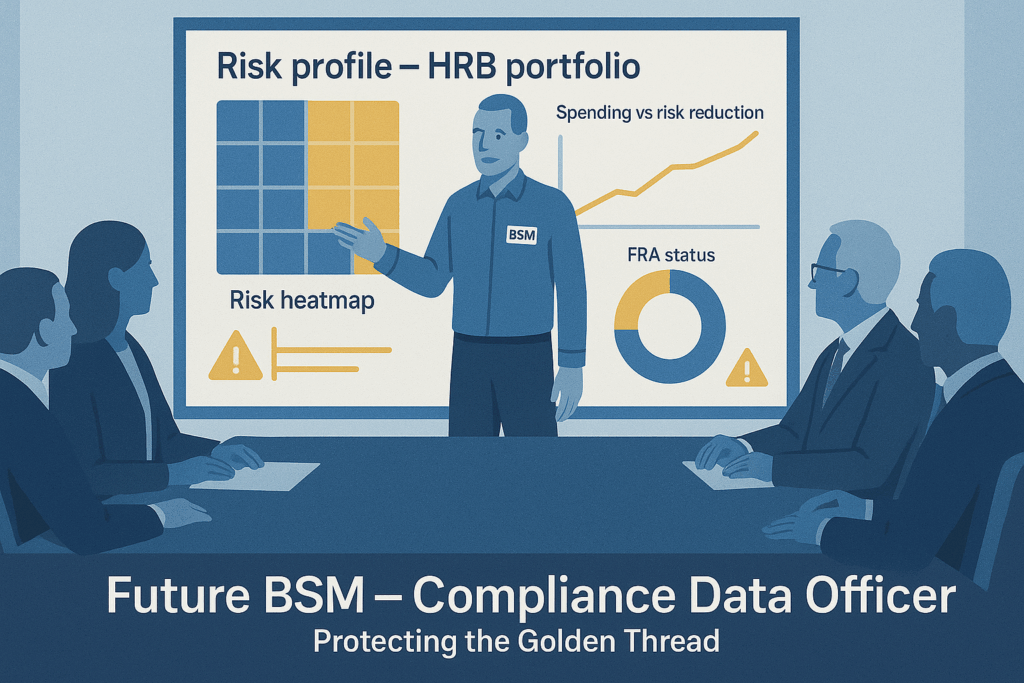
Tech evolves the BSM’s role. It shifts from inspector to a strategic Compliance Data Officer.
Strategic Oversight and Assurance for Building Safety Jobs
The BSM’s focus moves from gathering data to providing assurance to the PAP. Your value is in your ability to interpret complex digital data. Furthermore, you must articulate the risk profile clearly.
Data-Driven Decision Making: Instead of relying on gut feeling, you use predictive analytics. Thus, this helps justify major spending. Your budget proposals are no longer based on cyclical schedules. Instead, they are based on quantified risk.
Regulatory Command: When the HSE requests information, you no longer compile documents for weeks. Then, you generate a compliance report from the Golden Thread system in hours. Finally, you demonstrate immediate readiness.
The Human Element: Managing the Technology Interface
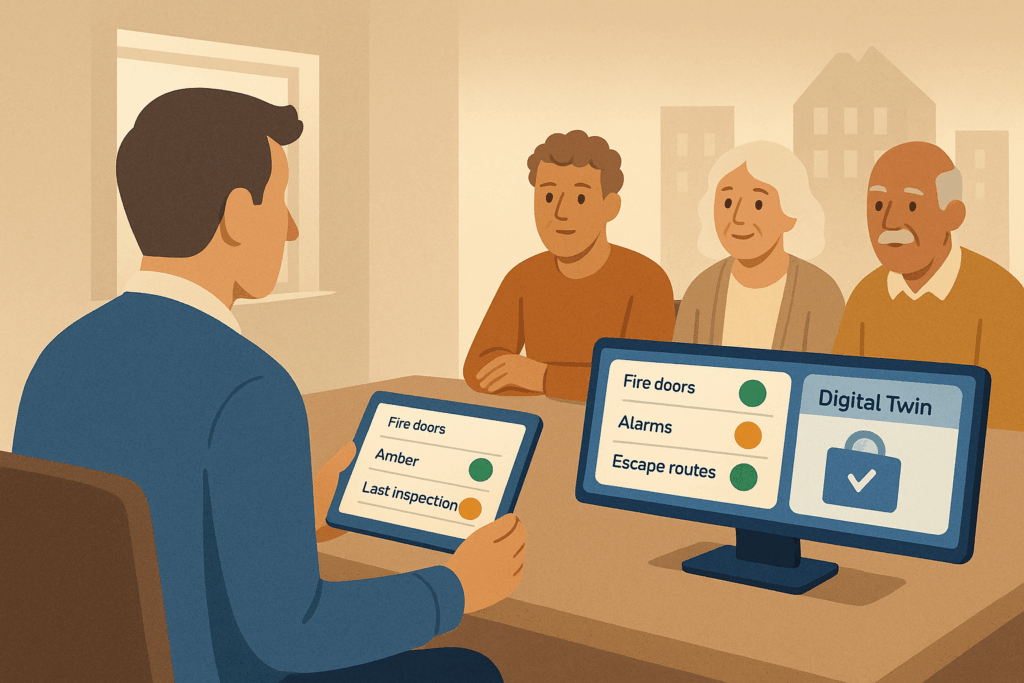
Building safety is about people. Thus, technology only succeeds if humans manage it well.
Contractor Management: You will ensure all contractors integrate their data into your platform. This requires strong technical communication.
Resident Communication: While technology provides the data, the BSM must translate complex findings for residents. This ensures the Engagement Strategy remains transparent.
The future BSM is a highly paid professional. They bridge data streams and safety outcomes. By embracing tools today, your position is secured as a leader in the future of Building Safety Jobs.