

The government recently announced an ‘equal access’ approach for Cladding Remediation Funding. For years, replacing dangerous cladding financially hurt social housing groups. In effect, they faced two major issues. First, they had a duty to keep renters safe. Second, they had no proper money source. They could not pay for the huge amount of work.
Social landlords used their own savings. They also took out big loans. They did this to fix fire risks. Consequently, this took billions away from other needs. This money should have paid for repairs and new homes.
Previous funds, such as the Building Safety Fund (BSF), mainly helped private owners. Although this was important, many social housing blocks got stuck. Specifically, they did not qualify for some funds. Conversely, they competed with private developers. These developers got expert help much faster.
Furthermore, the National Housing Federation (NHF) said the total cost was over £10 billion. Thus, the new ‘equal access’ rule is a huge chance. It fixes this large, unpaid debt. Ultimately, it finally unlocks crucial Cladding Remediation Funding.
The Policy Shift: Equal Access and Securing Cladding Remediation Funding
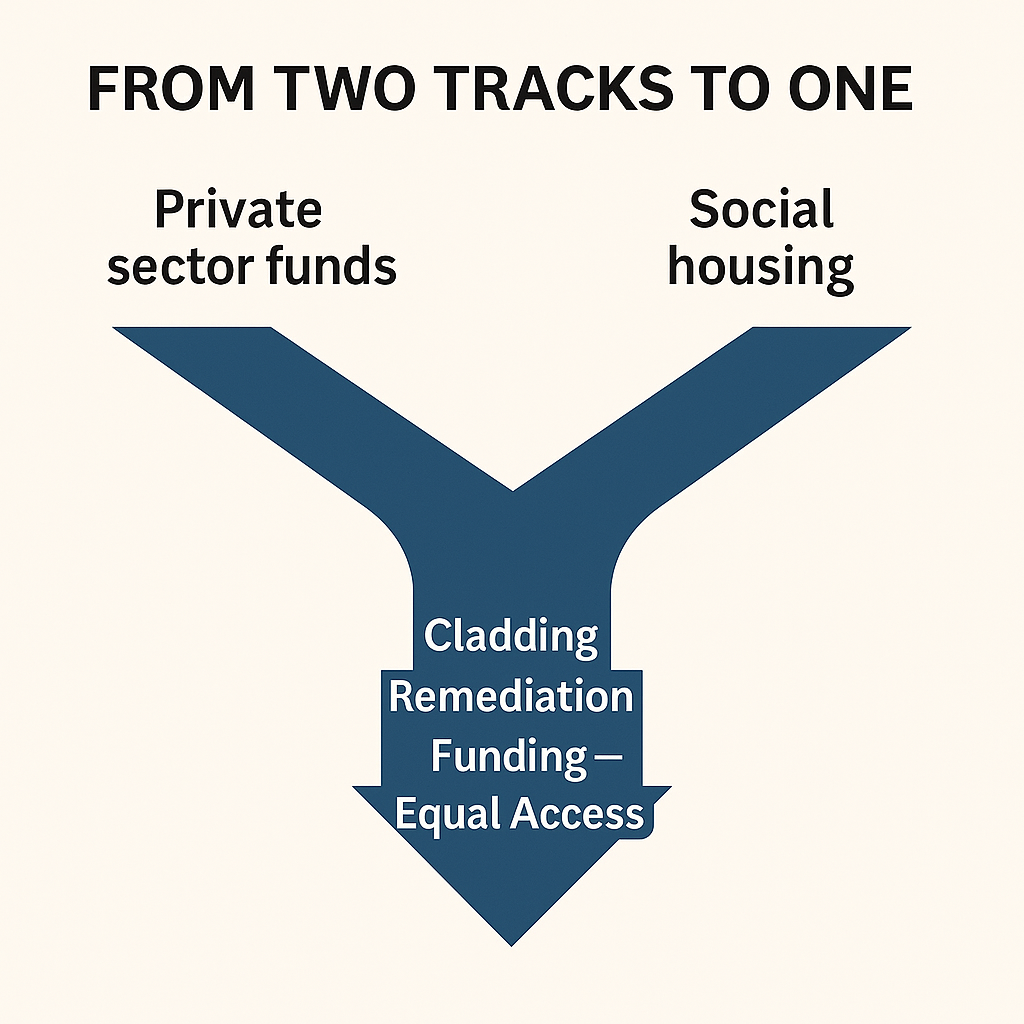
The CSS rules are simple now. Cladding Remediation Funding is for all homes. This covers all buildings over 11 meters. The cladding must be bad. This change removes the old rule. Therefore, it helps social landlords.
Accessing Funding for Cladding Remediation
The playing field is now level. Social landlords are usually very open. They also have great accountability. Consequently, they should find the application path easier.
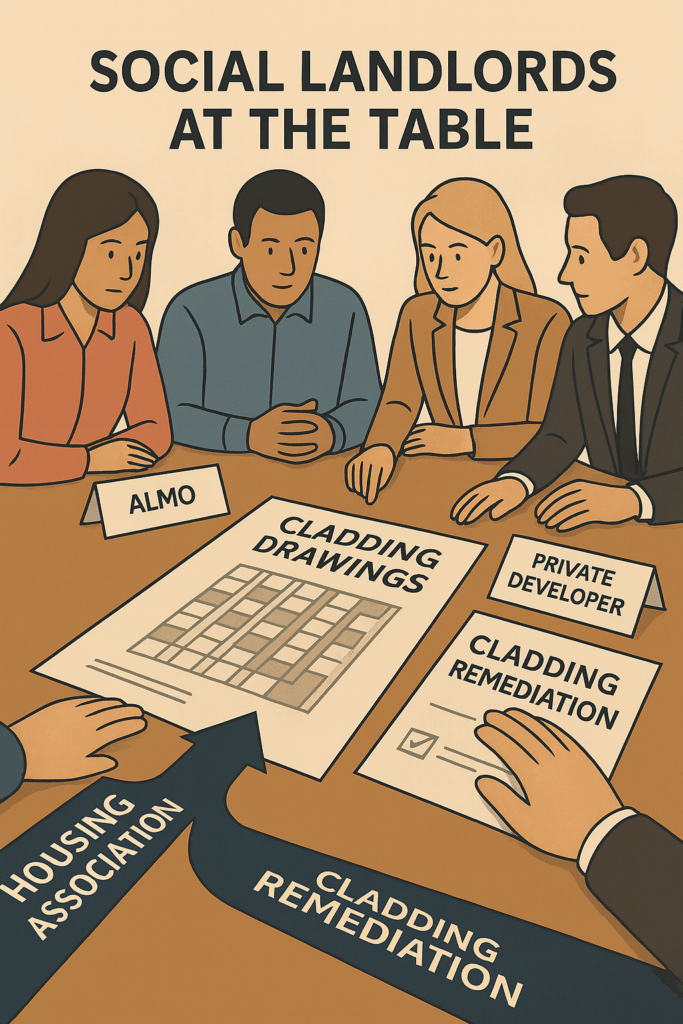
Specifically, the equal access model means:
- No Competitive Disadvantage: Social landlords do not fight private developers for consultants. Instead, everyone submits projects the same way.
- Focus on Risk, Not Tenure: Priority goes to buildings with the worst fire risk. It does not matter who owns them. Therefore, the most dangerous buildings should get fixed first.
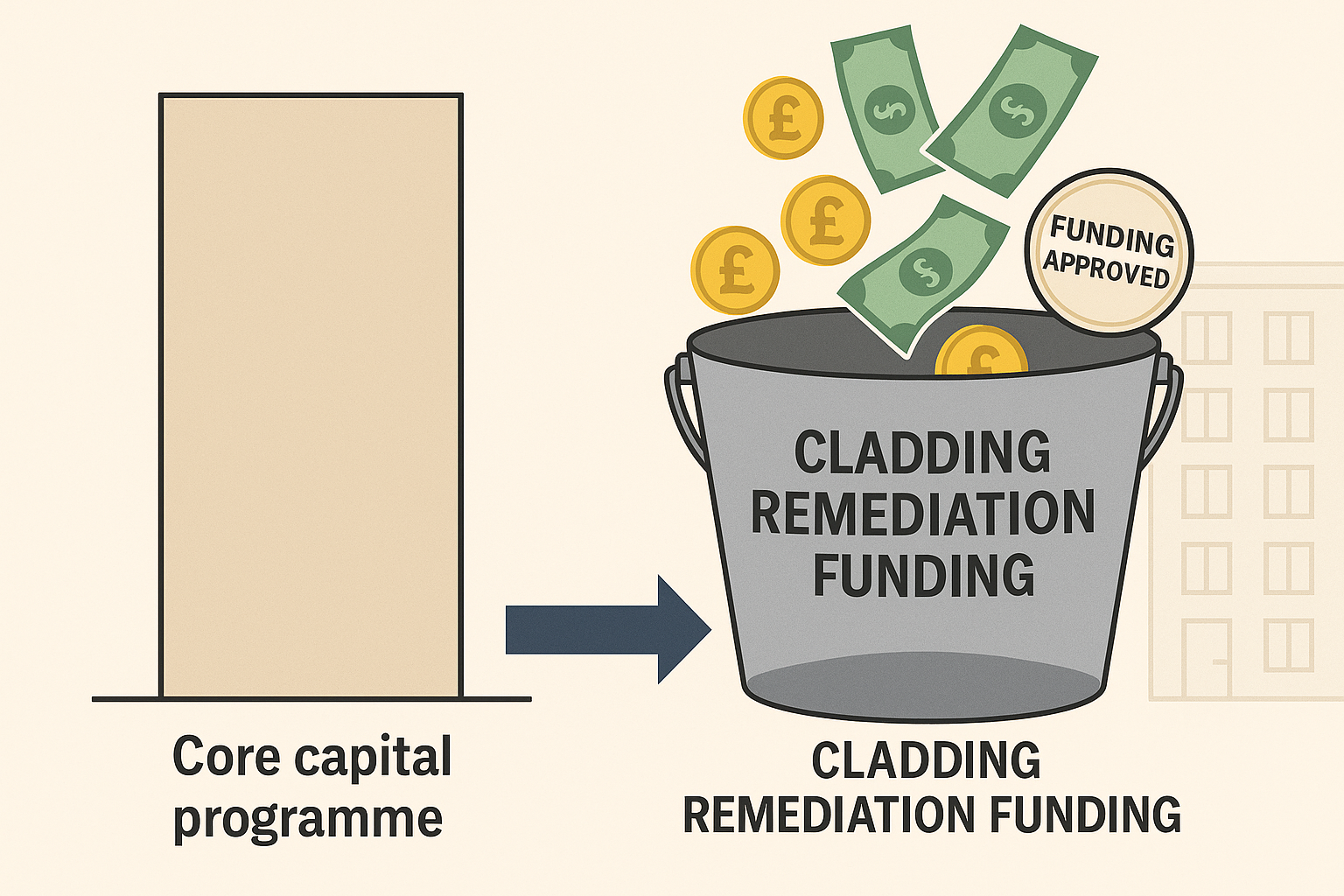
- Budget Clarity: Finally, HAs and ALMOs can move cladding costs. These costs leave their normal budget. They enter a secure government stream. This action saves their capital. They can use this saved money to build affordable homes.
However, getting the money is only the start. Ultimately, the scheme’s success depends on the landlords’ ability to manage the process. This means everything from the start of the application to the end of the work.
Barrier 1: The BSR Bottleneck Hindering Cladding Remediation Funding Execution
The slow approval process is the biggest threat. This happens after getting Cladding Remediation Funding. The new Building Safety Act (BSA) 2022 is the cause.
The BSA created the Building Safety Regulator (BSR). The BSR watches safety in all tall buildings (HRBs). The BSR’s job is key. But it needs huge effort. For this reason, for major fire work, the landlord must send a formal request. This is the ‘gateway’ approval process.
The Challenge of Gateway 2 Approvals
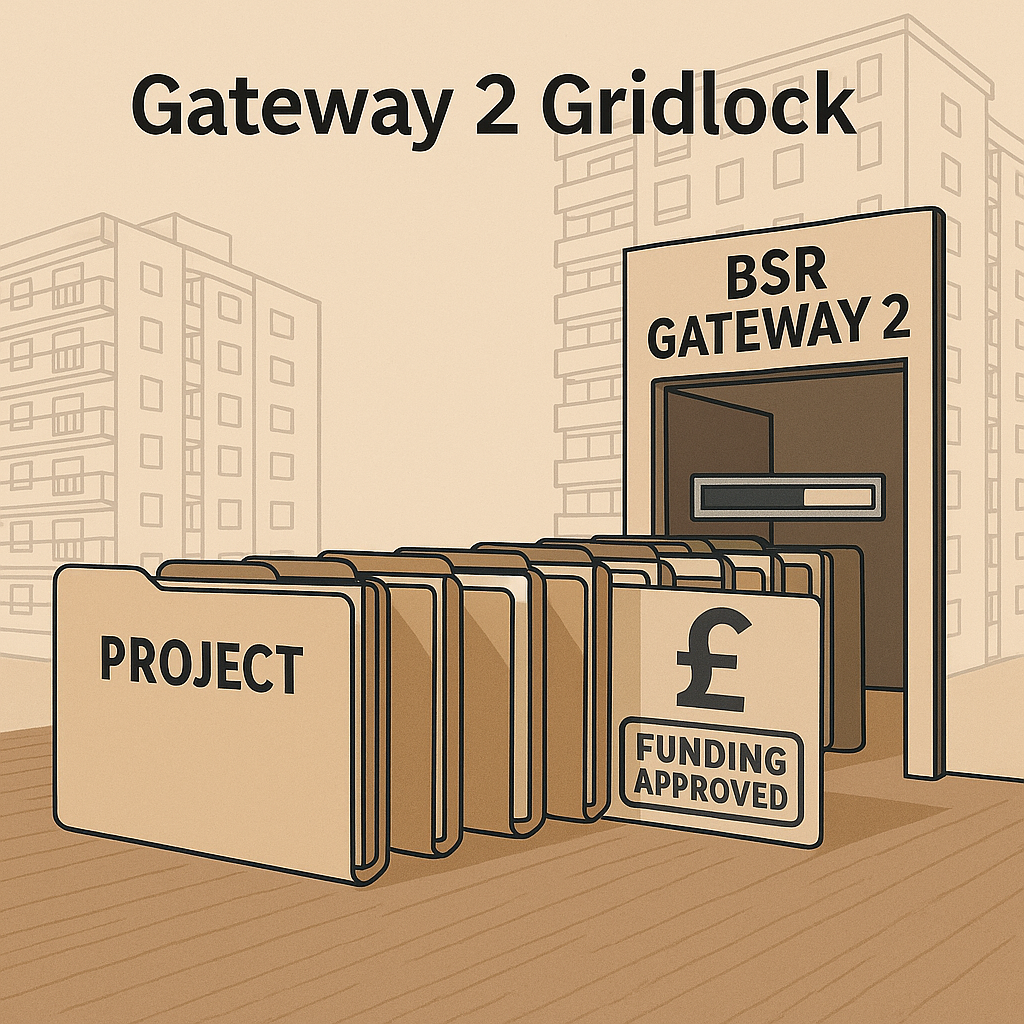
Gateway 2 is a key step. Here, the BSR checks the design details. They check the fire safety plan before building starts.
- Increased Scrutiny: The BSR checks everything closely. This is due to the disasters like Grenfell. Thus, applications must be very complete. They must be detailed. They must fully follow new, strict rules.
- Capacity Strain: Currently, the BSR is a new office. In addition, the need for its approvals is huge. It covers new builds and major repairs. Consequently, this creates long delays.
- Design Complexity: Fixing social housing involves complex parts. Replacing cladding impacts insulation and fire breaks. Therefore, the design team must write down every detail clearly. If they fail, their plan is rejected. They must then return to the back of the queue.
In order to avoid this delay, social landlords must pay for design work early. They must see the Gateway 2 submission as a full plan. It must fully satisfy the BSR’s strict rules.
Barrier 2: Competence and Supply Chain in Cladding Remediation
Even with BSR approval, two big challenges remain. These are the supply chain and builder skill.
The Problem of Contractor Competence
The BSA strongly focuses on skill. This applies to the entire project team. Furthermore, the landlord must prove they chose skilled firms. This includes designers and builders.
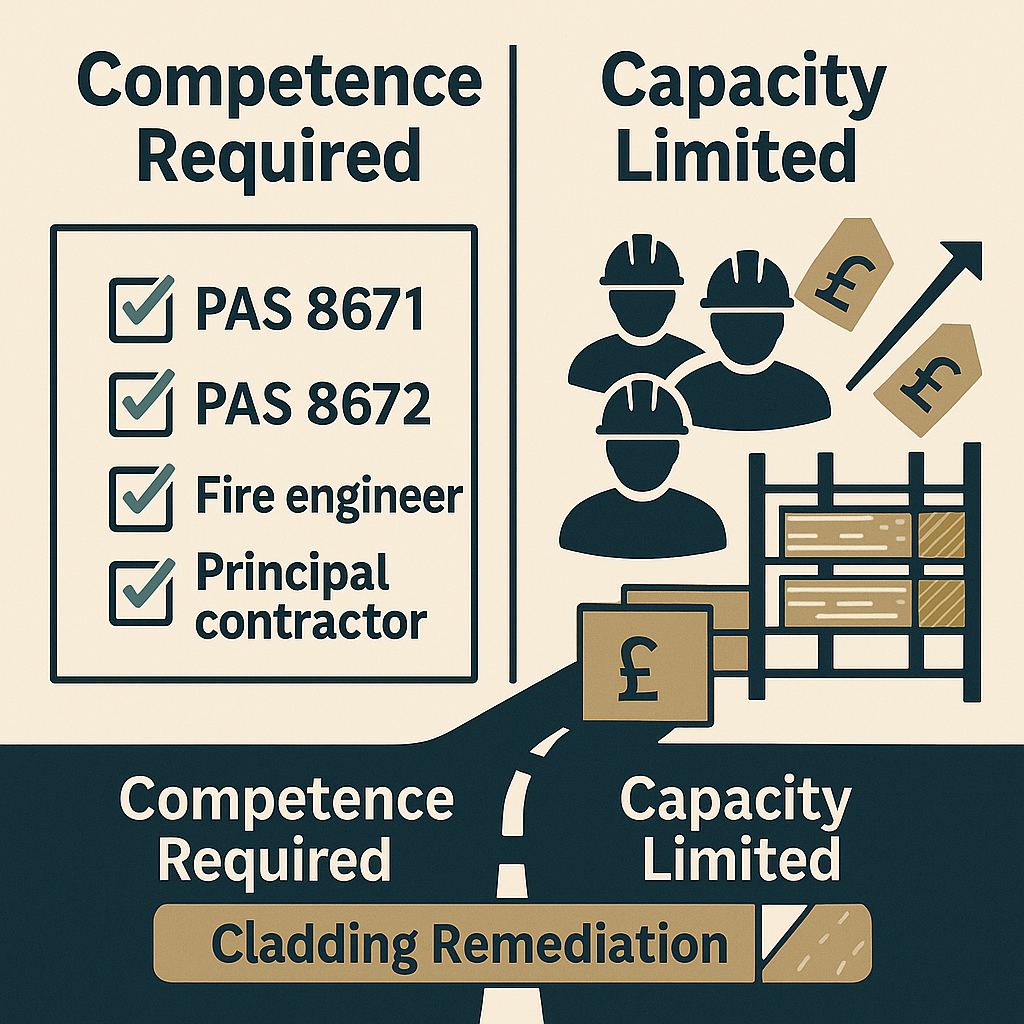
- New Standards: Specifically, builders must now meet new Publicly Available Specification (PAS) rules. These include PAS 8671 (Principal Designer) and PAS 8672 (Principal Contractor). Ultimately, these define the needed skills for key safety jobs.
- The Competent Shortage: Despite the clear need, few contractors can reliably prove these high skills. Therefore, this lack of workers raises prices. It limits the number of qualified firms available.
- HA/ALMO Responsibility: Social landlords must use strong hiring rules. They cannot just use old builders. Instead, they must actively check skill certificates for the whole project.
The Supply Chain Bottleneck
Remediation needs specific materials. For example, this includes fireproof insulation and special panels.
- Material Demand: The government committed billions to thousands of fixes. Since demand for these special materials is huge, this is happening fast. Consequently, this causes long waits and high price hikes.
- Cost Overruns: Budgets set a year ago may now be too low. This is due to rising prices for materials (steel, aluminium, insulation). Thus, watching finances and managing change become very hard tasks.
In order to reduce these issues, social landlords must partner closely with their contractors. Contracts must include strong rules for material buying. In addition, they must manage pricing. They should also buy key materials early.
The Social Housing Advantage in Securing Cladding Remediation Funding

Despite the hard work, HAs and ALMOs have advantages. For example, they can manage the remediation process better than many private owners.
Stronger Governance and Accountability
HAs and ALMOs follow strict government rules. For example, they report to the Regulator of Social Housing. This means they usually run better. Also, they have clear plans for their buildings. Moreover, they talk well with residents.

- Resident Liaison: Social landlords have ways to talk with tenants. This is crucial during noisy work. Keeping residents informed builds trust. Furthermore, it makes the project run smoother. This includes managing temporary moves.
- Procurement Power: In addition, many large HAs use shared buying groups. For instance, they use groups from the NHF. These groups help them find skilled builders fast. This avoids long, single tender processes.
Driving Sector Wide Competence
Social landlords are big buyers. Thus, they can use this power. They can demand higher skills from the market. By working together, they help build a reliable supply chain.
- Data Sharing: Moreover, HAs can share success stories. They can share tips for BSR submissions. Also, they can share cost savings. Ultimately, this helps the whole sector improve faster.
Recommendations for Housing Leaders: A Roadmap for Cladding Remediation Funding
Housing leaders must be very active. This ensures they use the ‘equal access’ funding well. They must solve the remaining problems. Therefore, their plan must focus on compliance and competence.
1. Build Your BSR Approval Strategy Now
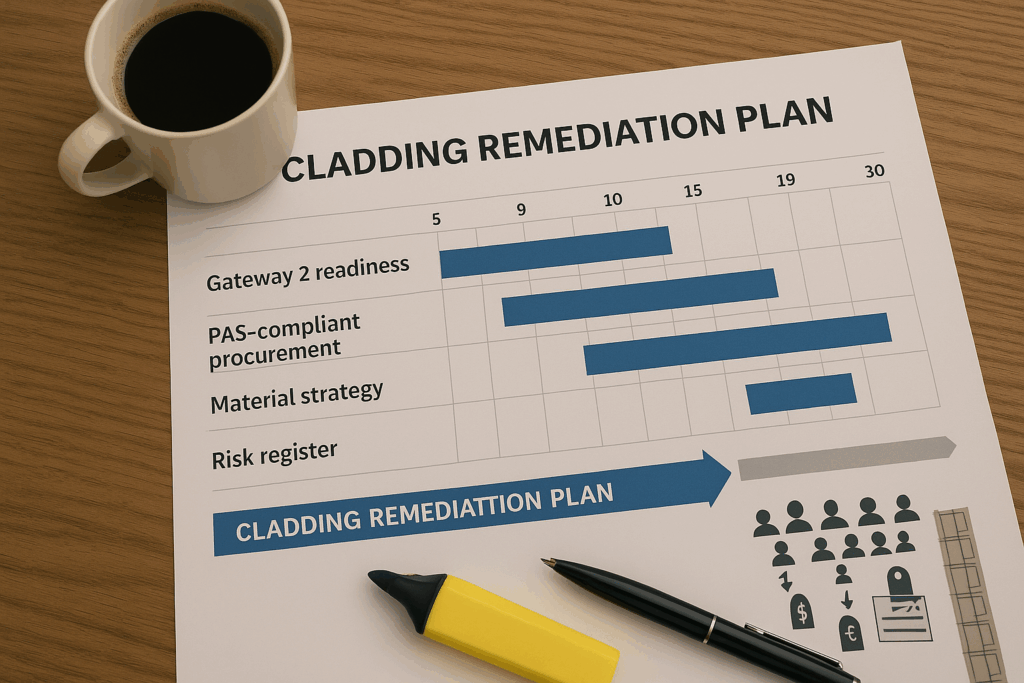
- Focus on Gateway 2 Readiness: The BSR submission is the key project task. Treat it this way. Design teams must give the BSR exact documents. This includes the Fire and Emergency File. It must also show proof of meeting new safety rules.
- Appoint Competent Roles Early: Hire your lead Designer and Contractor right away. You should do this even if they only advise before the bidding starts. Their early help saves time. Furthermore, it prevents expensive changes after BSR review.
2. Prioritise Contractor and Designer Competence
- Mandate PAS Compliance: Make meeting PAS rules mandatory. This is for all major repairs. For example, demand PAS 8671/8672. This requirement must be strict.
- Use Frameworks: Use existing buying groups. This reduces the work of checking skills. However, always check skills for the specific project.
3. Establish Robust Financial and Program Controls
- Realistic Budgeting: Construction prices are rising fast. Accept this. Add a large safety cushion to budgets. Subsequently, monitor material costs every week.
- Risk Management: Create a detailed list of risks. It must list supply chain delays and BSR problems. Consequently, you can react faster to issues.
Conclusion: A Funding Opportunity, Not a Guarantee for Cladding Remediation Funding
The shift to ‘equal access’ for Cladding Remediation Funding is a massive win. Indeed, it gives social housing the money stability it truly needed. However, the real goal is finishing these projects. This must be done while meeting the strict new safety rules.
In conclusion, the money is finally here. Now, housing leaders must meet that chance. They need high technical skills. They must also strictly follow the rules. Finally, they need smart supply chain management. The safety of thousands of tenants depends on these actions.