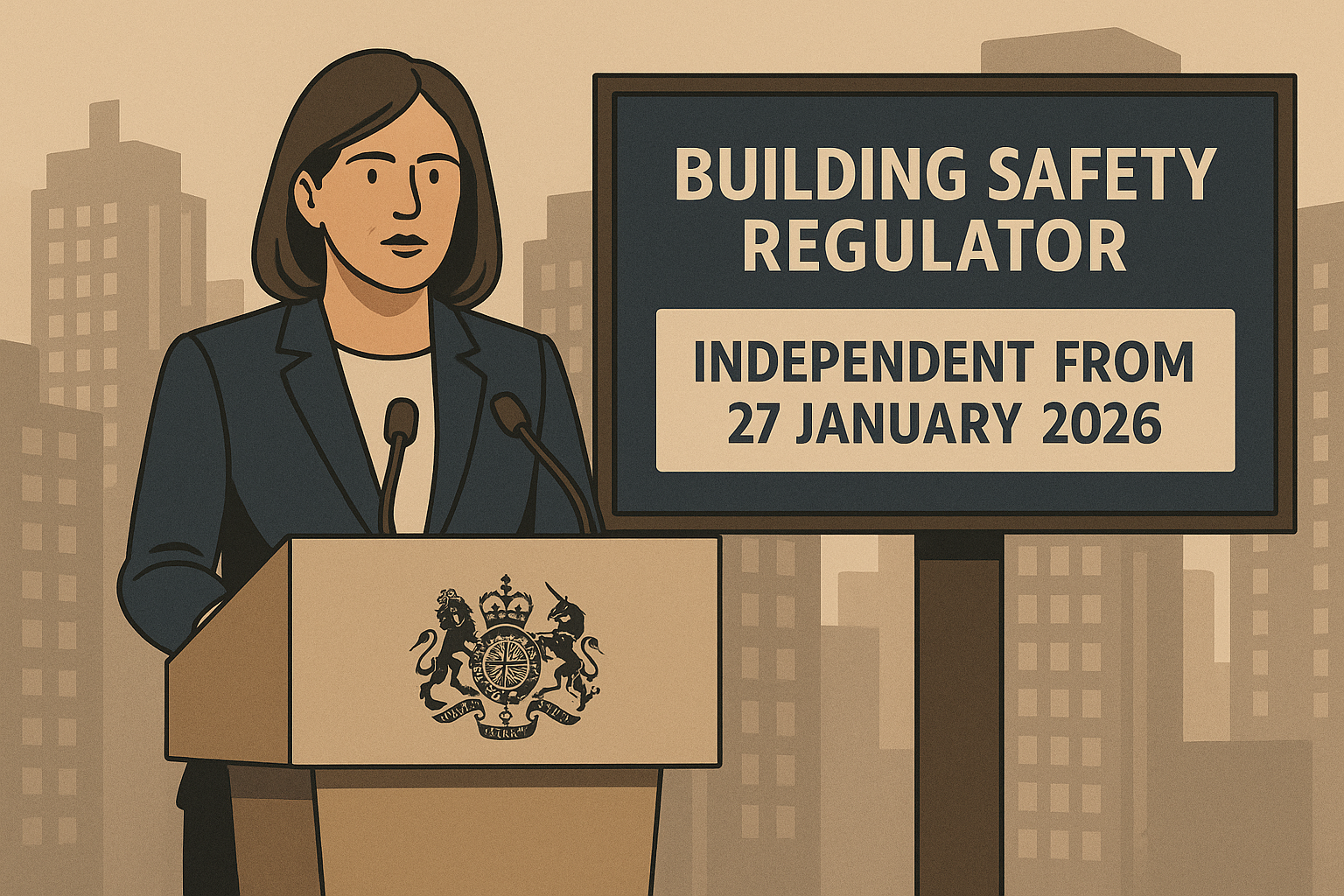
The government confirmed a huge safety change for UK buildings. Samantha Dixon, Minister for Building Safety, Fire, and Democracy, announced the Building Safety Regulator (BSR) will formally leave the Health and Safety Executive (HSE) on January 27, 2026. This move follows a key report from the Grenfell Tower Inquiry. Specifically, it creates a single, dedicated safety boss for construction. The change to full BSR Independence is vital for clear accountability.
The legal rule making this change is the Building Safety Regulator (Establishment of New Body and Transfer of Functions etc.) Regulations 2026. Parliament saw these rules in November 2025. Thus, this sets the path for the BSR to leave the HSE division. Ultimately, it will become a new, standalone Executive Non Departmental Public Body (NDPB).
BSR Independence and the New Governance Model
The BSR’s new standalone status is not just paperwork. Instead, we built it to boost its focus and power. The new body will get money straight from the Ministry of Housing, Communities, and Local Government (MHCLG). Therefore,this ends its link to the HSE. The HSE works for the Department for Work and Pensions.
Minister Dixon highlighted that this change will “strengthen lines of accountability and give a dedicated focus to BSR operations.” The BSR handles housing and building rules. Consequently, linking the BSR with the MHCLG creates clearer checks. Furthermore, it creates one clear plan for fire and safety work. Achieving BSR Independence helps reach these goals.
Key Structures Supporting BSR Independence
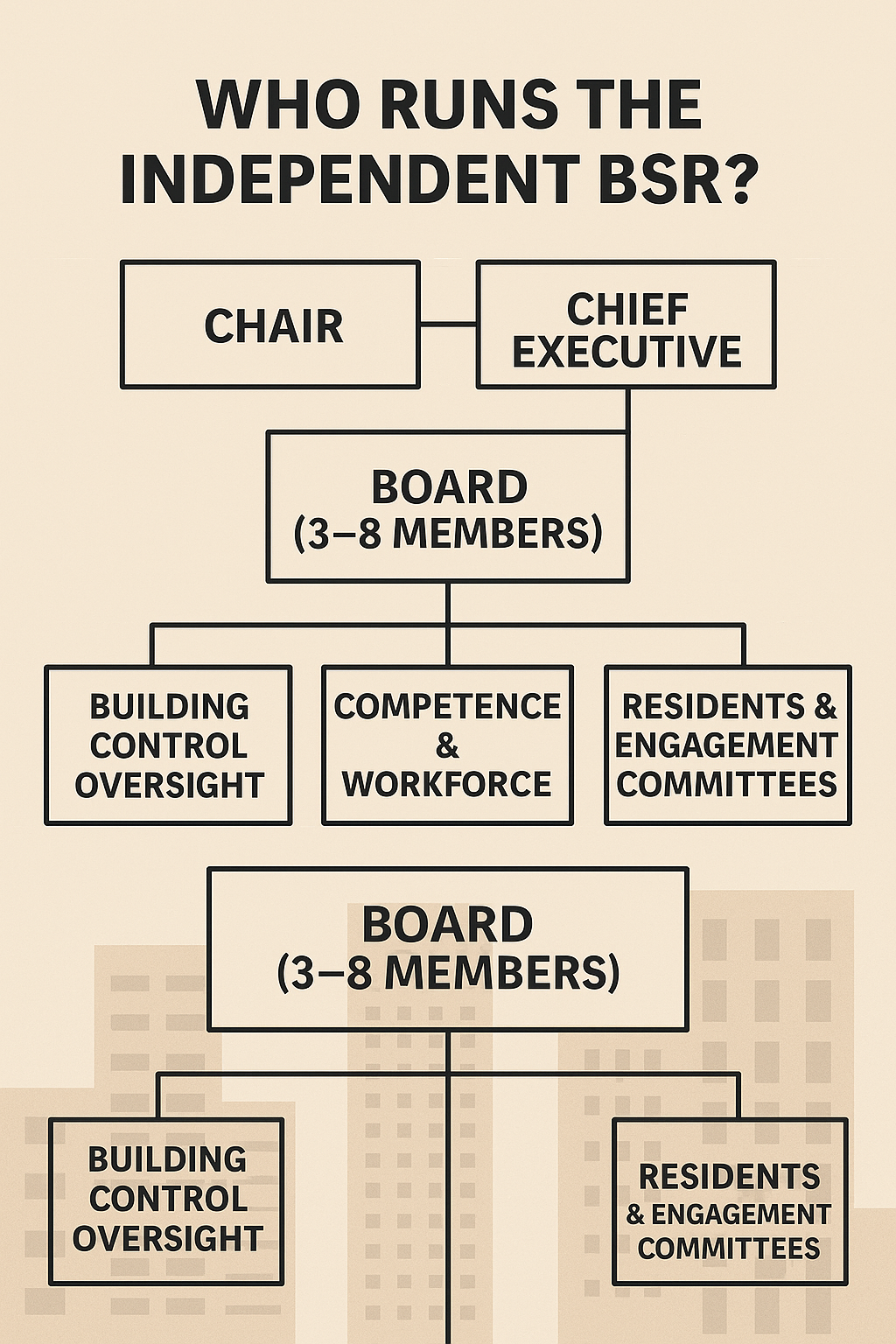
The new governance structure includes:
- A Chair and a new Chief Executive. Andy Roe and Charlie Pugsley recently took these jobs.
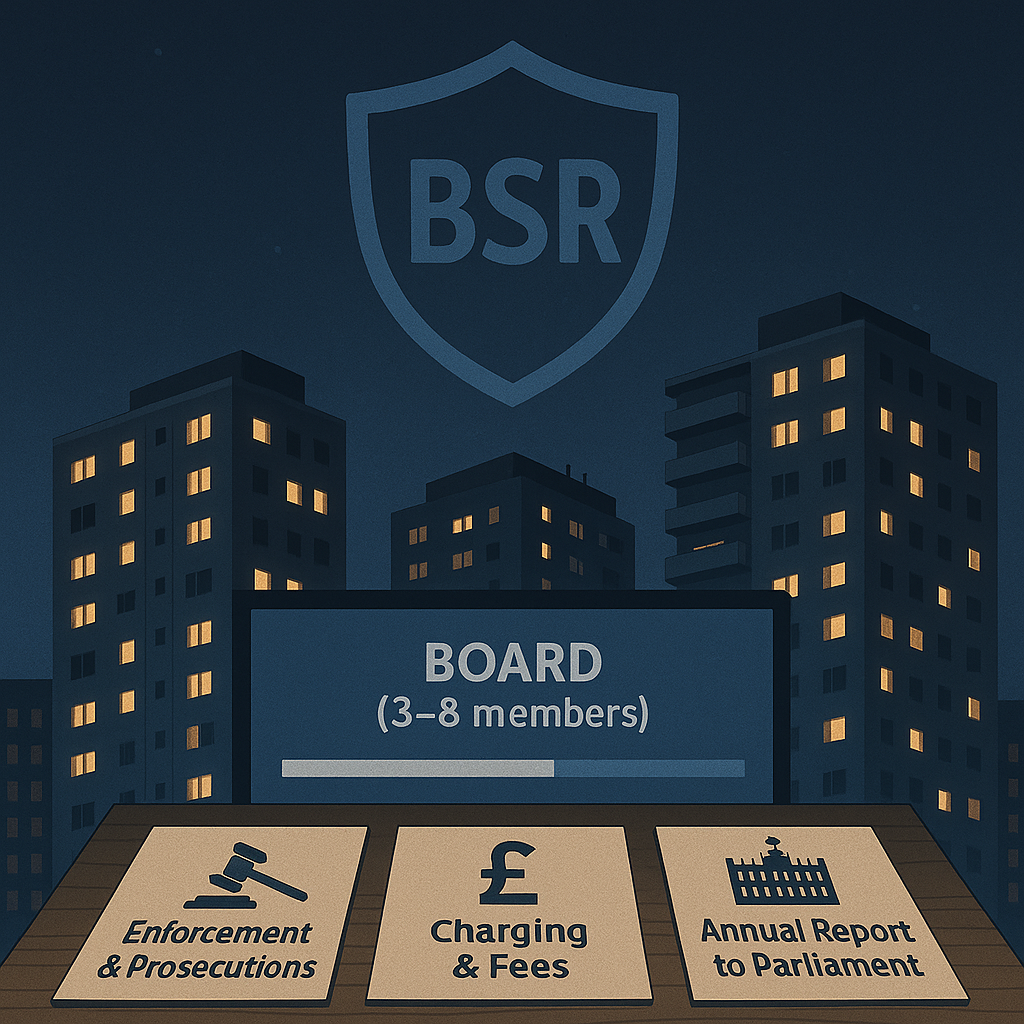
- A Board comprising three to eight members. The Secretary of State appoints these members.
- Specialist committees to oversee key areas. These areas include building checks, worker skill, and resident views.
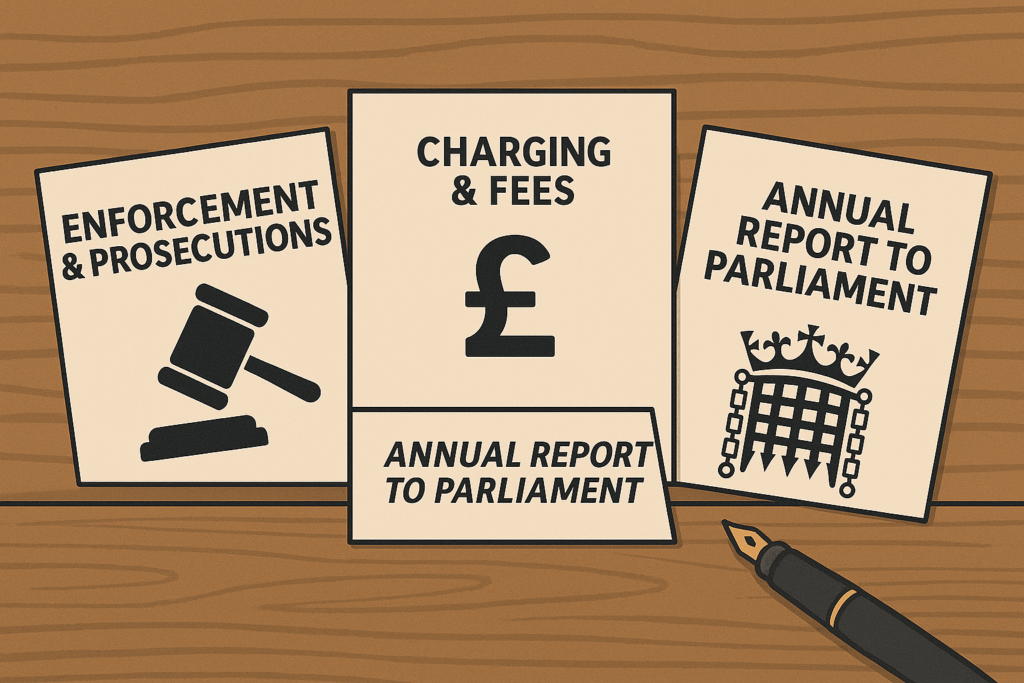
The BSR will also gain more money and legal freedom. Therefore, it will have full power to enforce building safety laws. It can start legal action, including criminal trials. Moreover, it can charge for services and publish its own Annual Reports straight to Parliament. This new freedom confirms BSR Independence.
Continuity and Delays: The Test of BSR Independence
The formal split arrives amid work pressure. This pressure is to clear backlogs and speed up complex approval processes. These include Gateway 2 (design approval) and Gateway 3 (final certificate) stages. These stages are for Higher Risk Buildings (HRBs).
To ensure things run smoothly during the change:
- Staff and Cases Transfer: The new BSR body will keep all current powers, staff, and live cases. The HSE’s Building Safety Division ran these before. Therefore, all ongoing applications and law actions will transfer at once.
- HSE Support: The HSE built and ran the BSR since the Building Safety Act 2022. However, it will continue to provide help through transitional arrangements until the end of 2026. This allows for a clear changeover of daily work.
- Capacity Boost: The government has already promised to make the BSR stronger. This includes adding over 100 new workers, like inspectors and engineers. In addition, it involves starting a new Fast Track Process to speed up new build reviews.
The main goal is to make the BSR fully independent. This gives it the focus and dedicated workers needed to change the work culture in construction. Furthermore, it ensures safety for people in tall buildings. This test of BSR Independence matters greatly to the industry.
The Pathway to a Single Construction Regulator
Minister Dixon stressed that the BSR’s separation is “an important first step towards establishing a single construction regulator.” This goal directly answers the Grenfell Inquiry’s finding. Indeed, the old, broken safety system was a core reason for the crisis.
The new BSR will first focus on its main jobs. These jobs include overseeing HRBs, watching building control experts, and improving worker skills. Its new NDPB status positions it for future plans. Ultimately, it can eventually combine other safety jobs across the sector. This long term plan is vital for simple rules. It also ensures steady safety rules across all phases of building work.
The success of the change, set for January 27, 2026, will be crucial. It must determine if the new management can effectively balance strict safety checks with the industry’s need for fast project delivery.