
The state of fire safety remediation in England is at a vital turning point. Recently, new data from the Regulator of Social Housing (RSH) showed a big problem. Over 500 buildings with “life critical” fire risks had no clear fix in place this spring. These risks specifically involve the walls on the outside of the buildings.
This news has shocked the housing world. Furthermore, it shows that finding a risk is not the same as fixing it. For this reason, we need experts to step in now. Will Perry is a director at the RSH. He says that keeping tenants safe must be the absolute first goal for every landlord.
What the New Data Tells Us

The latest report looks at social housing from April to June. During this time, it found 1,867 buildings with serious fire safety flaws. These flaws are linked to External Wall Systems (EWS).
The most worrying part is the lack of a plan. About 532 of these buildings have no clear path to being fixed. That is nearly 30% of the high-risk group. Most landlords have checked their buildings for fire risks. Yet, many struggle to start the actual work.
As a result, many people still live in risky homes. Some buildings do not even have a start date for work for over ten years. Because of this, the regulator is watching slow landlords much more closely.
Will Perry on Putting Tenants First
Will Perry is clear about these facts. He says that keeping people safe is a duty that no one can skip. In addition, landlords need good, fresh data to manage these risks.
He noted that most social housing is safe to live in. However, the small number of risky buildings must be fixed fast. For this reason, the RSH is now taking a much stronger lead.
Perry says the regulator will use direct checks to watch progress. They will also talk to landlords who do not have a clear plan. The main goal is to give residents peace of mind. Truly, no one should have to worry if their home is safe.
Why Is Fire Safety Remediation in England So Slow?
Why do so many buildings still lack a plan? The RSH report points to a few main causes. First, legal rules are very complex. This is especially true when many different people own parts of one building.
Second, it is hard to find the right workers. There are simply not enough experts who know how to fix these walls. Also, getting building parts is still slow across the UK.
It is hard to buy the specific fire safe materials needed. Plus, fixing tall buildings is a huge job. Many landlords do not have the staff to lead such big projects. Because of this, many plans stay “unclear” for too long.
The Danger of Bad External Wall Systems (EWS)

The term “life critical” is a serious warning. These flaws often mean the walls can catch fire easily. For instance, they might lack “fire breaks” that stop flames from moving. If a fire starts, it can spread fast across the outside of the block.
Furthermore, fixing these walls is a big task. Workers often have to strip the building down to its frame. This is why experts use deep tests called FRAEWs.
Still, finding the flaw is only the start. For those 500 buildings, the risk is still there. Therefore, landlords must use short-term fixes like fire wardens. These fixes cost a lot of money and make life hard for residents.
New Jobs in Building Safety and Fire Safety
This crisis shows we need more experts. The gap in fire safety remediation in England is a “skills gap.” We need pros to move these 500 buildings from “risky” to “safe.”
There is a huge need for safety checkers and project leads. Specifically, the sector wants people who can:
- Read Technical Reports: Turn complex data into a simple work plan.
- Follow the Law: Make sure work meets the new Building Safety Act rules.
- Lead Big Teams: Manage builders, residents, and the state.
The regulator is now calling out slow landlords. Consequently, there are more jobs for safety experts. It is a great chance to build a career while saving lives.
The Law and the Building Safety Act

We must look at these facts alongside the Building Safety Act 2022. This law created a new “Building Safety Regulator” (BSR). It also made “Accountable Persons” responsible for safety.
The RSH watches social landlords, while the BSR checks high-rise blocks. Moreover, the government has a new plan to speed up fixes. They want landlords to meet strict deadlines.
Also, the state has put up over £1 billion in funds. This helps social landlords pay for the work. Now, there is no excuse for a lack of cash. The focus has shifted toward better planning and finding the right staff.
Why Every Building Needs a Clear Fire Safety Plan
A “clear plan” is more than a piece of paper. It is a promise. Without a plan, you cannot get money or hire builders. Similarly, you cannot tell residents when they will be safe.
The RSH sees a lack of a plan as a huge risk. It often shows that a landlord does not have good data. Will Perry says landlords must know their buildings inside and out.
Furthermore, if a landlord has no start date, they likely do not know the task. For this reason, the regulator is focusing on these 532 buildings. They want to move landlords from “waiting” to “doing.”
Short Term Fire Safety Steps
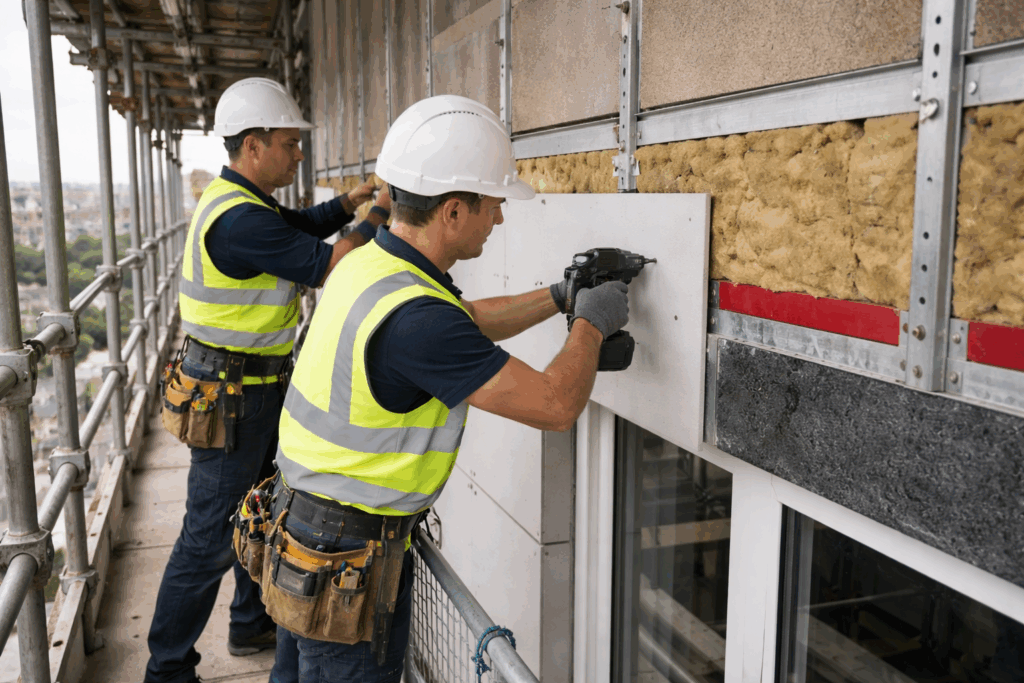
Residents need to stay safe while they wait for a permanent fix. Almost all risky buildings have had a fire check. For those waiting for work, small steps help.
This includes new smoke alarms or taking off small bits of bad wall. Some blocks use “waking watches” where people patrol for fire. But these are not real fixes. Indeed, they are costly and cause stress.
A patrol is a sign that a home is not yet safe. This is why we need clear plans. We must end the need for these temporary fixes.
Looking Toward 2030
The road ahead is long. Much of the social housing stock will not be fixed until 2030. Most buildings will be safe in five years, but many will wait longer.
This long wait is a problem. First, the risk stays high as time goes on. Second, the price of work will go up. This makes future fixes even harder to fund.
We must do this work now. Therefore, we need a big push of new talent into the sector. We cannot wait until the end of the decade to act.
Summary of the Crisis
The RSH data is a loud wake-up call. Progress is being made, but 500 buildings with no plan is too many. Will Perry’s words show that time is running out for slow landlords.
Safety must come first. To fix fire safety remediation in England, we must solve the worker shortage. For those on buildingsafetyjobs.com, your skills are in high demand. You are the link between a bad building and a safe home.
What is Next?
We expect the RSH to get tougher this year. Moreover, landlords with no plans will face hard questions. They might even lose their high ratings.
The BSR will also start to use its power to fine people. This gives landlords a big reason to move fast. Consequently, the goal is to see the “no plan” list hit zero.
Every home needs a path to safety. Every person should feel safe in bed. We will keep pushing to turn this data into real work on the ground.
Conclusion: A Call to Work

The task is huge, but we must do it. Over 500 buildings are waiting. If you work in building safety, we need you.
Your skills can break the logjam in fire safety remediation in England. The sector is changing fast. New funds and new laws are here to help. Now, we need leaders to step up. We must make sure no building is left in the dark. As Will Perry said, safety is the first priority. In conclusion, it is time for every building to have a plan.
Source Check:
This data comes from the Regulator of Social Housing (RSH). It is based on their Q2 2024/25 Fire Safety Survey. This report counts fire safety progress for social housing in England.
Are you a safety pro? Find your next role in fire safety at buildingsafetyjobs.com. Help us make England’s homes safe again.