The recent Glasgow fire has caused a lot of trouble for people who travel through the city. On a busy Sunday, a large fire started in a building on Union Street. Because the fire was so hot, parts of the building fell down. Consequently, officials had to close Glasgow Central Station for a long time. This event has changed how we think about building safety in old cities. In this post, we will look at what happened and what it means for the future. We will also talk about how the city is getting back to normal after the Glasgow fire.
How the Glasgow Fire Started and Spread
First, we should look at how the Glasgow fire began. The fire started in a small shop on the corner of Union Street and Gordon Street. This area is very busy because it is right next to the main train station. Fire crews arrived very quickly after the first call. However, the flames moved fast through the old wood inside the walls.
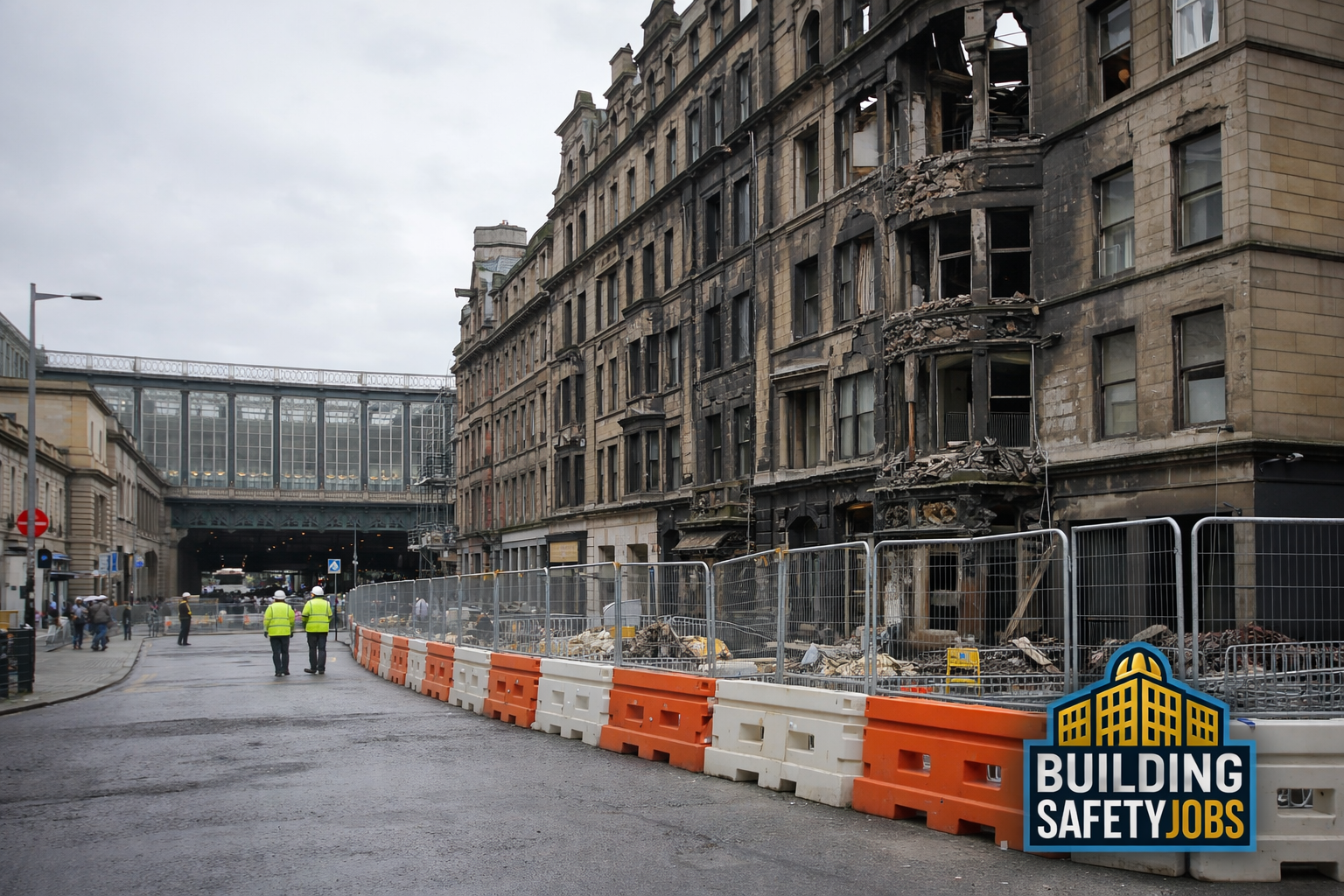
Because the building is very old, it did not have modern fire walls. Therefore, the heat grew until the roof started to cave in. Witnesses said the smoke was so thick that they could not see the station clock. Specifically, the fire crews had to use tall ladders to reach the top floors. Despite their hard work, the fire destroyed much of the internal structure. This is why the Glasgow fire became such a big problem for the whole city.
Why the Building Fell Down
Many people ask why the building collapsed during the Glasgow fire. Structural engineers say the main reason was the age of the materials. For example, the building used heavy stone on the outside but wood on the inside. When the wood burned away, the heavy stone had nothing to hold it up. Consequently, large chunks of masonry fell onto the pavement below.
Similarly, the water from the fire hoses added a lot of weight to the floors. Because the floors were already weak, they simply gave way. This created a dangerous situation for the fire crews. As a result, they had to stand back and fight the fire from a distance. This made it harder to stop the flames quickly.
Travel News and the Glasgow Fire Impact
The Glasgow fire did not just hurt one building. It also stopped thousands of people from getting to work. Because the building is so close to the tracks, Network Rail had to shut the station. They did this because they were worried that the walls might fall onto the trains.
During the first few days, no trains could move in or out of the high-level platforms. Consequently, passengers had to use buses or walk long distances. This caused huge crowds at other smaller stations. Moreover, many shops inside the station had to close their doors. This led to a big loss of money for local business owners.
Rail Services and the Glasgow Fire Recovery
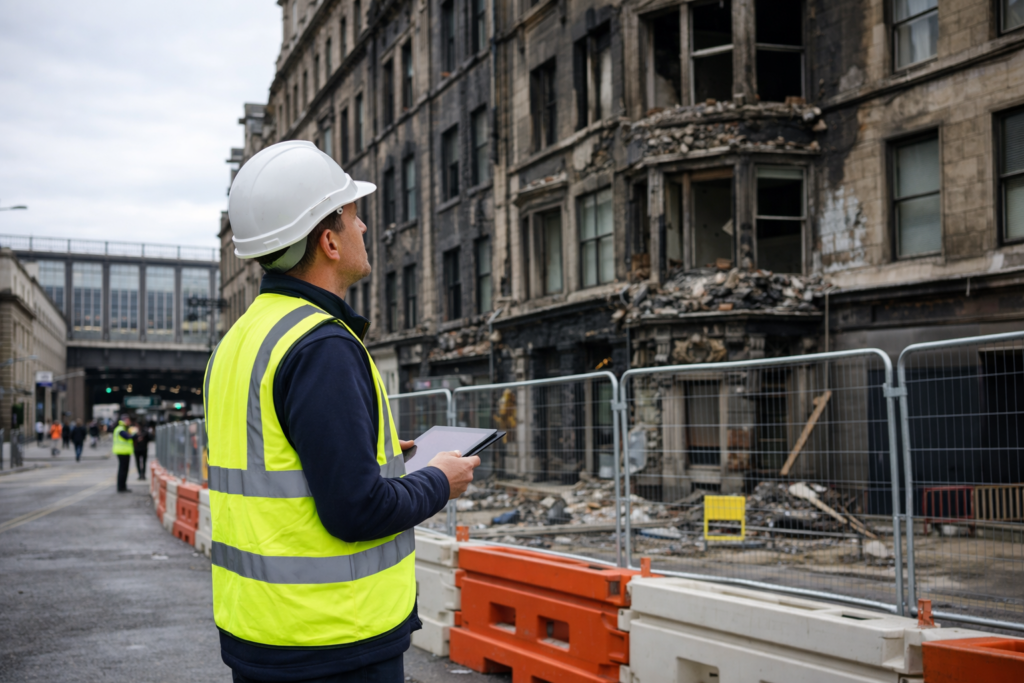
Next, we can look at how the trains started running again. It took a lot of work to make the area safe. First, workers had to put up big metal fences. Then, they brought in giant cranes to remove the loose stones.
- Stage One: The low-level trains started first because they are underground.
- Stage Two: Some main tracks opened after engineers checked the overhead wires.
- Stage Three: All platforms finally opened three weeks after the Glasgow fire.
Even though the trains are running, things are still different. For instance, you cannot use the Gordon Street doors yet. You must walk around to the side of the station instead. Furthermore, the trains might still be a bit late while the work continues. Therefore, you should always check your phone for updates before you leave home.
Building Safety After the Glasgow Fire
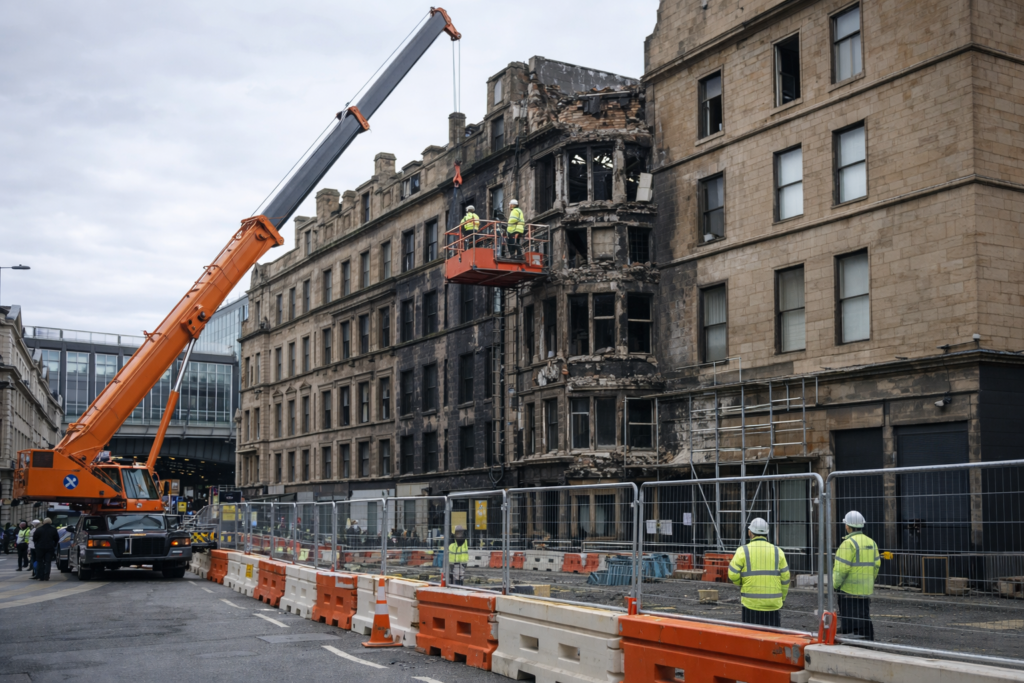
The Glasgow fire has taught us many lessons about safety. In the UK, we have many old buildings that look beautiful but might be dangerous. Specifically, we need to look at how we check these buildings for fire risks.
Building safety managers now have a lot of work to do. They must look at other shops on Union Street to make sure they are safe. If one shop has a fire, it can affect the whole block. Consequently, the council might bring in new rules for small businesses. These rules could help stop another Glasgow fire from happening again.
Why the Glasgow Fire Spread Quickly
One major factor in the Glasgow fire was the “chimney effect.” This happens when fire finds a vertical gap, like an old lift shaft or a staircase. Because the air moves up, it pulls the fire with it. In this case, the fire jumped from the ground floor to the roof in just minutes.
Additionally, the building had a lot of old dust and dry timber. These materials act like fuel for a fire. Therefore, even a small spark can lead to a massive blaze. Building safety experts say we must seal these gaps in old buildings. If we do this, we can slow down a fire and give people more time to escape.
The Future of Union Street
So, what will happen to the site of the Glasgow fire? For now, the building is being torn down bit by bit. This is a very slow process because the workers must be careful. They do not want to damage the station or the road.
Once the site is clear, the city will have to decide what to build next. Some people want a new, modern office block. Others want to see a building that looks like the old one. However, the most important thing is that the new building must be safe. It will need modern sprinklers and fire-proof materials.
In the meantime, Union Street remains partly closed. Buses have to take a different route, which adds time to every trip. But, the city is working hard to fix this. They want to get Glasgow back to its best as soon as possible.
Practical Tips for Your Daily Commute
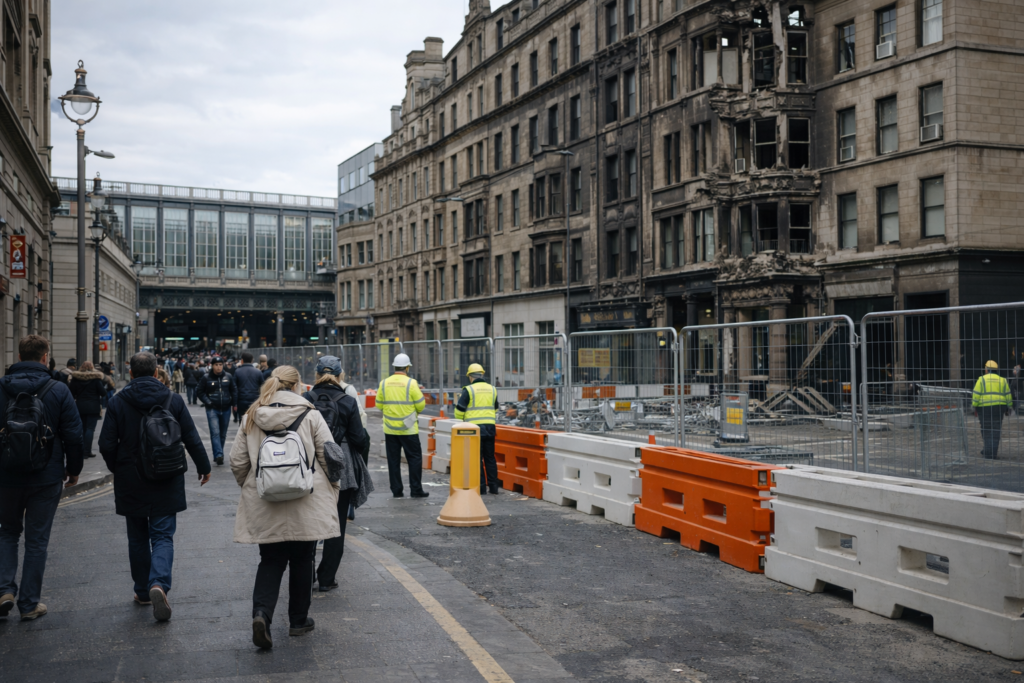
If you are traveling near the site of the Glasgow fire, here is some helpful advice.
First, allow an extra ten minutes for your journey. Because some paths are closed, you will have to walk further than usual. Second, keep your eyes open for new signs. The station staff are putting up posters to help you find your way.
Third, try to avoid the peak hours if you can. The station is very crowded right now because some entrances are still shut. Finally, be patient with the staff. They are doing their best to help everyone after the Glasgow fire disruption.
How We Can Prevent More Fires
We must all play a part in keeping our city safe. Business owners should check their wires and batteries every year. Moreover, they should train their staff on what to do if they see smoke.
For example, if the shop in the Glasgow fire had a better alarm, the fire might have been caught sooner. Similarly, if the building had better fire doors, the flames might not have spread so fast. Therefore, investing in safety is always a good idea. It saves lives and it saves our history.
Building safety is a career that really matters. We need experts who can spot these dangers before they turn into a crisis. If you care about people and want to make buildings better, this might be the job for you.
The Role of Safety Professionals
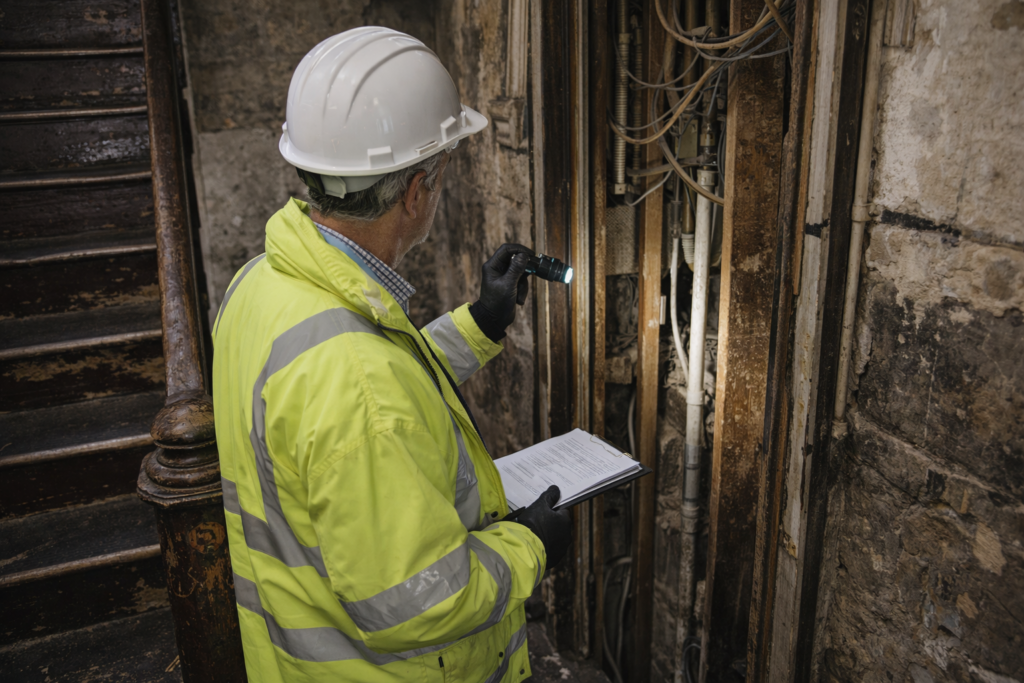
After the Glasgow fire, many people realised how important safety managers are. These professionals do not just look at papers. They go out and check every corner of a building. They look for blocked exits and faulty alarms.
Without these experts, more buildings could suffer from a Glasgow fire. They work with the fire service and the council to keep us all safe. It is a tough job, but it is very rewarding. You get to solve problems and protect the city you love.
Specifically, structural safety is a key part of this work. You have to understand how buildings are made. You also need to know how they react to heat and stress. If you have these skills, you can help prevent another disaster like the Glasgow fire.
Summary of the Glasgow Fire Events
To wrap up, the Glasgow fire was a major event for the city. It showed us that old buildings need a lot of care. It also showed us how much we rely on our trains and stations.
Because the city acted fast, no one was seriously hurt. This is the most important thing. However, the damage to the building and the rail service was very high. We will be talking about the Glasgow fire for many years.
By learning from this, we can make Glasgow a safer place to live and work. We can update our laws and improve our buildings. Together, we can make sure that our heritage stays standing for a long time.
Join the Building Safety Industry
Do you have what it takes to protect our cities? The Glasgow fire shows us that we need skilled people to manage building risks. We are currently looking for a leader to join a top team in London. You will help make sure that big buildings stay safe and follow all the rules.
Role: Structural Safety & Compliance Manager
Location: London (Full-Time)
Salary: £60,000 per year
In this role, you will lead the way in building safety. You will check structural health and manage safety files. This is a great chance to grow your career and help the public. If you liked learning about the Glasgow fire, you will love this job.