A big safety warning reaches UK building managers and workers. Elstree Film Studios Limited faced prosecution recently. Ignorance cannot defend you when dealing with asbestos. In brief, the key to safety is having the right Asbestos R&D Survey done before you start work.
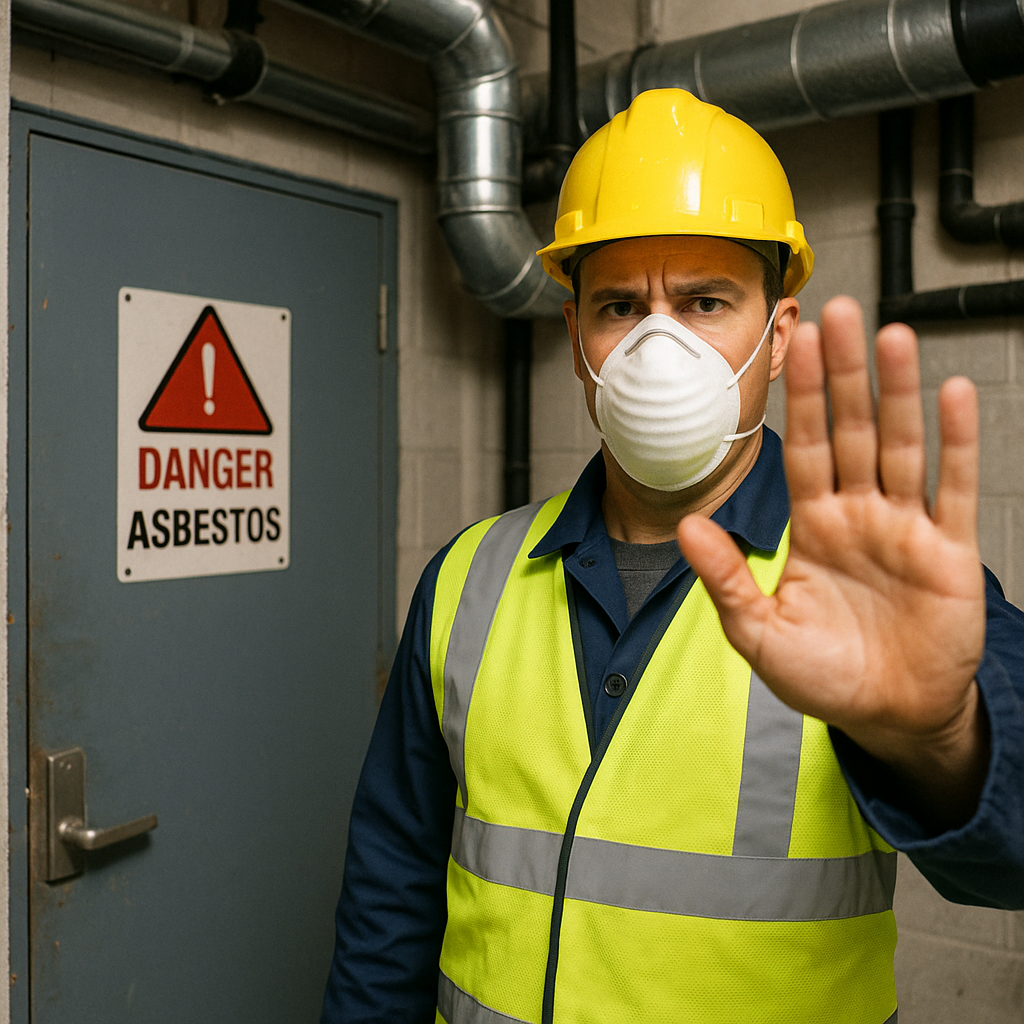
Studio staff were told they were safe in July 2022. They ripped out wall panels with hand tools. However, they were wrong. One maintenance worker stopped the work. His good sense likely saved others from harm. In fact, he spotted asbestos insulation.
Testing confirmed the deadly material. Amosite and Crocidolite were found. Specifically, these are very dangerous forms of asbestos. The cause of this error was simple. Ultimately, the existing asbestos surveys did not cover the specific wall surfaces. Workers faced risk. Consequently, the company did not know what the building hid inside. Therefore, this error proves the need for an Asbestos R&D Survey.
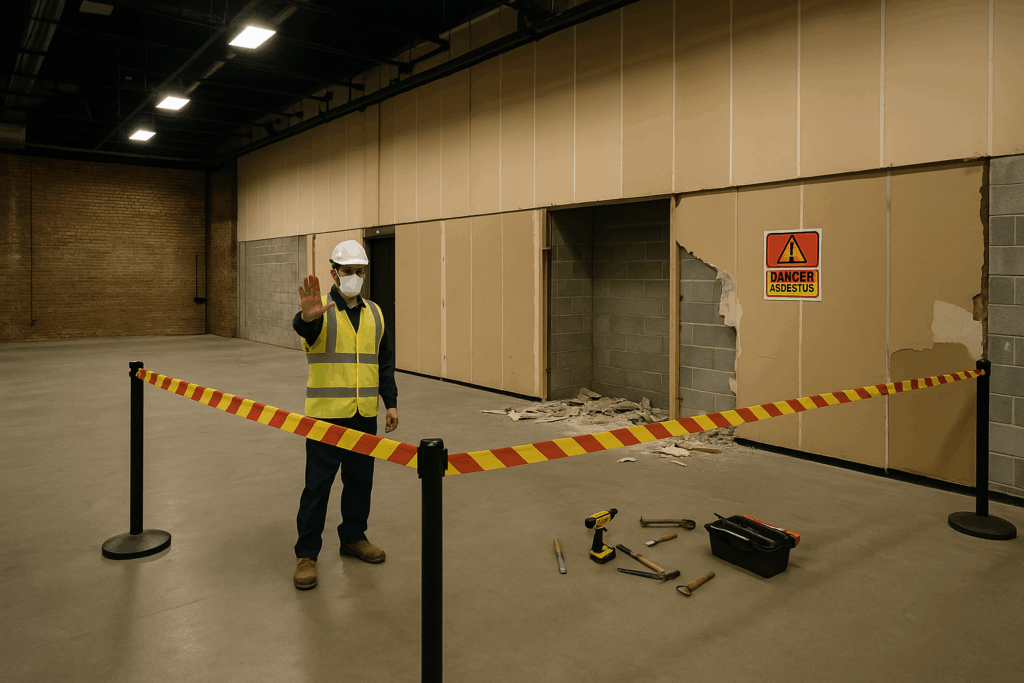
The courts fined the studio £6,000 and £6,790 in costs. Moreover, the real cost is human life. Inspector Stephen Manley gave the main rule:
“Those in control of buildings must ensure they have a suitable assessment in place. For intrusive work, this often requires a specific localised survey by a competent person.”
This rule shows the main safety task. Thus, it is the key difference between following the law and being careless. Asbestos Surveyors hold vital roles.
The Law: Understanding the Duty
Every manager of business buildings has a legal duty. The Control of Asbestos Regulations 2012 (CAR 2012) mandates this. Regulation 4 is the key part.
The Duty Holder controls the building. Furthermore, they must take several steps:
- Find Out: They must take steps to find asbestos.
- Record: They must record the location and state of asbestos.
- Assess: They must decide the risk. Similarly, they must create a plan to handle the risks.
- Manage: They must create a plan to handle the risks.
- Inform: They must tell workers where the asbestos is.
The Elstree case showed a failure to find and tell. Thus, the company thought its old documents were enough. Consequently, workers faced danger. The risks from asbestos are terrible. They include lung cancer and mesothelioma. Clearly, no one can justify these dangers by saving time or money.
The Critical Difference: Management vs. Asbestos R&D Survey
The need for a “specific localised survey” is a clear point. Standard reports do not work for big repairs.
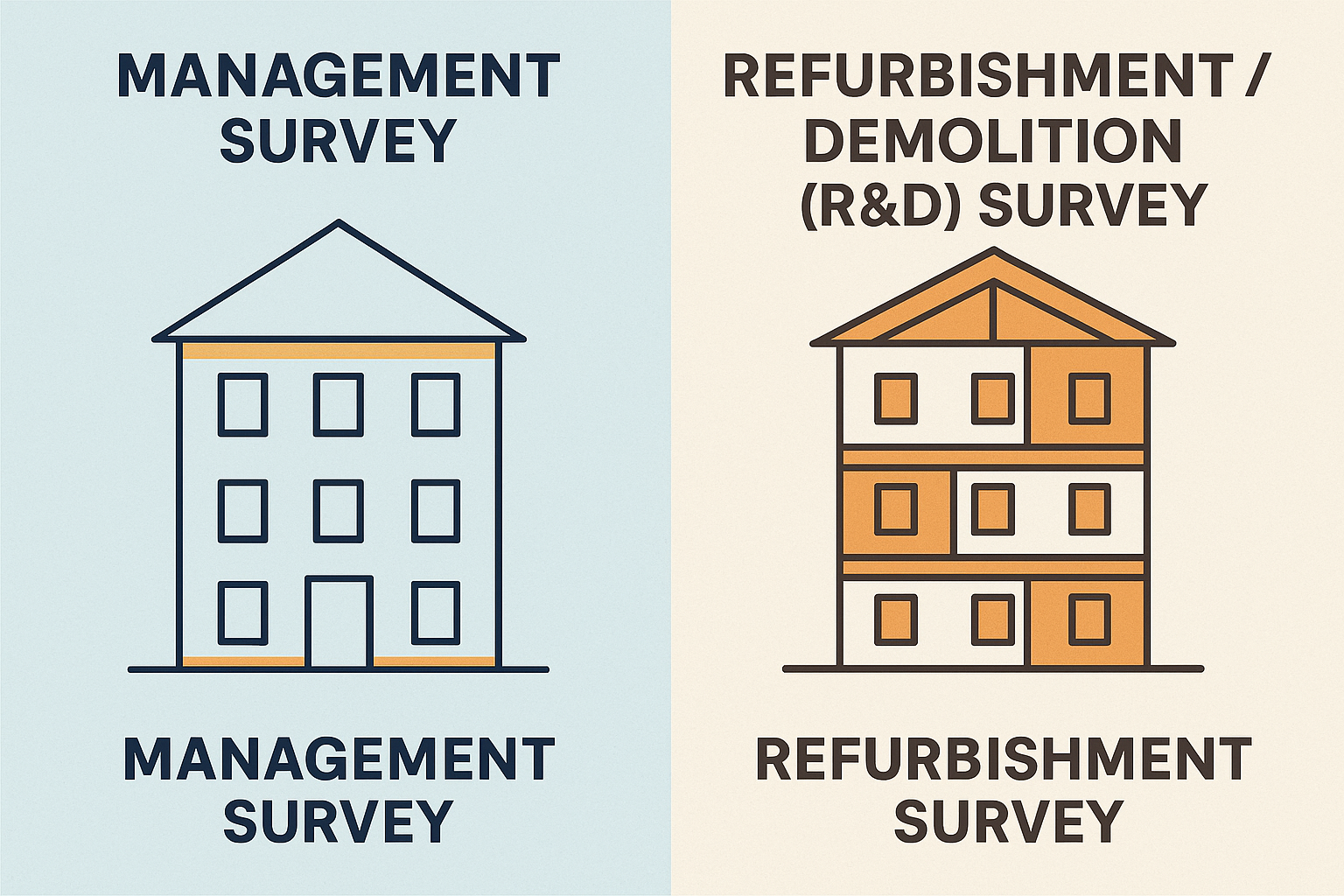
Most buildings get covered by a Management Survey. Evidently, this is the standard, easy check for daily needs.
- Management Survey: This checks materials easy to see. It is done for routine work, like changing a light. Furthermore, it assumes hidden areas contain asbestos.
However, major work changes everything. This includes cutting, drilling, or moving walls. Then, experts need a deep check. This is the Asbestos R&D Survey.
- Refurbishment/Demolition (R&D) Survey: This survey is fully intrusive. Its goal is to find all asbestos in the work area. Specifically, this means breaking into walls and ceilings.
The Elstree failure happened because they used an easy check. Instead, they did an intrusive job. An Asbestos R&D Survey should have found the materials they uncovered. As a result, the company was fined. Indeed, this shows the survey’s true value.
The Danger of Amosite and Crocidolite
The materials found pose a great danger. Amosite and Crocidolite release fine particles easily. In fact, experts call Crocidolite the most harmful type. Therefore, the workers had to stop at once. Only licensed workers could do the cleanup.
The Competent Person and the Asbestos R&D Survey
Inspector Manley said a competent person must do the survey. Ultimately, this is key for safety jobs.
Competency is not just an idea. Skill and training prove it. For example, a good professional:
- Holds Formal Qualifications: They hold qualifications like BOHS P402. Moreover, they have specific experience.
- Has Specific Experience: They know where asbestos hides.
- Shows Independence: Cost does not influence their work. Likewise, they show independence.
- Maintains Professional Development (CPD): Rules change, so they keep learning.
The Elstree case shows the need for these experts. A good R&D surveyor would require destructive checks. Thus, they would demand this before any other work began.
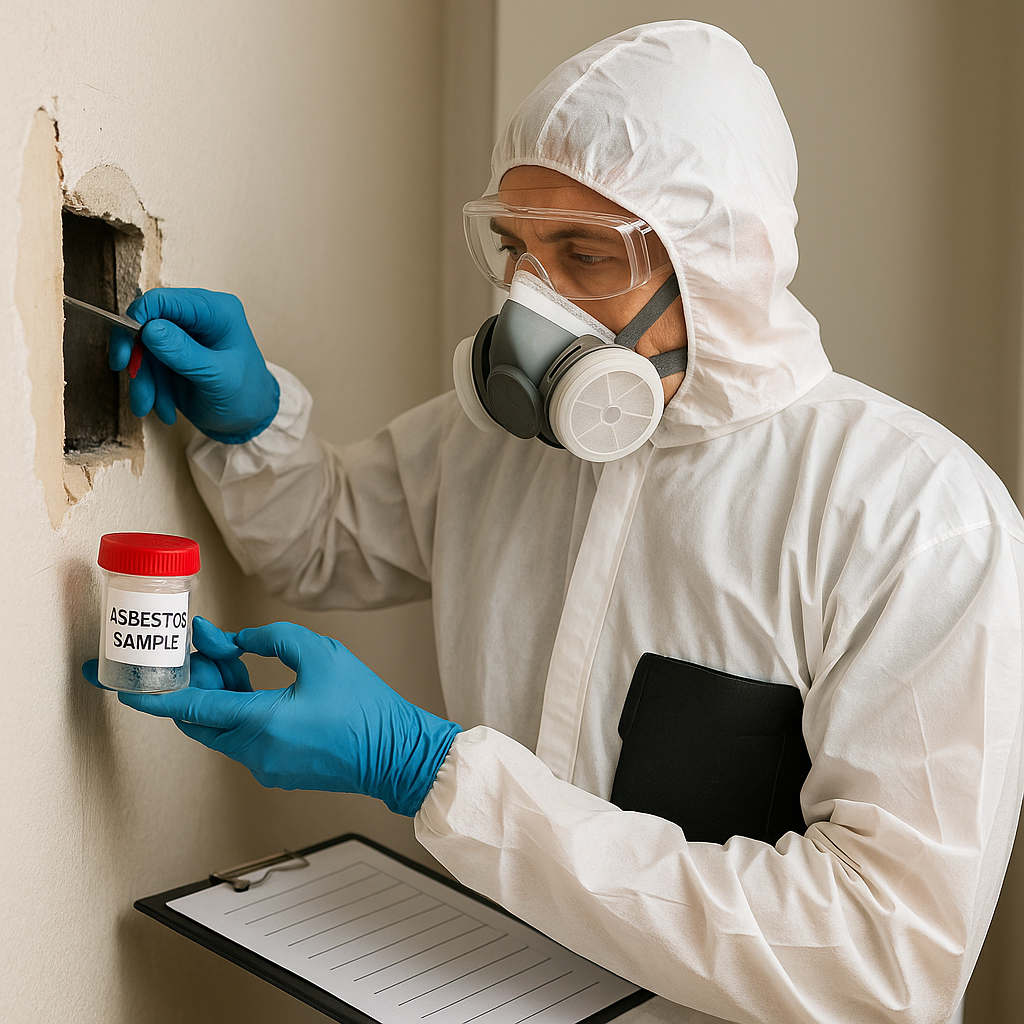
Actionable Steps: Implementing the Asbestos R&D Survey Requirement
The Inspector’s warning makes the safety plan clear. Therefore, all building managers must use these steps:
1. Define the Scope of Work
Each task needs checking. Does it involve breaking the building’s structure? If yes, the work is intrusive. Consequently, move to the next step.
2. Commission a Specific, Localised Asbestos R&D Survey
You must have an Asbestos R&D Survey before work starts. It must cover only the work area. You must not use old records. Instead, the check must be intrusive enough to find everything.
3. Verify Competency
You must not hire cheap workers. You must demand proof of training. Furthermore, a cheap survey cannot offer legal protection.
4. Maintain and Communicate the Asbestos Register
You must update the Asbestos Register after the survey. You must tell the workers the risks. Then, they must know exactly where the asbestos is.

Conclusion: Don’t Guess, Survey
The Elstree case proves that asbestos risk is real. It hides in our buildings. In summary, the rule for managers is simple: A competent person must do an Asbestos R&D Survey before any intrusive work.
This is the law. It protects lives. Moreover, it protects the company’s status. Therefore, it ensures safety.