Managing Stress in Building Safety Compliance Roles
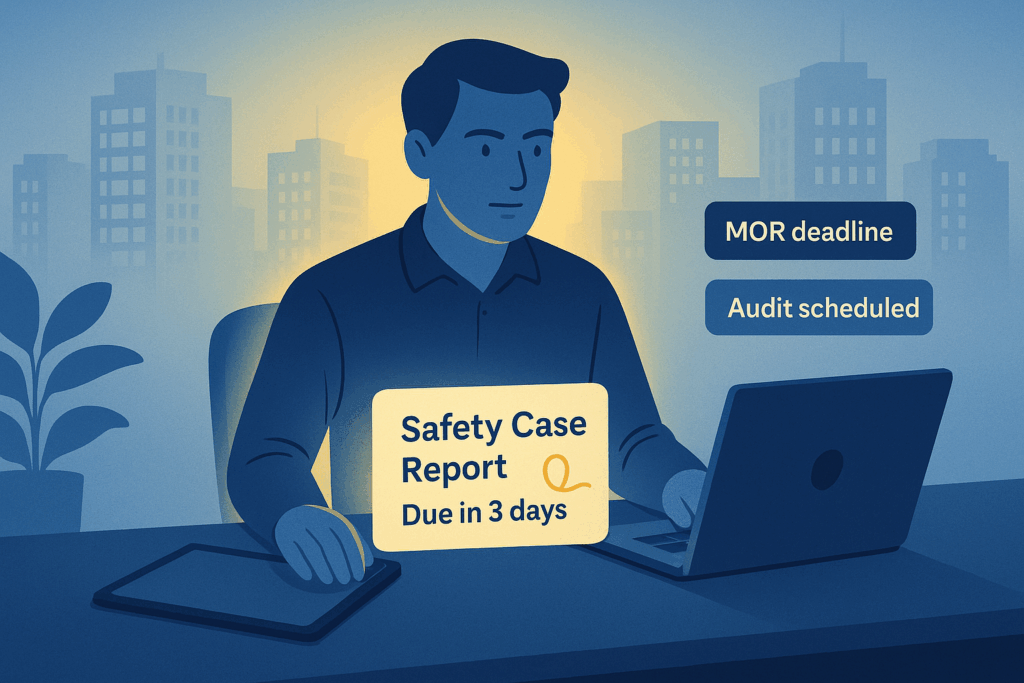
The job of a Building Safety professional is very high stakes in the UK workplace. Managing Stress is therefore a key professional skill. You might be a Building Safety Manager (BSM), a Fire Risk Assessor, or a Compliance Lead. After the Building Safety Act 2022 (BSA), your work is under huge review. The “Golden Thread” means every choice you make is recorded. Furthermore, the Regulator checks this. In short, your actions are linked directly to residents’ health and safety.
This work creates unique pressure. For example, there are strict legal deadlines. You carry the constant weight of safety responsibility. You need sharp focus during audits and Safety Case production. Consequently, this guide sees stress management as a critical professional skill, not just a soft skill. By controlling your calm and setting work limits, you ensure your decisions are clear, correct, and compliant.
Section 1: Practical Steps for Managing Stress Under Pressure
Compliance jobs have high pressure times. These times are directly linked to the legal calendar. Therefore, learning to prepare for these specific stressors is key to staying in control and reducing worry.
Time Tactics: Managing Stress from Deadlines
Legal deadlines are fixed. Clearly, missing a date for a Mandatory Occurrence Report (MOR) or a Safety Case submission brings a penalty. More importantly, it signals a major failure in the building’s safety system.
Also, you have many tasks at once: managing repairs, checking contractor skills, and talking to residents. Thus, these fixed deadlines often feel too much.
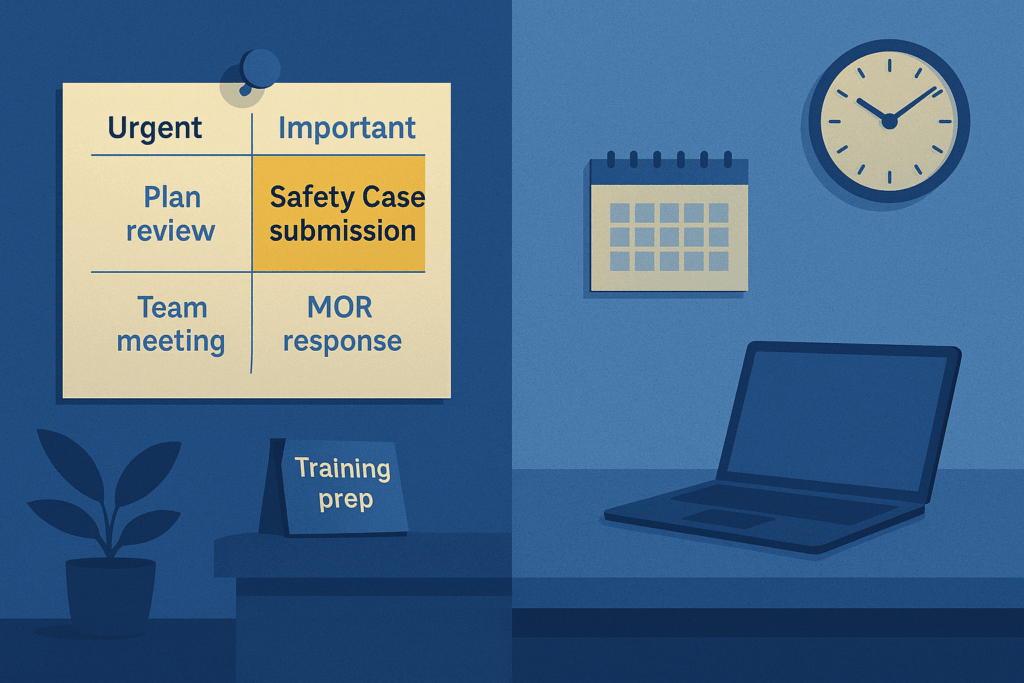
- Use Priority Lists: Use a simple system, like the Urgent/Important list to sort your work. Legal submissions (like the Safety Case) are often Urgent AND Important. Similarly, resident safety issues (via MOR) are Urgent and must be fixed right away. Crucially, try to pass on tasks that are Urgent but NOT Important (like simple admin) when you can.
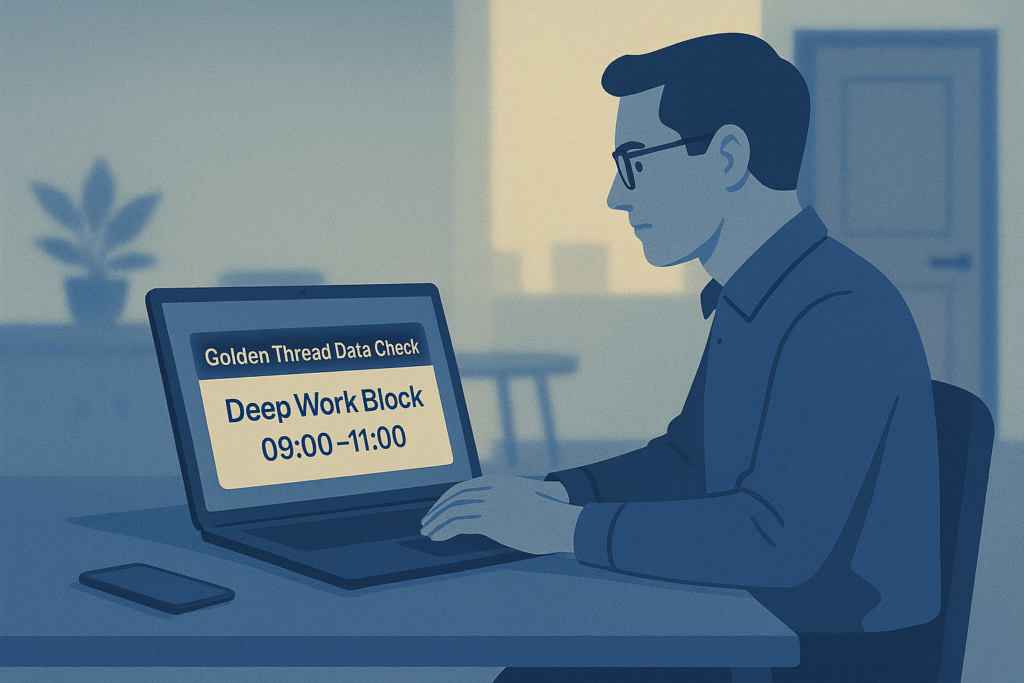
- Block Time for Deep Work: Plan specific, quiet times just for big tasks. For example, use this time for checking Golden Thread data or writing the Safety Case plan. During these blocks, turn off alarms and stay away from your email inbox. Ultimately, this sharp focus stops mistakes and lowers the stress of interrupted work.
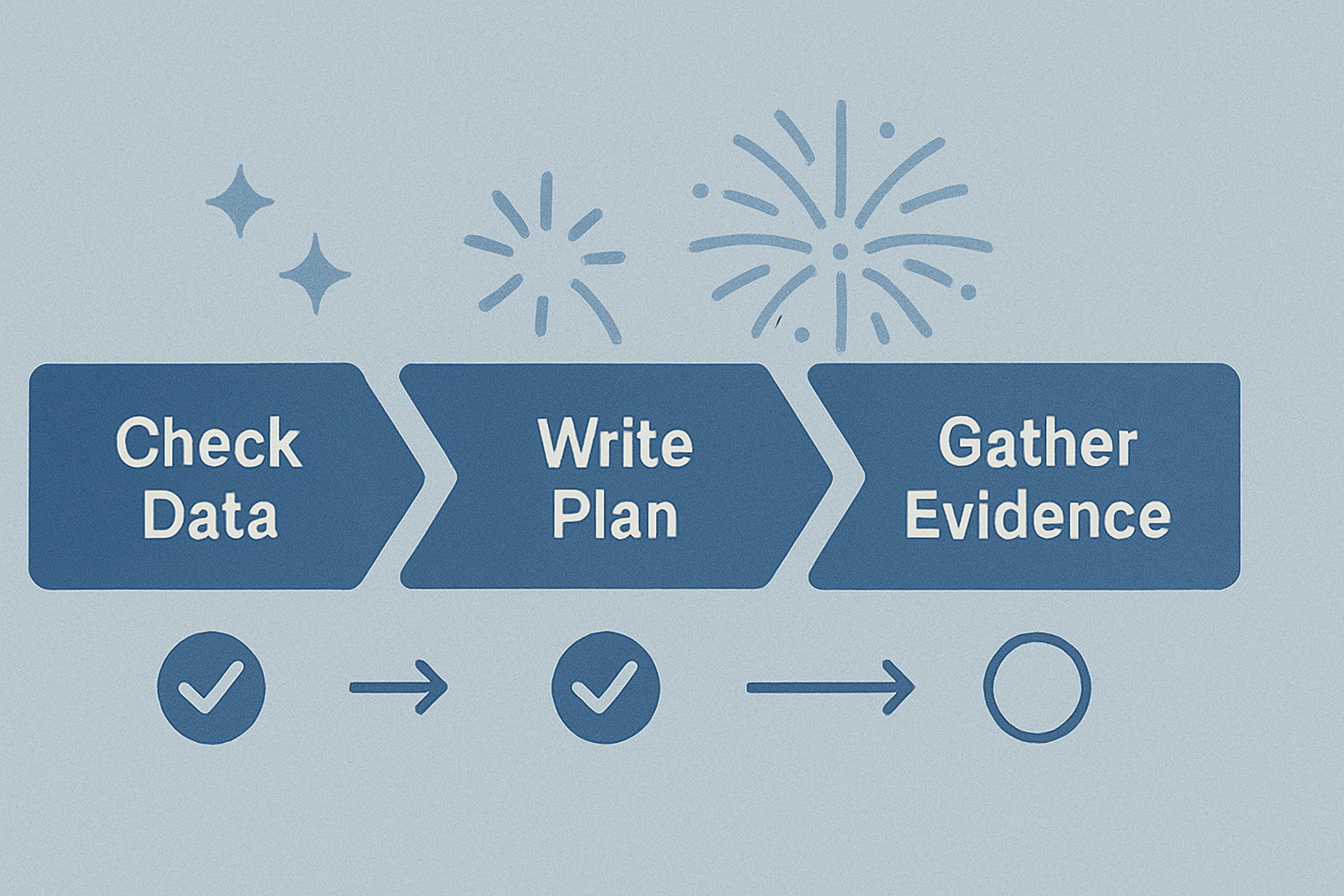
- Break Down Big Tasks: A full Safety Case Report can seem too hard to finish. Therefore, break it into smaller steps: Check Data, Write the Plan, Gather Proof, and Board Review. Celebrate each small step you finish. This helps build momentum and reduces feeling overwhelmed.
Audit Resilience: Inspections
Audits by the Building Safety Regulator (BSR) test your safety system. Consequently, the stress often comes from fearing you or your company will fail.
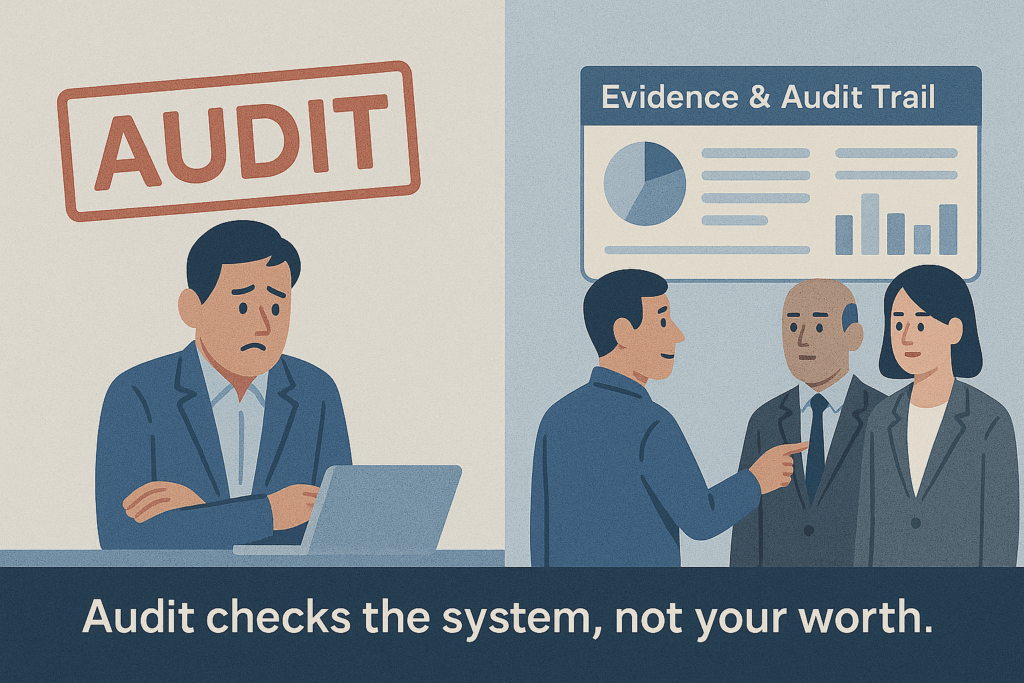
- Separate Proof from Self: Understand that an audit checks the proof, the data, records, and processes—not your personal character. Instead, act as a helper who shows the proof of compliance.
- Practice the Review: Before a major audit, do a test run with coworkers. Ask them to pretend to be auditors. They should focus on tracing fire safety info (e.g., “Show me the installation and history for this door.”). This practice, specifically, builds confidence and finds gaps before the Regulator sees them.
- Time Off After Audits: Right after a big audit, plan time away from the building and the office. This allows your body to calm down. Resist the urge to fix every single problem right away. Instead, schedule a calm review meeting the next day.
Section 2: Setting Work Limits
Your time and energy are limited, but demands from your bosses, residents, and contractors are often endless. Therefore,setting clear professional limits is key to keeping a healthy pace and doing accurate work.
Managing Stress by Defining Boundaries Upwards (The Board & AP)
The Accountable Person (AP) holds the main legal duty. They will surely ask the BSM for quick fixes and promises.
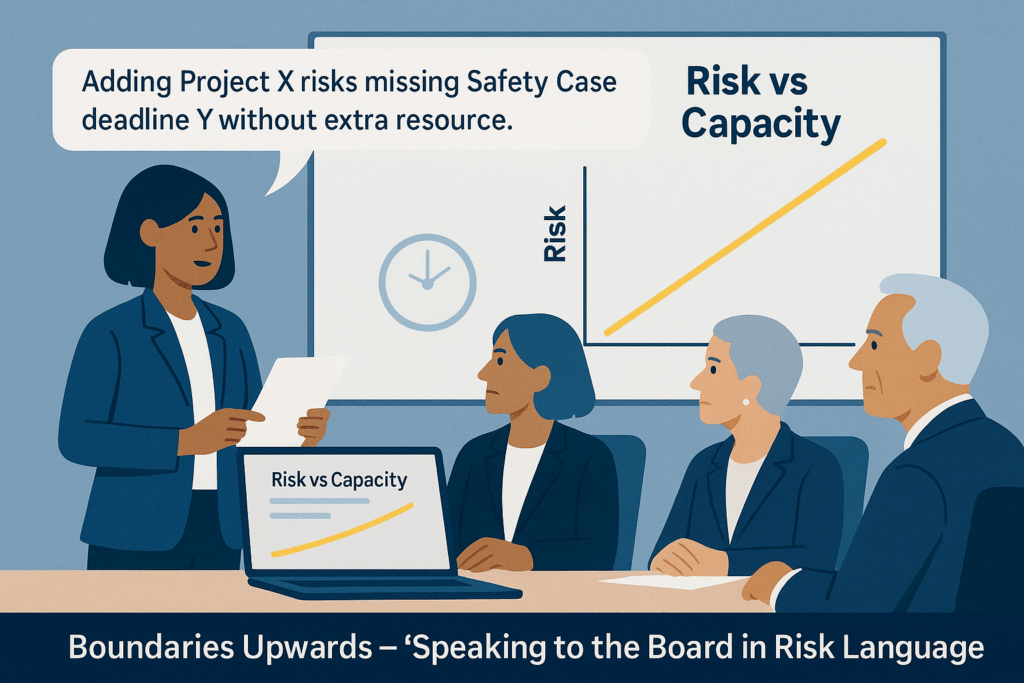
- Talk About Risk, Not Feelings: When talking about work speed or delays, always talk about risk and legal duties. For example, don’t say, “I can’t handle this extra work.” Instead, say, “Adding Task X puts our deadline for Report Y at risk. Therefore, we must choose one, or I need more help.”
- Define Your Work Hours: Set clear rules for talking to the AP and the Board. You may need to be reached for real emergencies. But be sure to state that normal questions will be handled during set work hours. This prevents work from creeping into your personal time.
- Formalise New Projects: Never agree to a big new project (like major wall repairs) without a clear plan. This plan must define who does what, the timeline, and who is responsible for each step. This prevents goals from changing and protects your schedule.
Setting Limits Outwards
Dealing with residents and contractors needs skill. However, you must balance this with enforcing safety rules and keeping deadlines.
- Resident Talk Limits: Being open is key for the Resident Engagement Strategy. But set clear ways for safety reports (e.g., a special email). Make it clear that all safety worries are serious, but general questions will be answered during specific times. This action sorts urgent issues from general questions.
- Contractor Rules: Contractors often miss deadlines. This directly harms your ability to show proof for the Golden Thread. Enforce Service Level Agreements (SLAs) strictly. Your rule here is professional: late submission of papers is not acceptable because it breaks your legal duty to keep the Golden Thread correct.
- Protecting Focus Time: Be ready to politely refuse meeting requests that lack a clear goal. Remember, your time is vital for doing compliance work; treat it as such.
Digital Discipline
Always being connected to the office causes much worry and burnout.
- The Evening Firewall: Have a strict rule about checking work emails after work hours. If necessary, check for urgent things for only 10 minutes at a set time, and then disconnect completely.
- Control Notifications: Turn off all non essential alerts on your devices. Furthermore, check emails only three times a day (morning, lunch, and end of day) instead of reacting to every new message.
Section 3: Building a Personal Resilience Toolkit for Managing Stress
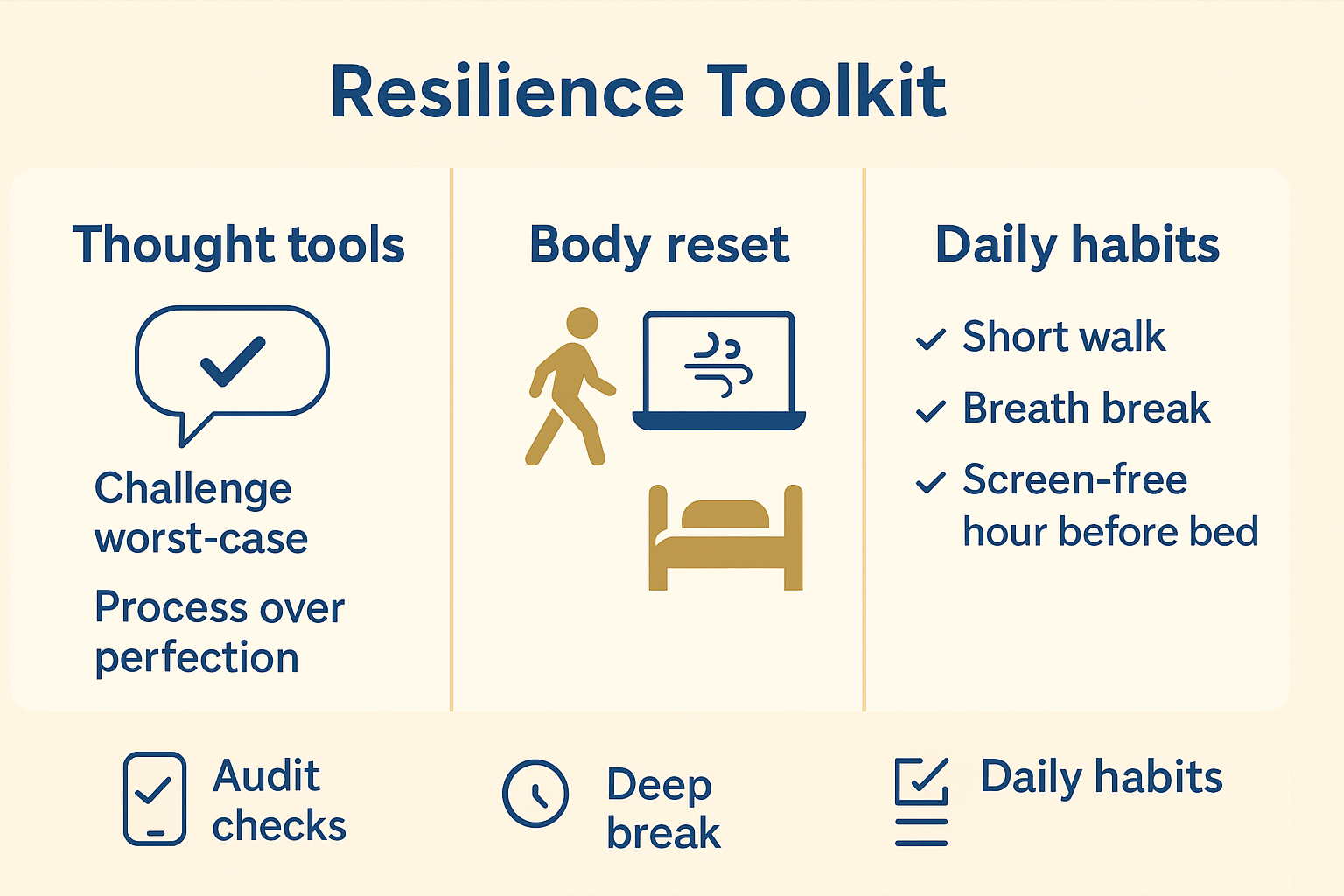
Managing Stress requires both mind tactics to change how you think and body tactics to keep your energy up. This entire section is your personal plan for staying well.
Reframing Thoughts for Resilience and Managing Stress
Safety pros often worry about “what if” scenarios. Therefore, changing your thoughts helps manage this fear.
- Challenge Worst Case Thinking: When you face a tough deadline, you might think, “If I miss this, the Regulator will close the building.” Challenge this: “What is the proof? The evidence shows I have a good plan, a capable team, and I told my boss about the risk. I will follow the plan.”
- Focus on Process, Not Perfection: The Safety Case goal is to show a strong safety system, not a risk free building. Because of this, aiming for perfection is impossible and adds to stress. Focus on making the process thorough and correct. This positive mindset shift lowers the fear of trying to do the impossible.
- Practise Self Compassion: Accept that your job is very difficult. Even when a mistake happens, and they will happen, see it as a chance to learn and improve the safety system, not a personal failure.
Physical Health: The Foundation of Focus
Your body’s health supports your mind’s resilience. In a still, high stress job, you must pay attention to this.
- The Power of Movement: Moving regularly (even a short walk at lunch) is key to releasing built up tension and stress. Schedule activity into your week, just like a building inspection.
- Mindfulness and Quiet: Use simple breathing exercises or apps to create quiet mental space during the day. In fact, just five minutes of focusing on your breath can reset your mind and stop stress from growing.
- High Quality Rest: Aim for good, regular sleep. Specifically, avoid looking at screens (especially work emails) an hour before bed. Good sleep is the most important factor in keeping your emotions stable and making good decisions.
Section 4: Your Professional Support Ecosystem
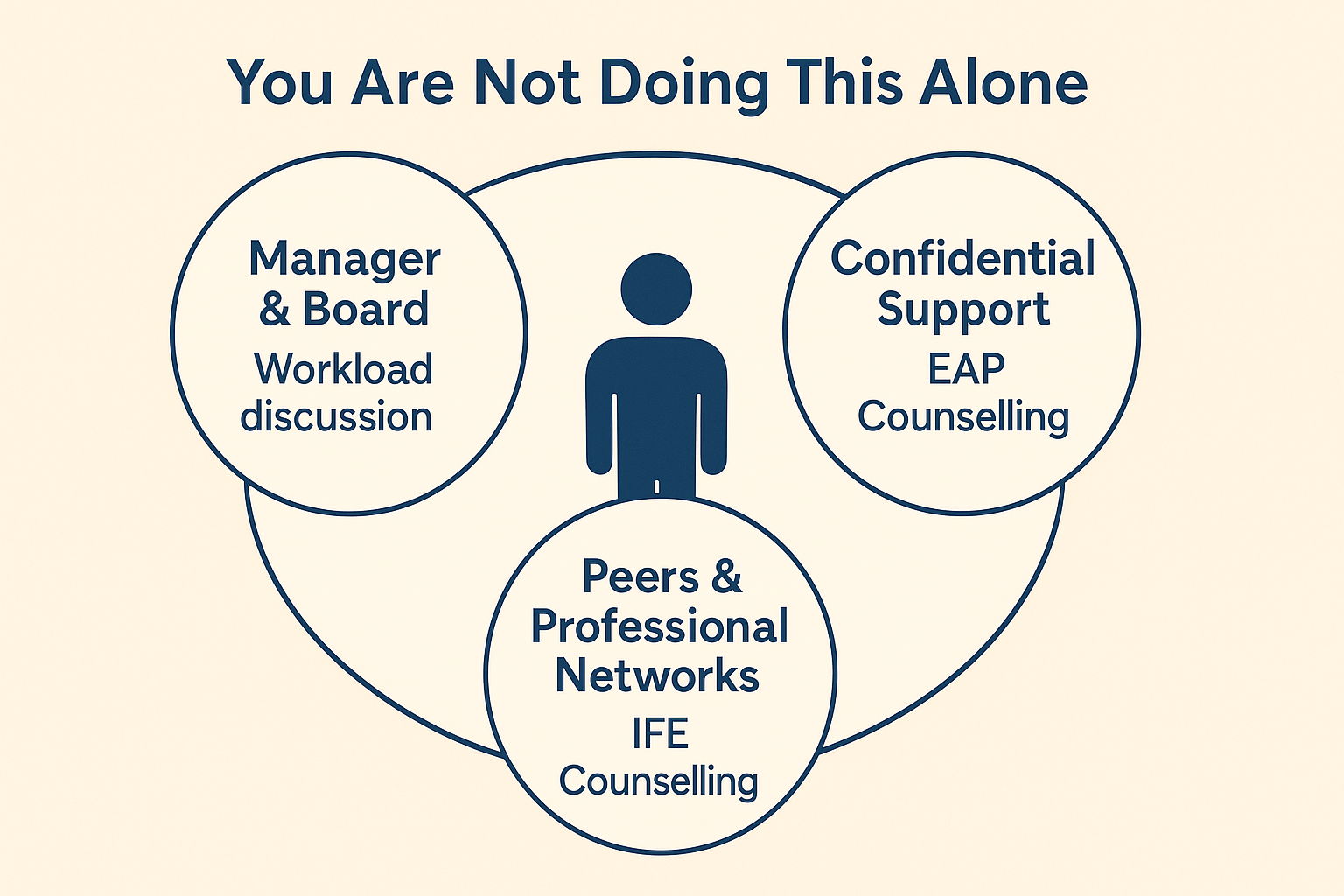
No professional should handle the weight of life safety alone. Thus, building a reliable support network is key for long term health.
Leveraging Confidential Workplace Support
Most large companies offer a secret Employee Assistance Programme (EAP). This gives short term help for worry, legal issues, or money problems.
- Confidentiality: EAPs are run outside the company, meaning that your boss does not know who uses the service or why. Therefore, use this for private stress, worry, or burnout help.
- Immediate Access: Use the EAP when stress is hurting your sleep, mood, or focus. Do not wait until you feel completely burned out.
Peer Mentoring and Professional Networks
Talking to others who understand the specific pressures of the BSA world is very helpful.
- Professional Networks: Join groups like the Institution of Fire Engineers (IFE) or local compliance groups. Sharing problems and solutions with peers, especially regarding new, confusing laws makes you feel less alone and gives proven answers.
- CPD and Mentoring: Find an older, trusted professional who has worked in high stakes compliance. Mentors offer vital outside advice on managing your career and dealing with difficult bosses. Furthermore, use your training sessions (CPD) for both learning and networking.
Addressing Workload Issues with Management
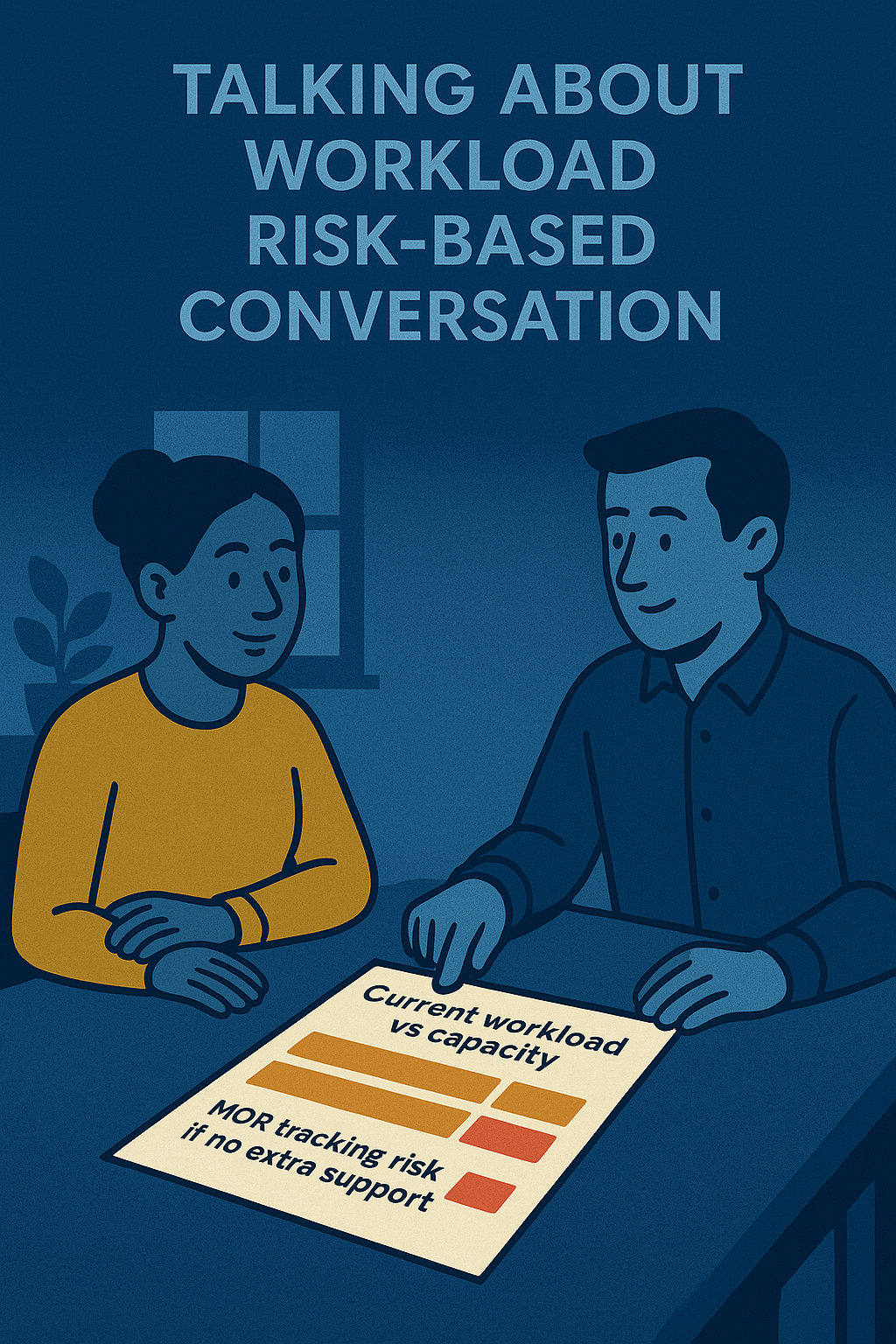
If personal stress is causing real workload issues or burnout, you must talk to your manager professionally.
- Document the Load: Before talking, write down your current work against what you can handle. Then, present the problem as a risk to the compliance plan, not a personal failure (e.g., “The current workload means I can’t track all MOR actions, creating a clear compliance risk.”).
- Propose Solutions: Always go to the discussion with suggested solutions. These should include prioritising tasks, moving non safety work to others, or asking for outside help for documents or audits.
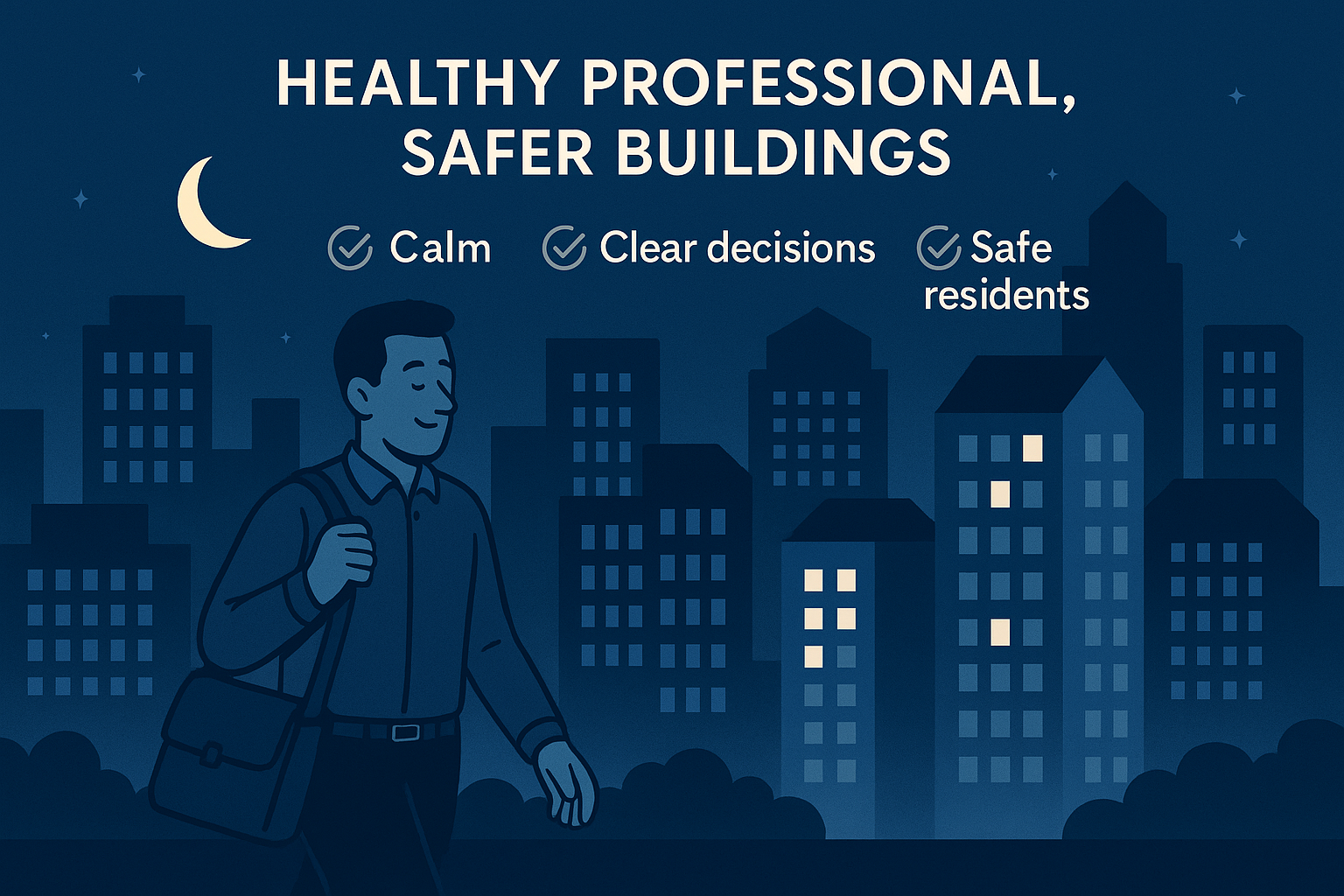
By actively Managing Stress, setting good boundaries, and using your support network, you keep your mind sharp. Ultimately, your ability to stay well is a critical part of meeting the high safety standards required in Building Safety.