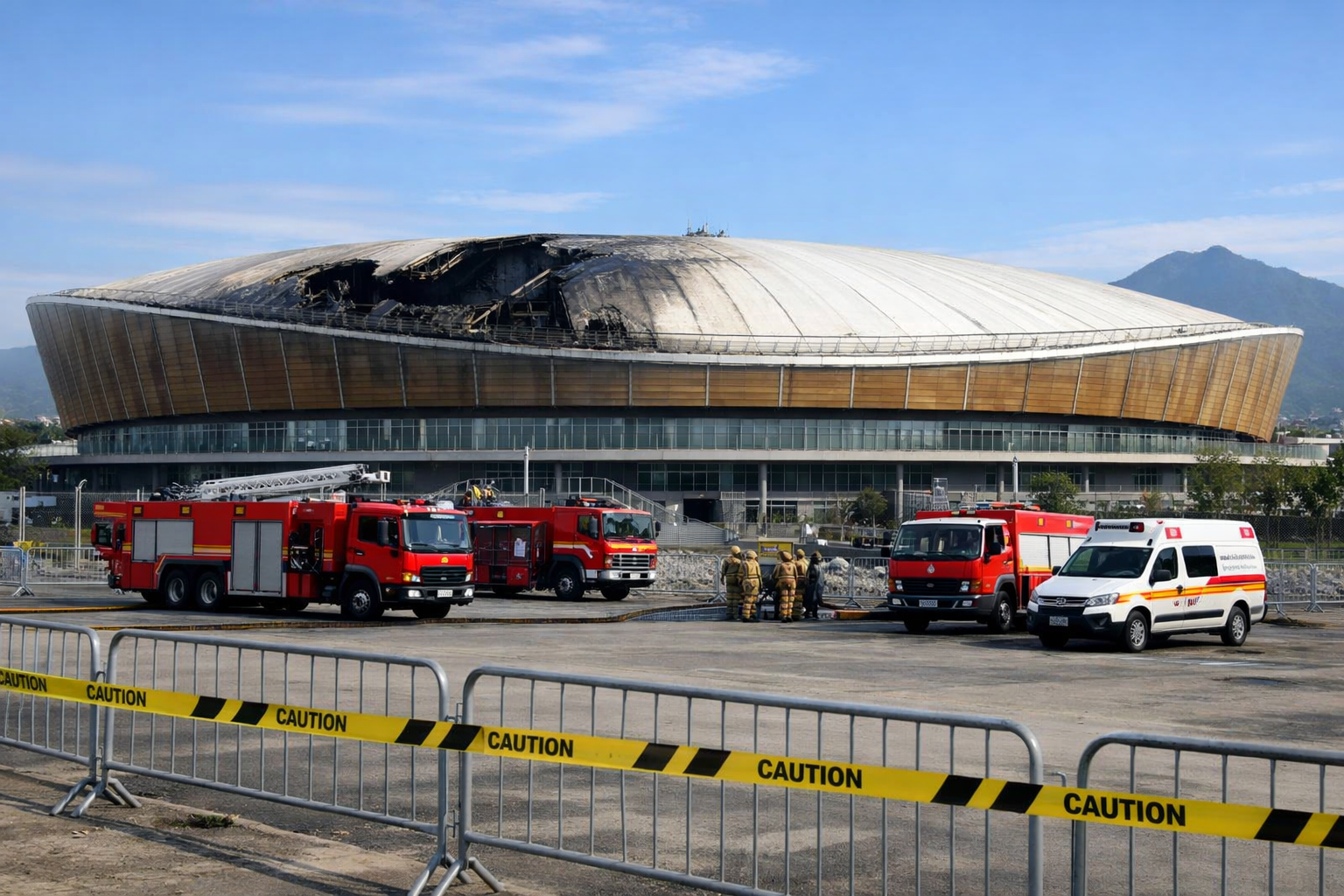
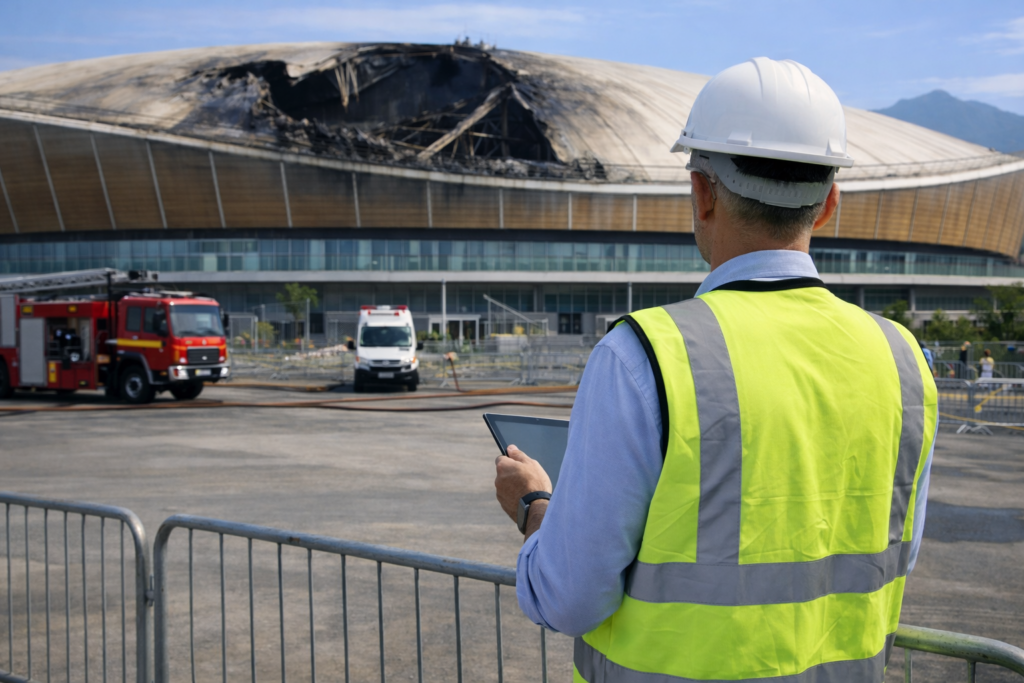
The recent fire at Rio’s Olympic Velodrome has raised serious questions about how specialist sports venues perform during a major incident. According to reporting from Reuters, AP News, and the BBC, the blaze broke out on 8 April 2026 at the velodrome in Rio’s Olympic Park, prompting a large emergency response but resulting in no reported injuries. Reuters also reported that around 80 firefighters and 20 fire trucks were sent to the scene after crews were alerted at 4:17am local time.
For building safety professionals, the incident is a useful reminder that lightweight roof systems and complex public venues can become highly vulnerable once fire reaches key elements of the building envelope.
A major emergency response
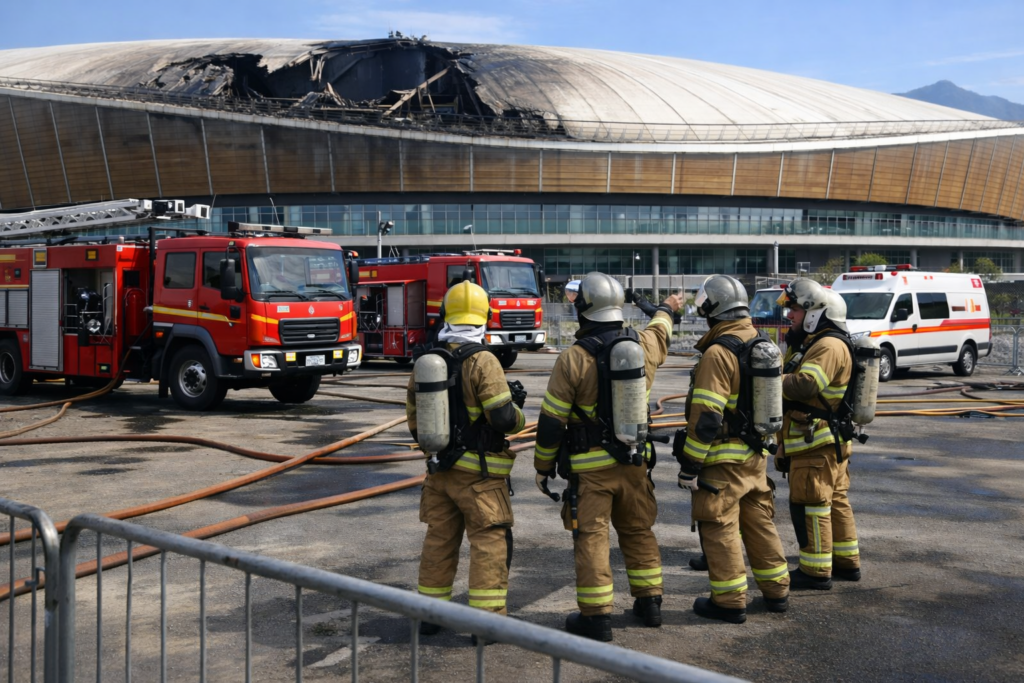
The response to the fire was significant. Reuters reported that firefighters tackled the blaze from both inside and outside the building, working to contain it and protect nearby assets, including items housed in the Olympic Museum. AP also reported that the fire was largely confined to the fabric roof and that the interior of the building remained mostly untouched.
That matters because large venues can demand a huge amount of emergency resource in a very short space of time, particularly where the building has unusual materials, a wide roof span, or a public legacy function. The most important outcome was that no one was hurt, but the damage to the roof appears to have been substantial.
Why the roof was especially vulnerable
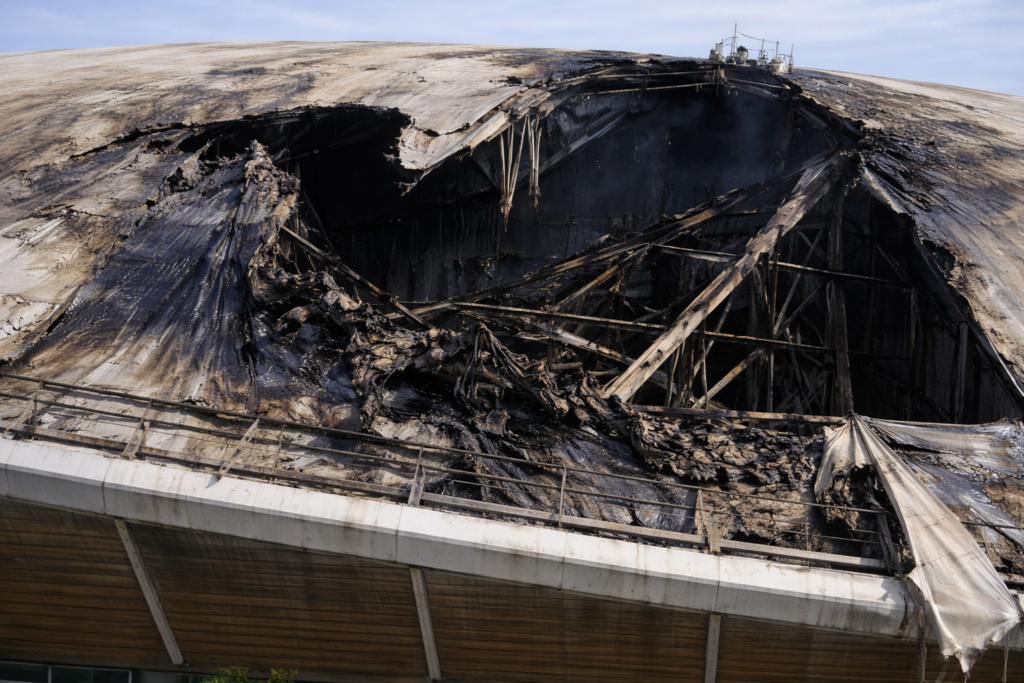
Early reporting suggests the fire mainly affected the velodrome’s fabric or canvas roof covering. Reuters reported that the blaze reached the canvas ceiling, while AP said the fire mainly affected the fabric roof of the venue.
That is significant because lightweight membrane systems can perform very differently from more conventional structural materials once exposed to sustained heat. In venues like this, the roof is not just an architectural feature. It is a critical part of the building’s overall fire performance and resilience.
For building safety professionals, the key questions will be familiar: how did the fire spread, how did the roof system behave under heat, and were the venue’s materials and fire strategy robust enough to limit wider damage.
A critical facility with wider importance
This is not just another public building. Reuters reported that the velodrome serves as Brazil’s largest and most prominent track cycling centre and is used as a training base for the country’s cycling and weightlifting teams.
That gives the incident wider significance. It is not only a fire in a notable structure, but a disruption to a specialist sporting facility with long-term operational value and symbolic importance as part of Rio’s Olympic legacy.
There were also concerns about nearby facilities. Reuters reported that firefighters worked to protect exhibits in the Olympic Museum, while AP said only a small portion of the museum’s collection suffered damage that could be repaired.
The track appears to have been preserved
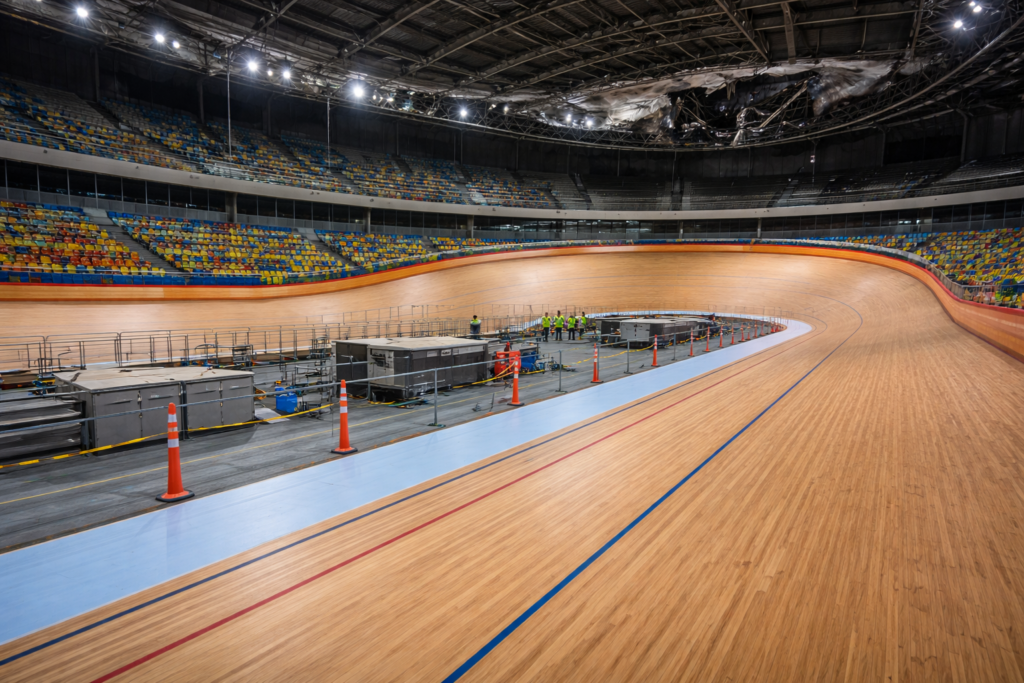
One of the more encouraging details to emerge is that the track itself appears to have survived the fire. AP reported that the structure and track remained unharmed, while Reuters said city officials described the velodrome and museum as only barely affected overall.
That is particularly important because velodrome tracks are highly specialised assets. Even when fire does not directly damage them, smoke, residue, heat, and moisture from firefighting operations can all affect their condition and future performance. Buildings, like institutions, tend to get complicated the moment anything catches fire.
What building safety professionals should take from this
For those working in building safety, fire engineering, and asset management, a few lessons stand out.
First, roof systems need close scrutiny.
Where a venue relies on tensile or lightweight membrane materials, fire performance must be properly understood, documented, and reviewed over time.
Second, fire strategy must reflect how the building actually behaves.
A design may work well on paper, but real fire behaviour can expose weaknesses in materials, access arrangements, suppression measures, or compartmentation.
Third, recovery planning is part of resilience.
Even when there are no casualties and the core structure survives, smoke contamination, repairs, cleaning, and technical checks can keep a venue out of action for longer than people expect. Reuters and AP both indicate that while the main venue elements were preserved, assessment and remedial work are still required.
Looking beyond the cleanup
The bigger lesson from the Rio velodrome fire is that major public assets need more than reactive repair. They need ongoing inspection, realistic fire risk planning, and a clear understanding of how specialist materials will perform under stress.
For the building safety sector, this incident is another reminder that iconic buildings are not immune to basic risks. In fact, their complexity often makes proper maintenance and risk management even more important. Humans do love building impressive things and then acting offended when inspection schedules matter.
Original source articles
- BBC Sport: Olympic velodrome fire article
- Reuters: Fire at Rio Olympic Park velodrome brought under control, no injuries reported
- AP News: Fire breaks out at Rio de Janeiro Olympic Park velodrome; no injuries reported
Career Opportunity: Shape the Future of Fire Engineering
Are you an experienced fire engineering professional ready to lead complex safety strategies on major projects? We are currently recruiting for a Head of Fire Engineering role with a leading firm in London.
This is a full-time opportunity offering a competitive salary and the chance to work on high-profile schemes where strong fire strategy, sound judgement, and technical leadership really matter.
Apply now: Head of Fire Engineering | Full-Time | London | Competitive