The Building Safety Regulator (BSR) recently published new rules for staged building control approval. This update changes how developers in England manage their projects. Previously, only massive sites with several towers could use this route. Now, the BSR allows single-tower projects to apply as well. This change helps you plan your construction phases more effectively. However, you must follow the rules exactly to stay compliant. You cannot start any work until the BSR approves your specific stage.
What is Staged Building Control Approval?

Normally, the BSR expects you to submit all plans before you start. They call this the “full application” route. However, big projects often have moving parts. These parts make a single submission difficult. The staged building control approval process lets you submit your design in sections. For example, you can get approval for the foundations first. Then, you can submit the details for the rest of the building later.
The BSR now offers this path to more developers. Even if you only have one tower, you can request a staged approach. Still, the BSR prefers full applications for most buildings. You should only choose stages if your project is truly complex.
New Rules for Single Towers

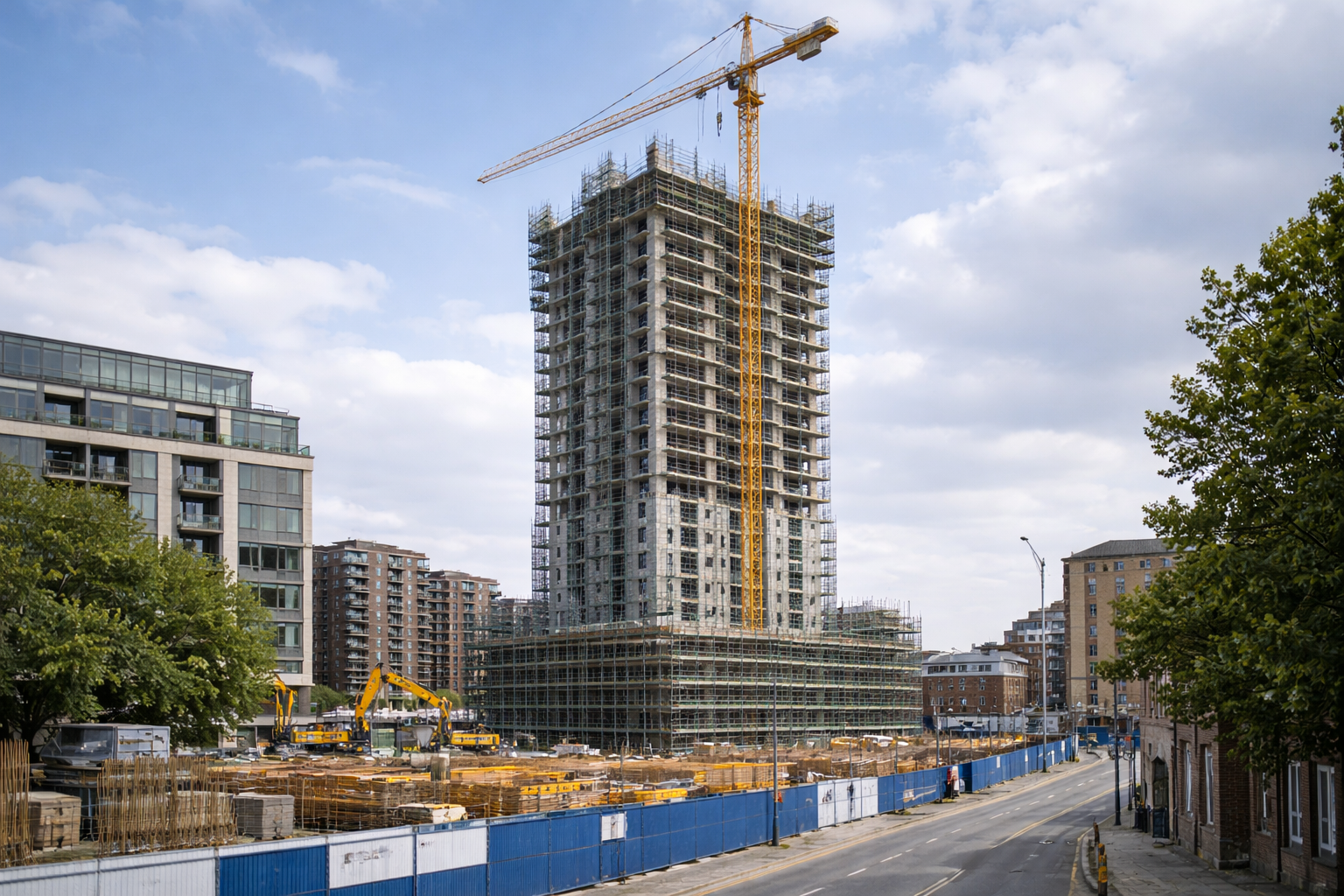
If you manage a single-tower project, you must meet a high bar. Your first stage must be substantial. You cannot just submit plans for “site prep” or “piling.” The BSR guidance states that Stage One must be complete. It must include:
- The complete foundations of the tower.
- The entire structure of the ground floor level.
This means your team must finish these designs early. You must prove the building is safe from the ground up. Once the BSR approves Stage One, you can begin work on the site. But remember one thing. You cannot build the floors above until the BSR approves Stage Two.
Understanding the New “Commencement” Rules
The GOV.UK update clarifies when a project “commences.” This is a vital legal milestone. If you do not reach commencement on time, your approval might expire.
For standard buildings, you reach commencement once you finish the foundations and the ground floor. However, the rule changes for staged building control approval projects. For these complex sites, the BSR counts the project as “commenced” when you finish the first stage of the first building. This clear definition helps developers track their legal deadlines.
Strict Rules: Do Not Start Work Early
The BSR enforces a “hard stop” policy. You must not start any construction work without approval. You need the BSR’s written sign-off for that specific stage. This rule includes even minor site tasks. If you start too early, you break the law. This can lead to heavy fines or site closures.
If you are building multiple towers, contact the BSR before you apply. They offer a helpful pre-application service. We strongly recommend using it. During these meetings, you can show them your “staging plan.” This document lists every stage you want to submit. It also shows your expected timeline. Early talk with the BSR prevents costly delays later.
How to Prepare Your Information

The BSR also updated how you should organise your data. They expect high-quality, digital submissions. Every staged building control approval application must include:
- A Staging Plan: A clear map of every future application.
- Compliance Statements: Proof that current work will not affect future safety.
- Fire Safety Plans: A full strategy for the entire building. You need this even if you are only on Stage One.
The BSR will reject messy or incomplete files. Rejections pause your project and cost you money. Therefore, you must ensure your “Golden Thread” of information is ready and accurate.
Conclusion: A Focus on Planning
These updates are a positive step for the construction industry. They provide the flexibility that complex builds need. But this flexibility requires more discipline from your team. Whether you build one tower or five, the staged building control approval path demands a perfect plan. Follow the new BSR guidance to keep your project moving and your occupants safe.