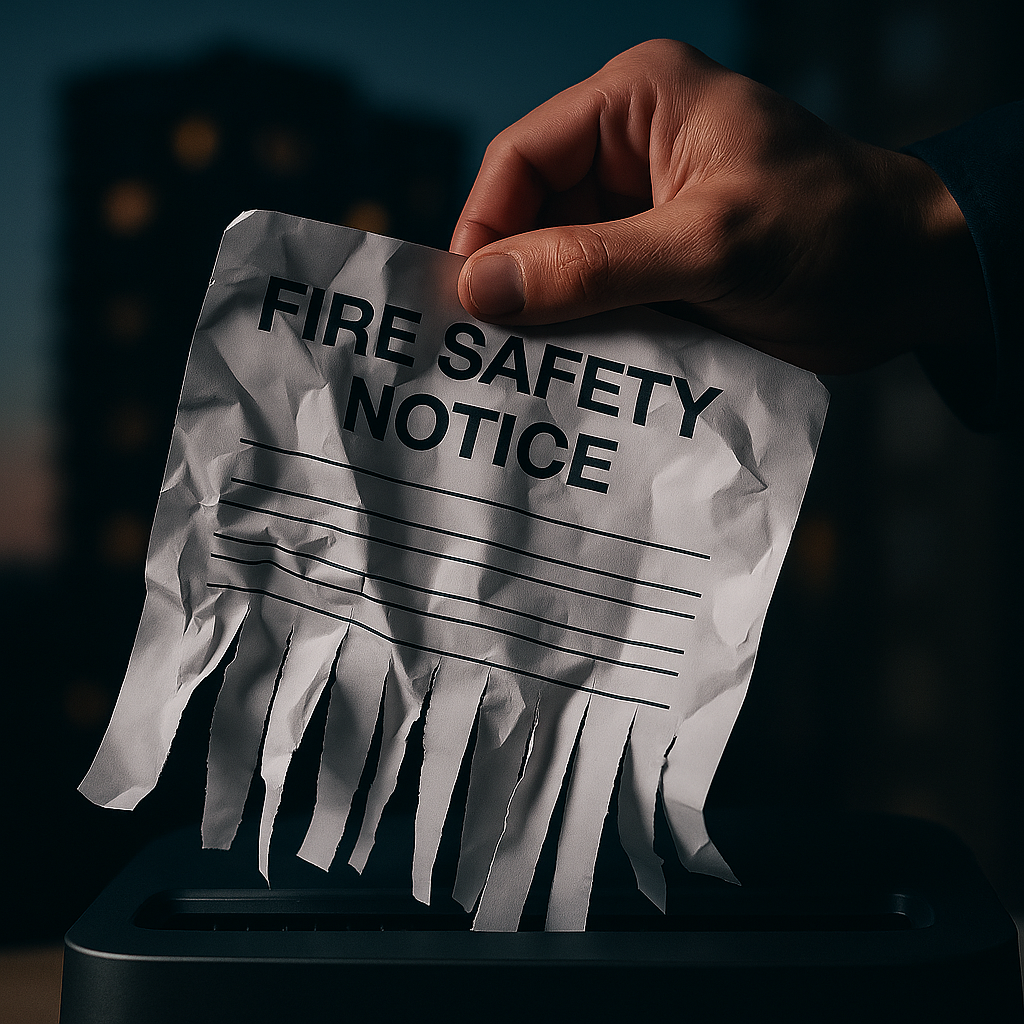
The news about a UK housing manager is shocking. This manager reportedly told staff to hide a key Fire Safety Notice. In addition, they also asked staff to fake safety papers. Clearly, this act shows a total failure of Building Safety Governance.
The manager gave one clear order: “Don’t tell anyone.” Indeed, this proves a bad work culture existed. Worse yet, protecting the company was more important than keeping people safe.
Ultimately, this event is a huge wake-up call for all fire safety workers. It warns building managers and Accountable Persons (APs). Therefore, this case proves that the new rules in the Building Safety Act 2022 (BSA) are needed. In short, responsibility must be absolute.
We must study this problem carefully. It shows the weak system that the BSA aims to fix. Specifically, this article will look at the reported actions. Furthermore, we will check them against UK fire safety law. We will show the legal duties that the Responsible Person (RP) and the new AP must follow. Only strong Building Safety Governance can stop such dangerous mistakes.
Governance Culture Failed: Rules Broke Down
Good Building Safety Governance has three main pillars. They are Skill, Openness, and Responsibility. However, the actions reported—hiding a notice and faking documents—break all three.
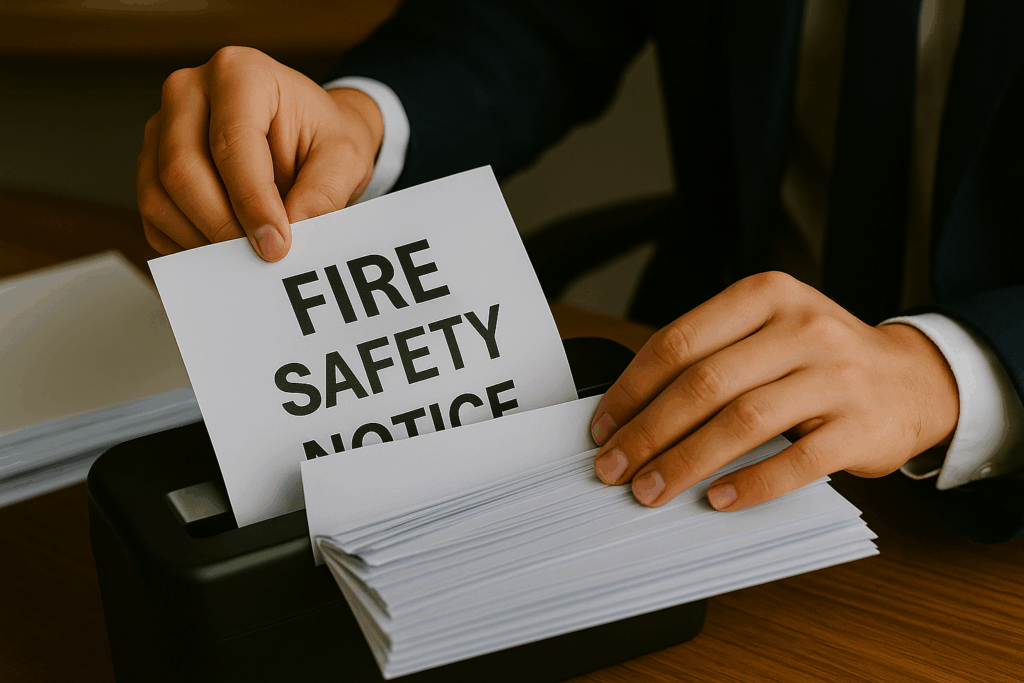
A Fire Safety Notice is a legal order. Specifically, the Fire and Rescue Service (FRS) issues this notice. It highlights major faults or demands quick repairs. Consequently, when managers hide this paper, they stop safety work. They leave residents facing known dangers. As a result, the serious risks are not fixed.
Even worse, the request to “fake fire safety files” is a major lie. The Fire Risk Assessment (FRA) documents are the plan to save lives. In fact, making up this record is very dangerous. It is a clear act of deception. Moreover, it creates big doubts about how risky the building actually is.
This behaviour also goes against the BSA’s most important rule: the Golden Thread of Information. The Golden Thread requires a continuous, accurate record of safety data. To illustrate, the AP, the Building Safety Regulator (BSR), and the residents must be able to see it. Importantly, the Golden Thread’s goal is simple. It makes it legally impossible to hide safety data. This forces honest Building Safety Governance.

Legal Governance: The Duty to Be Open
The reported actions are serious breaks of UK fire safety law. This includes the Regulatory Reform (Fire Safety) Order 2005 (FSO). In addition, it includes changes from the Fire Safety Act 2021 (FSA) and the BSA.
Governance Failure: FSO Rules Broken
The Responsible Person (RP) is the building owner or manager. By law, they have legal duties under the FSO. These duties include:
- The Duty to Check Fire Risk (FSO Article 9):
- Faking a file means the FRA is not “right” or “enough.” Therefore, it gives a false idea of the building’s true safety. Ultimately, this is a crime.
- The Duty to Act on Safety (FSO Article 11):
- Management hid the safety notice. In other words, this stopped the FRS’s required fixes from being done. So, the fire risk stayed a danger.
- The Duty to Tell Staff (FSO Article 19):
- The order to “Don’t tell anyone” put staff at risk. Similarly, staff must have full details about fire risks. This harms both residents and the staff.
New FSO Rules: Hiding Safety Data Is Criminal
First, the BSA made the FSO stronger in October 2023. Because of this, these changes make honesty a legal duty for all RPs of blocks of flats.
- Telling Residents: RPs must now share key fire safety information with residents. It must be easy to read. For instance, a safety notice is clearly “key information.” As a result, hiding it breaks this new FSO rule.
- Keeping Good Records: The RP must now write down the entire Fire Risk Assessment. Furthermore, they must name the person who wrote it. Crucially, this rule stops people from faking or changing files. It creates stronger Building Safety Governance.
Trying to hide the notice and change the files is a criminal act under the FSO. This can lead to big fines. What’s more, it could also lead to jail time for the people involved.
The BSA Rule: Individual Safety Responsibility
The Building Safety Act 2022 was made to stop this exact problem. Specifically, the Act puts a clear, constant burden on the Accountable Person (AP). This applies to high-rise buildings (HRBs) that are occupied (seven floors or 18m and above).
Dishonesty Fails Governance and Management Rules
The AP’s main legal job is to create a Safety Case Report. Basically, this report formally proves to the BSR that the AP has:
- Checked all risks (like fire spread or structural failure).
- Done everything reasonable to manage these risks.
- Set up good safety systems.
If a company fakes safety files, their Safety Case Report is useless. Consequently, it becomes a lie. Because of this, the AP breaks the BSA rules right away. The BSR will check the honesty of all the data very closely. A Safety Case based on lies will face strong action from the BSR.
Personal Risk: You Will Be Held Accountable
The BSA has clear rules for how an AP must manage risk. For one thing, the AP must have a Resident Engagement Plan. This plan gives residents clear safety information. In effect, it lets them help with safety choices. However, the manager’s order to silence staff ignored this legal rule completely. This is a complete failure of Building Safety Governance.
Finally, the BSA also puts senior people at risk.
- Jail Time: The Act puts duties on Duty holders (the AP and others). People who fail to follow the rules or block the BSR can face criminal charges. Clearly, a manager who tells people to hide papers risks being put on trial under the BSA’s strong new powers.
Professionals: Upholding Building Safety Governance Ethics
For professionals in this field, this incident changes your job. It is not just about ticking boxes. Instead, it is about risk oversight and being an ethical protector.
The Ethical Protector of Building Safety Governance
Skill now includes professional ethics and honesty. As a result, this is as vital as knowing the technical rules.
Every safety worker must follow one rule. Specifically, their main duty is to resident safety. This is more important than being loyal to any manager who asks for illegal actions. For example, true skill means being ready to:
- Say No and Report: Never agree to change records or hide notices. Simply put, this is what a professional must do.
- Write It Down and Escalate: Record all bad orders. Then, report them through safe channels. If needed, tell the BSR if the company does not take action.
- Use the Golden Thread: Use digital systems to make sure safety data is always true. This action stops managers from acting in secret.
Today, the market needs more than just staff who follow orders. Instead, it needs risk leaders who can stand up for Building Safety Governance. These people must be the moral backbone of their company.

Action Plan: Fixing Management and Building Safety Governance Culture
Every housing provider must see this scandal as a call to action. They must check their own safety culture and systems right away. Certainly, waiting is very dangerous. It could cause a tragedy.
Audit Step: Checking Governance and Safety Gaps
The first step must be a full, independent check of all safety files. This check must be deep and detailed. In fact, it must go past quick surface checks. It should:
- First, Check the Data: Make sure safety records match what is actually in the building (e.g., check maintenance logs against door inspections).
- Second, Check Notices: Make sure every notice from the FRS or BSR has been recorded and fixed.
- Finally, Check Staff Culture: Use private staff surveys. Then, see how employees feel about ethical leadership. Check if their systems for reporting safety concerns work.
Culture Change: Strengthening Building Safety Governance
This failure starts with company leaders. Therefore, the safety culture must change from the top down. Actions must focus on creating good Building Safety Governance:
- For instance, Zero Tolerance: State clearly that trying to hide data or falsify records will mean immediate firing and possible criminal charges.
- Pay for Openness: Spend money on digital systems that support the Golden Thread. This investment will make sure all safety data is logged and checked. Ultimately, it closes all loopholes.
- Give Power to Safety Staff: Make sure the Head of Safety or the Accountable Person’s team has direct access to the Board. Consequently, this makes safety a main Building Safety Governance issue.
Final Word: Safety Is Not Optional
The news story—the shocking order to keep a fire safety notice secret—ends the old, careless system.
The Building Safety Act is not just a new law. Rather, it is a new standard for ethics and operations. Therefore, it requires strong Building Safety Governance. This means complete openness, constant responsibility, and proven skill.
For every safety professional, your job is clear: You are the protector of your building’s truth. Moreover, you must put systems in place. These systems must make the command “Don’t tell anyone” impossible to follow. The safety of millions of residents depends on your honesty.