Your Quick Start Interview Guide for Building Safety Jobs
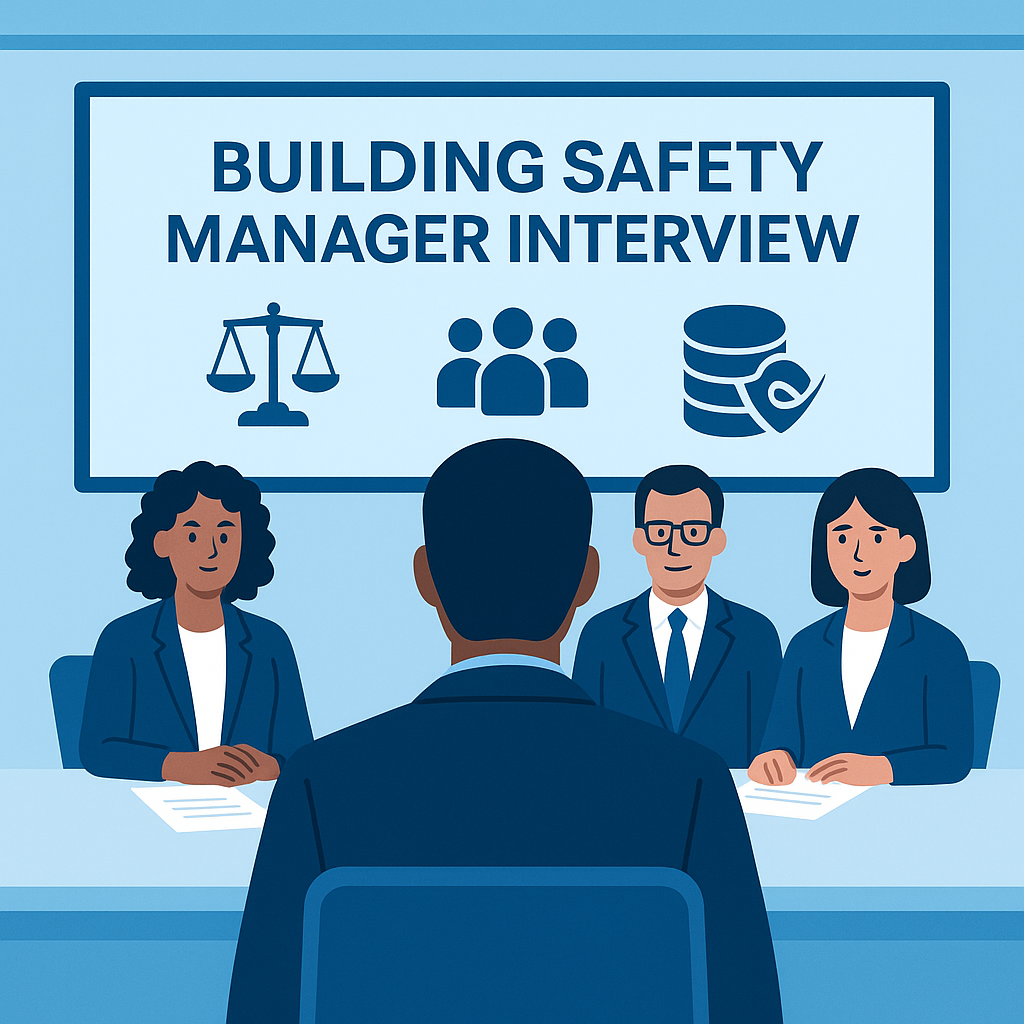
Preparing for a building safety Interview can feel hard, even for pros. The sector is changing fast. New laws, like the Building Safety Act and Awaab’s Law, set high expectations. Employers now want candidates who know compliance. Furthermore, they must show leadership, good judgment, and strong communication skills.
This guide will help you prepare. You will get tips for technical, behaviour, and scenario based Interview questions. It also includes sample answers using the STAR method (Situation, Task, Action, Result). Crucially, these are tailored for safety and compliance roles. Finally, it ends with an “Interview Cheat Sheet”—a quick list to review before the big day.
Section 1: What Employers Want in a Building Safety Interview
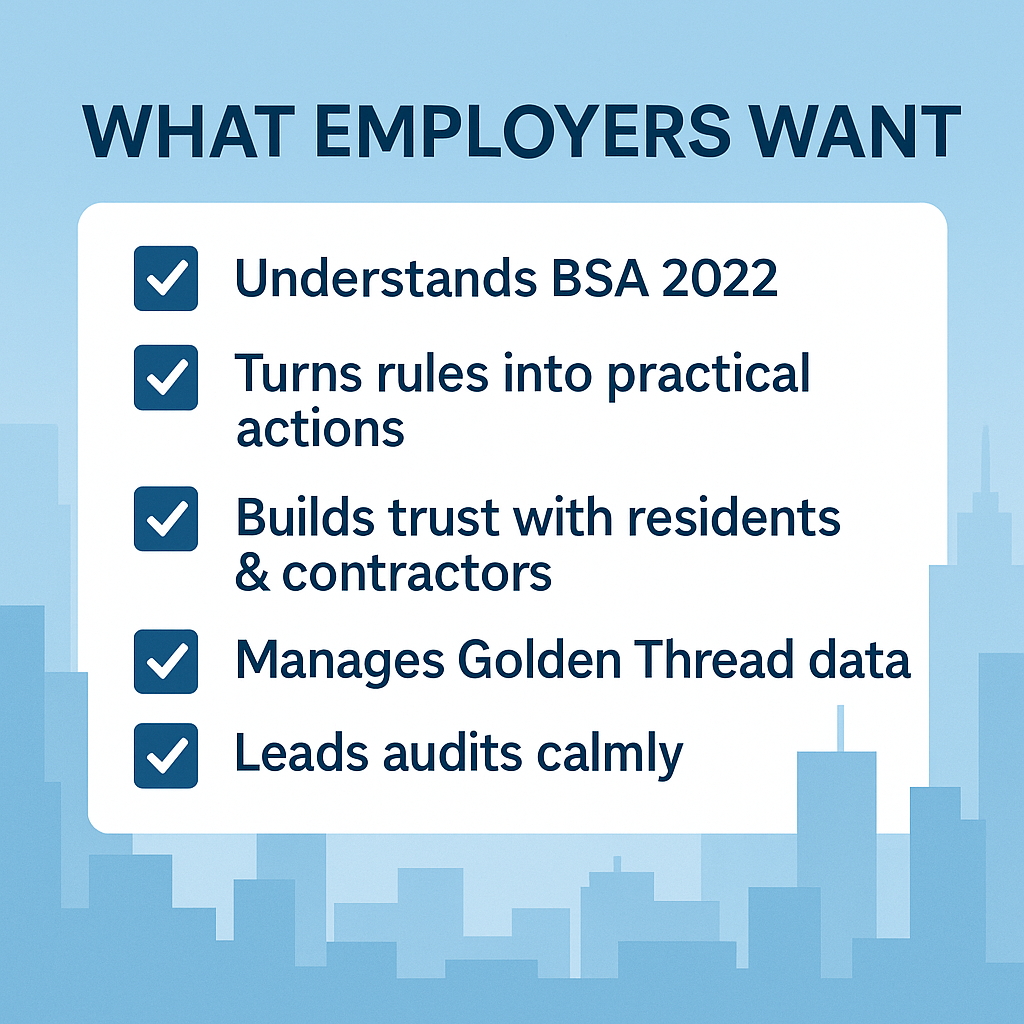
Before looking at specific questions, you must know what hiring managers seek. Therefore, understanding this is key.
Employers in all sectors (housing, developers, consultants) want people who can:
- Show they understand the Building Safety Act 2022.
- Turn complex rules into simple, practical actions.
- Build trust with residents, contractors, and regulators.
- Manage data using the Golden Thread system.
- Lead safety audits and handle incidents calmly.
Recruiters also watch your personality and approach. Being calm, professional, and clear matters just as much as technical skill.
Section 2: Technical Questions for Your Interview
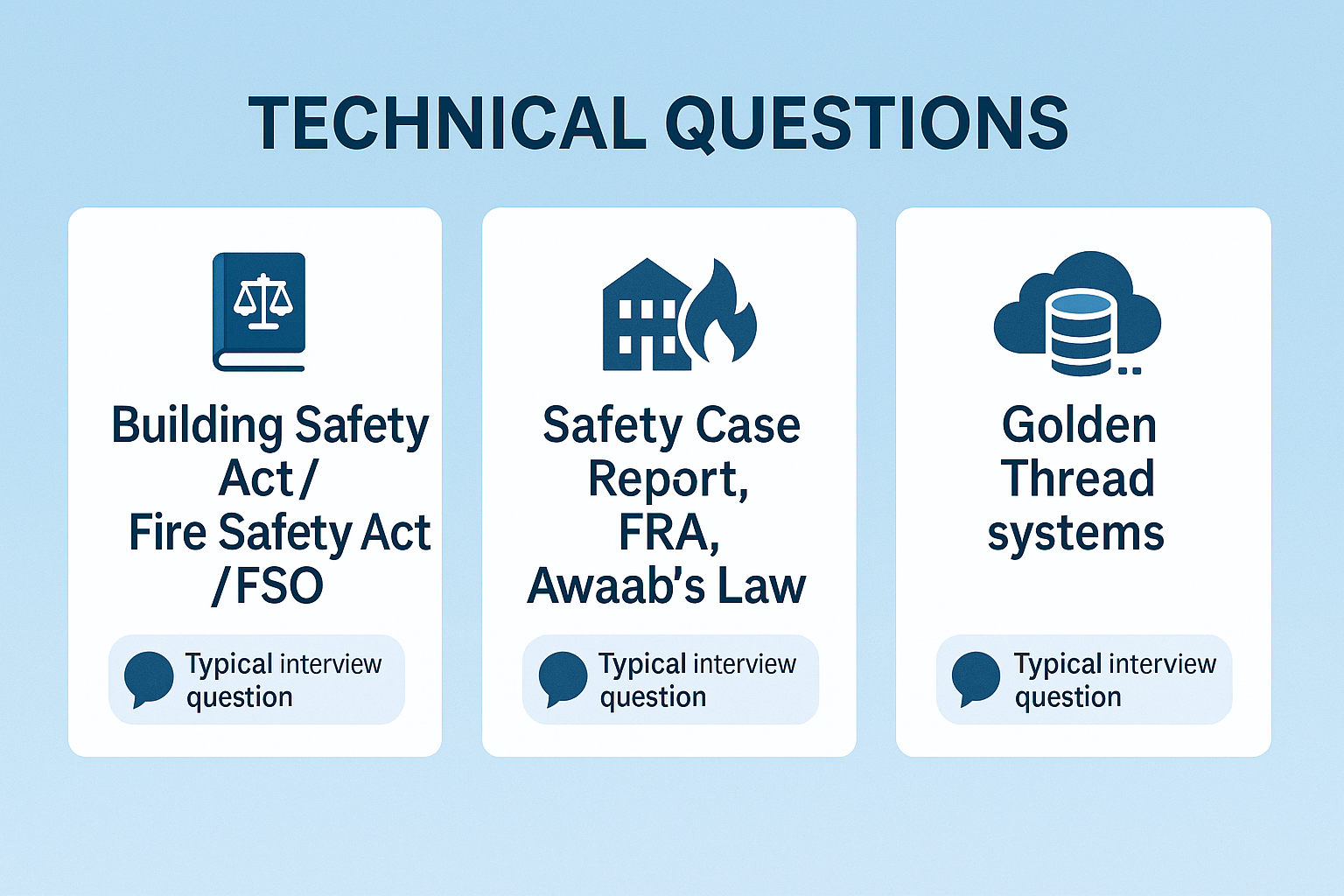
Technical questions test your knowledge of UK safety systems and laws. You do not need to memorise every rule. However, you must show you know the main safety frameworks.
Below are examples of questions you may face, along with tips on how to respond.
Example 1: “Can you explain the Golden Thread of information?”
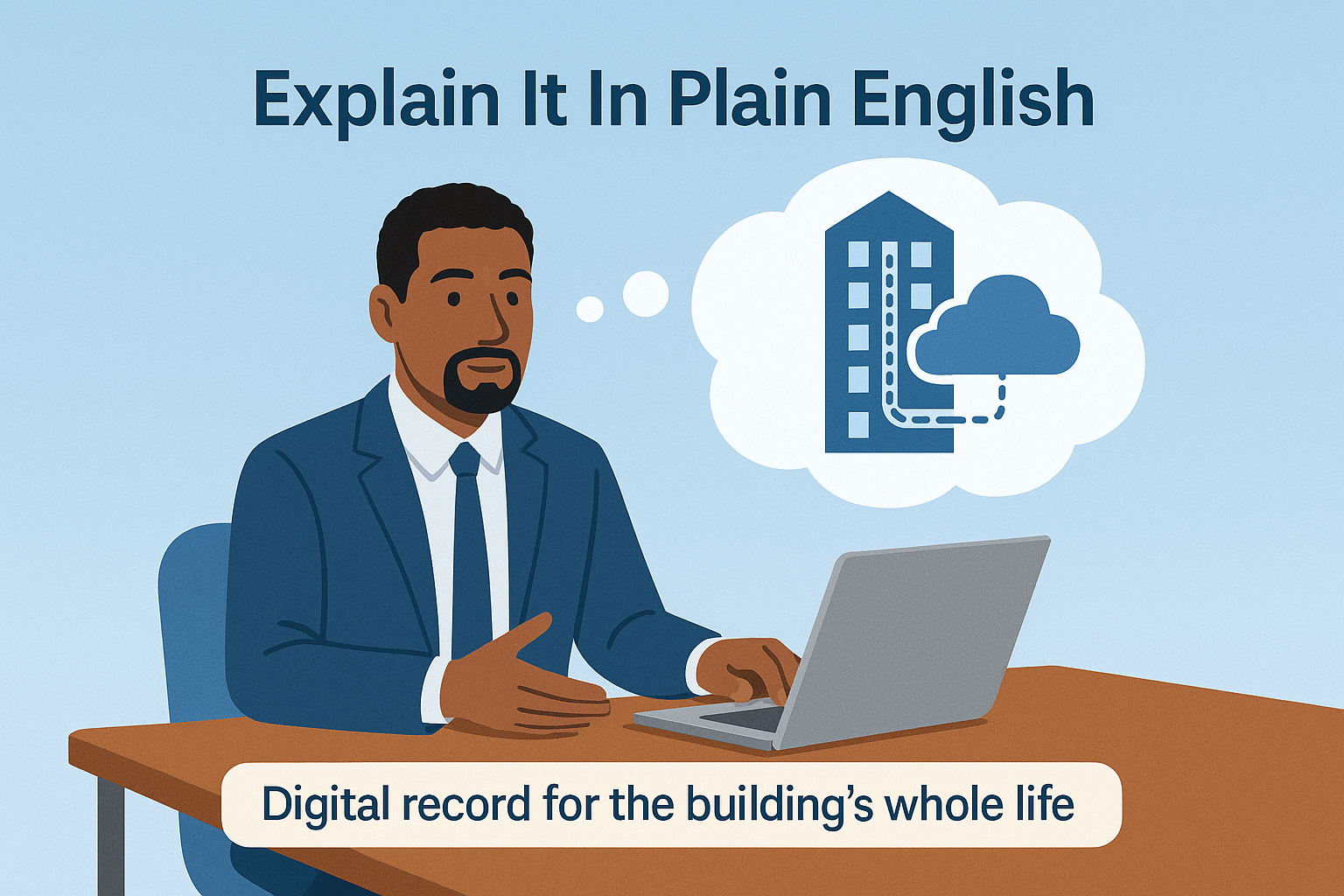
Explain it is a digital safety record. This record stays with the building for its entire life. Also emphasise that it ensures accountability, transparency, and easy access to correct data for everyone.
Tip: Moreover, mention tools you have used to manage the Golden Thread, like SharePoint or specific compliance software.
Example 2: “What is a Safety Case Report?”
Describe it as a structured report. This report shows the Regulator the building is safe to occupy. Highlight that it must include proof of risk management, maintenance, and resident engagement.
Tip: If you have helped write one, briefly outline your specific role and the result.
Example 3: “What laws govern fire safety in residential buildings?”
Mention key laws: the Building Safety Act 2022, the Fire Safety Act 2021, and the Regulatory Reform (Fire Safety) Order 2005. Discuss how they connect and how you use them daily.
Tip: Always keep your answer focused on how you use this knowledge in practice.
Example 4: “How do you approach a Fire Risk Assessment (FRA)?”
Outline your process: find hazards, assess the risk, record findings, and implement actions. Mention working with competent assessors. Also, ensure the records are available through the Golden Thread.
Tip: Show you know the different FRA types (Type 1 to Type 4) and when each is needed.
Example 5: “How do you ensure contractor compliance?”
Discuss how you check their competence, review their work plans, and monitor their actions. In addition, emphasise communication, regular audits, and holding contractors to high safety standards.
Tip: Use an example of finding a fault and how you fixed it.
Section 3: Scenario Questions in Your Interview
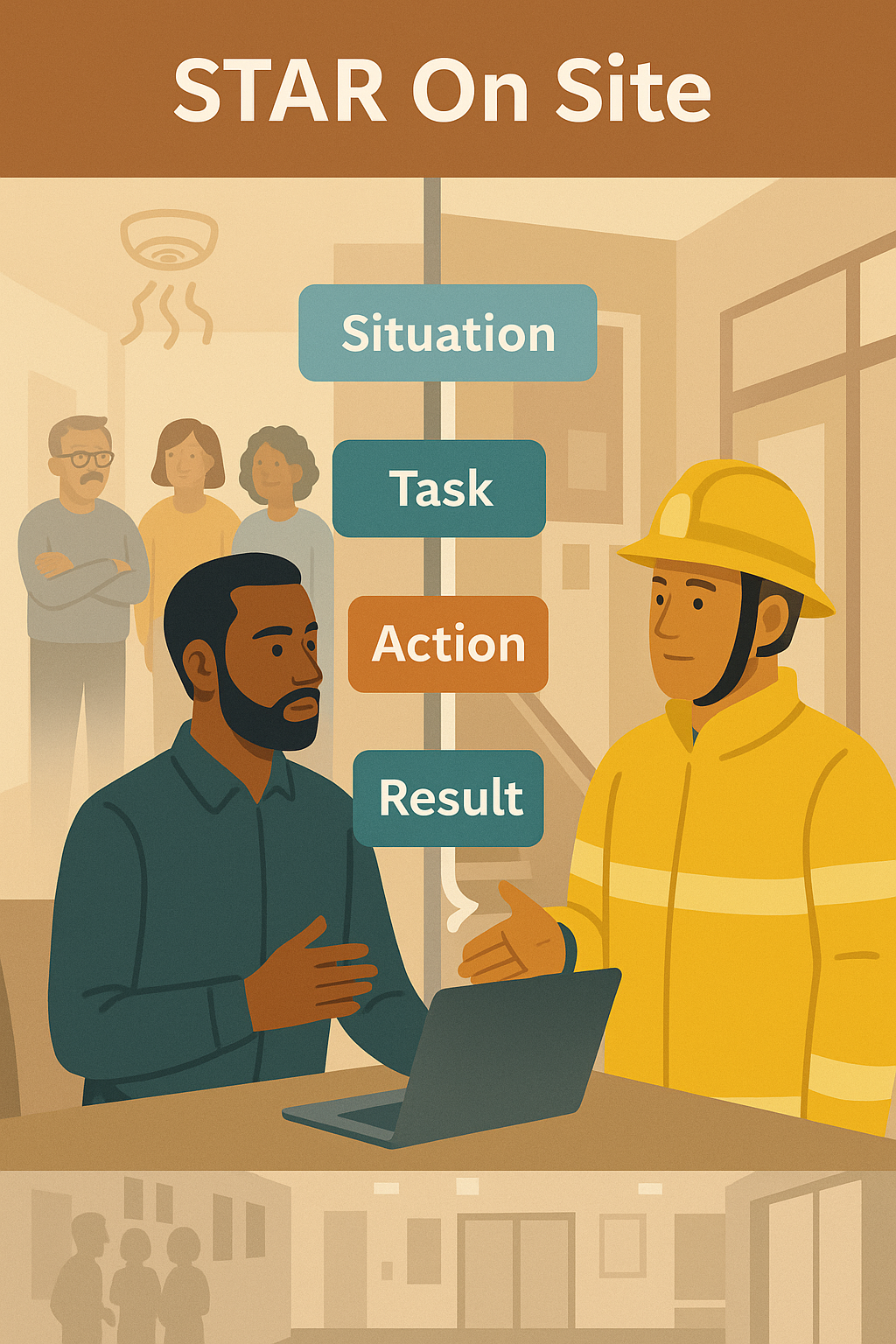
Scenario questions test how you use your knowledge in real life situations. They show the employer your decision making process. Crucially, they show how you stay calm under pressure.
Therefore, use the STAR method to answer clearly and show structured thinking.
Example 1: “A resident reports smoke from a communal area. What do you do?”
- Situation: Smoke was reported in a block of flats.
- Task: I needed to ensure residents’ safety and quickly find the source.
- Action: I told the concierge to raise the alarm. Furthermore, I called the fire service. Meanwhile, I checked the nearest plant room while talking to residents.
- Result: The issue was minor (overheating electrical equipment). The system was isolated. Residents felt safe. Maintenance rules were updated to stop it happening again.
This shows quick thinking and control under pressure.
Example 2: “You discover missing safety certificates. What steps would you take?”
- Situation: During a safety audit, I found that key inspection certificates were missing.
- Task: My job was to find or replace the documents and fix the audit gap.
- Action: I contacted the contractor to ask for copies. Then, I verified the data. Finally, I logged the information into the Golden Thread. In addition, I reviewed other files to find similar gaps.
- Result: We passed the audit. Consequently, I started a regular file check procedure. This reduced missing documents by 90%.
This shows accountability and a proactive approach.
Example 3: “How would you handle resistance from contractors?”
- Situation: A contractor refused new permit to work rules for high risk jobs.
- Task: I needed to ensure compliance while keeping a good working relationship.
- Action: I arranged a short meeting. I explained the legal reasons for the new rule. Also, I provided written support to help them adjust.
- Result: The contractor complied. Moreover, the process improved communication across the team.
This highlights communication, leadership, and diplomacy.
Section 4: Behavioural Questions for Your Interview
Behavioural questions help employers see how you deal with challenges and stress. They also check how you work with others.
These questions usually start with “Tell me about a time when…” Always use the STAR method to structure your responses.
Question 1: “Tell me about a time you managed a safety audit failure.”
- Situation: During an internal audit, our fire door records were incomplete.
- Task: My task was to fix the issue quickly before the external inspection.
- Action: I worked with the maintenance team to verify every door. Then, I updated records. Finally, I implemented a tracking spreadsheet with reminders for future checks.
- Result: The follow up audit passed easily. Therefore, the new system became permanent.
This shows you learn from mistakes.
Question 2: “Describe a time you explained complex safety information to non-technical people.”
- Situation: Residents were worried about cladding repair. They did not understand the process.
- Task: I needed to explain the work clearly to build trust.
- Action: I created a short, simple guide. In addition, I held a drop in meeting. Finally, I invited the fire consultant to answer questions.
- Result: The meeting reduced complaints by 70%. Furthermore, residents felt much safer about the work.
This highlights communication and emotional intelligence.
Question 3: “Give an example of when you found a safety risk others missed.”
- Situation: While checking maintenance logs, I saw repeated faults in smoke extraction fans.
- Task: I had to check if the issue was serious.
- Action: I reviewed the issue with the contractor. We found the same part was replaced repeatedly, but never fully repaired.
- Result: We changed suppliers. Consequently, performance improved. We avoided a potential failure during an audit.
Employers value people who are observant and analytical.
Section 5: The STAR Method Explained
The STAR method helps structure your Interview answers. This way, you stay focused and relevant.
- S – Situation: Describe the background briefly.
- T – Task: Explain what you needed to achieve or fix.
- A – Action: Outline what you personally did (not your team).
- R – Result: End with a clear, positive outcome.
When used properly, STAR turns vague answers into clear stories. In turn, these stories show your competence.
Section 6: Tips for Interview Success
- Do Your Research: Read about the company, its buildings, and its public reports. Mentioning their challenges shows real interest.
- Know Your Numbers: Bring statistics from your experience. For example, reduced audit failures or improved compliance rates.
- Link Everything to Safety: Even when discussing soft skills, explain how your actions improved safety or resident confidence.
- Show Regulation Knowledge: Use correct terms like “Accountable Person” or “Safety Case Report.”
- Ask Smart Questions: End by asking questions like: “How do you support ongoing professional development?” This shows curiosity and long term thinking.
Your Interview Cheat Sheet
Use this section for a quick reference before any building safety Interview.
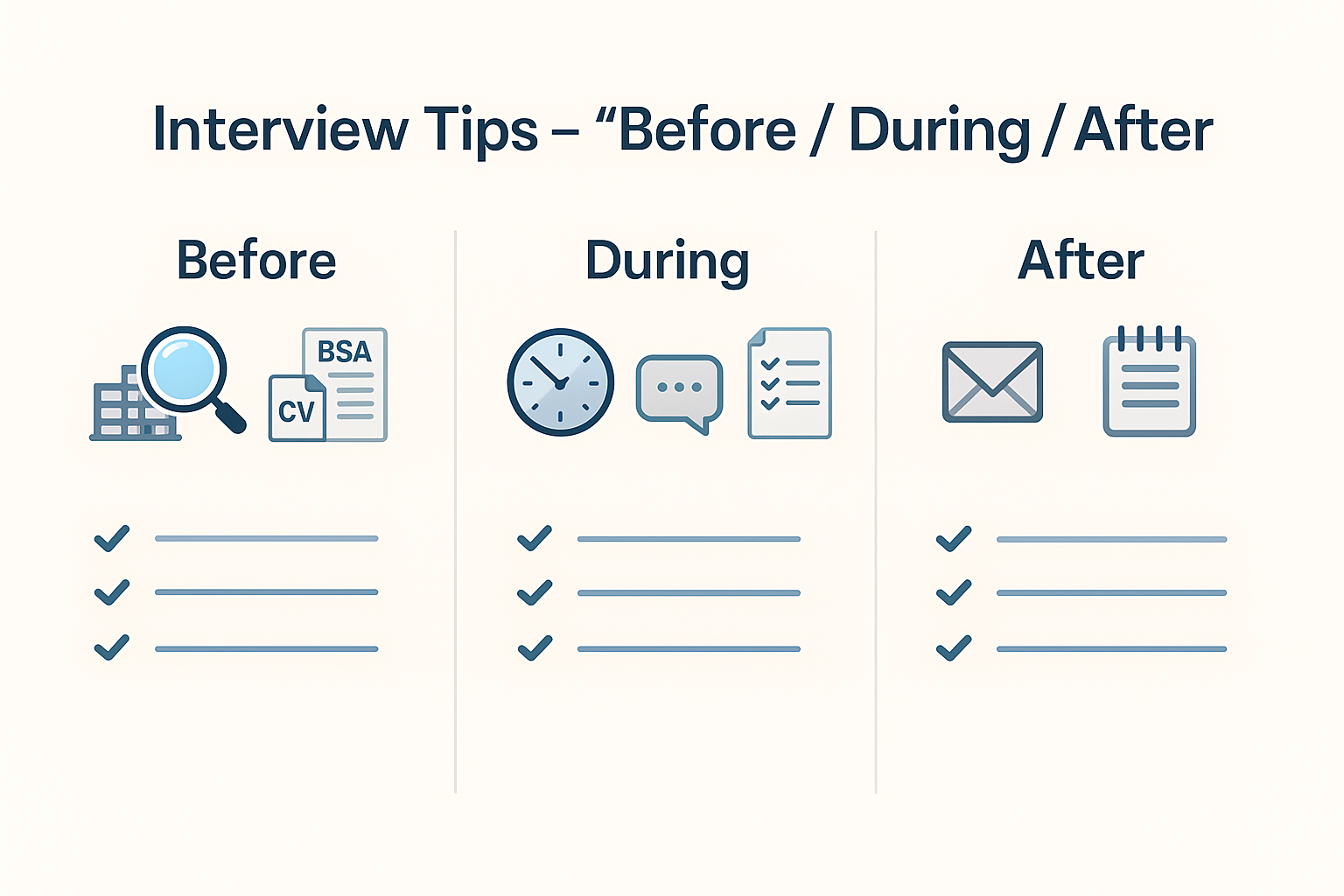
Before the Interview:
- Research the company’s approach to safety.
- Review the BSA, Fire Safety Act, and relevant PAS standards.
- Prepare three STAR stories showing leadership and technical skill.
- Furthermore, double check examples where you solved problems.
- Print your CV, certificates, and reference letters.
During the Interview:
- Take a breath before answering questions—do not rush.
- Structure answers using STAR (Situation, Task, Action, Result).
- Keep answers under two minutes unless asked for more detail.
- Show excitement for continuous learning.
- Ask thoughtful questions about the company’s culture.
After the Interview:
- Send a short thank you email within 24 hours.
- Reconfirm your interest and mention one point you enjoyed discussing.
- Finally, reflect on what went well and what to improve next time.
Common Pitfalls to Avoid
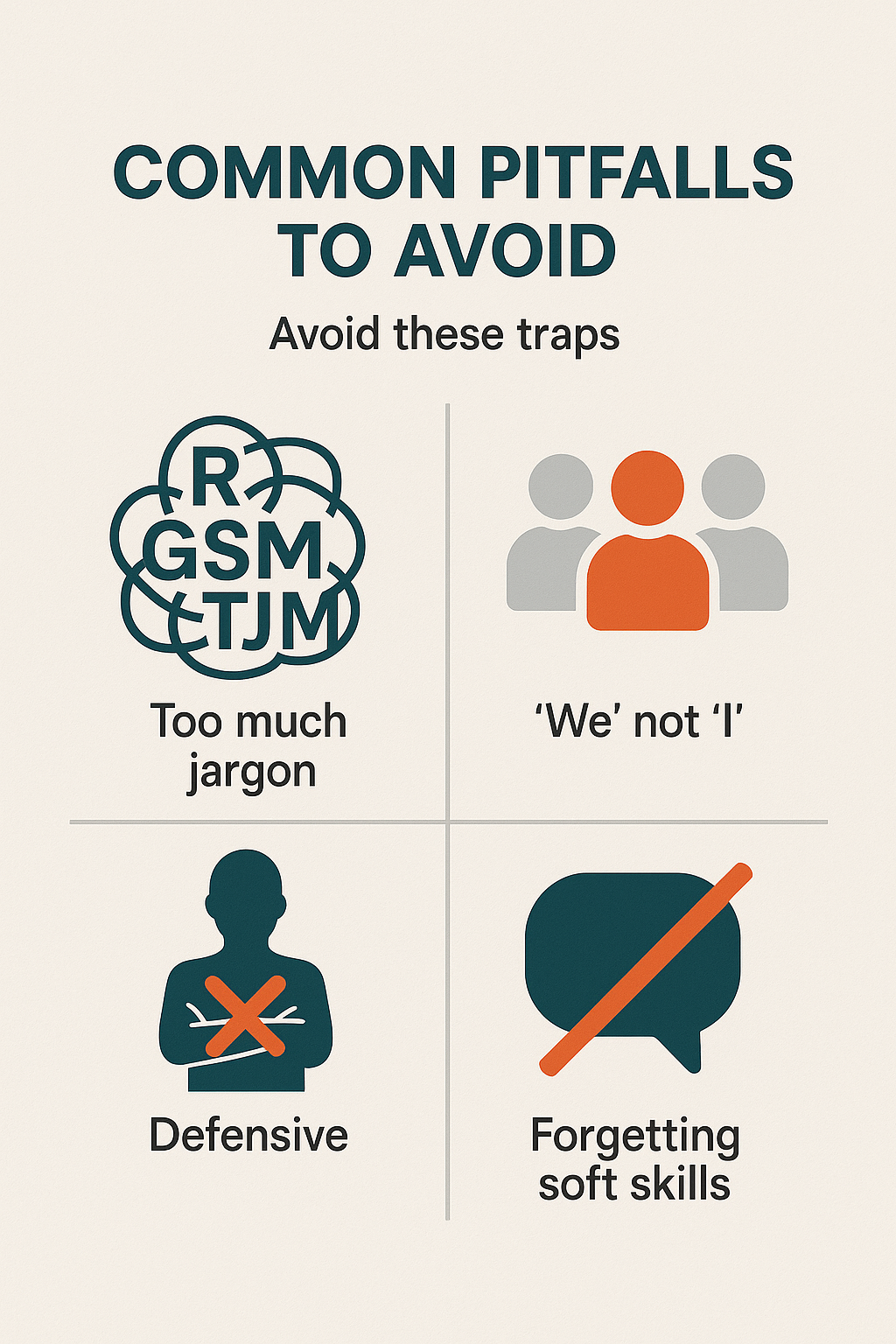
Even experienced candidates make mistakes. Therefore, know how to avoid these common ones.
- Overusing Jargon: Do not use too many acronyms unless you explain them. Show you can talk clearly to everyone.
- Talking Too Much About “We”: Interviewers want to know what you personally did. Consequently, highlight your actions.
- Being Defensive: Everyone makes mistakes. Instead of hiding them, explain what you learned and how you changed your approach.
- Ignoring Soft Skills: Communication and leadership are as important as technical knowledge.
Final Thoughts
The building safety sector is vital and fast moving. Whether you are aiming for a BSM or a Compliance Lead role, preparation will set you apart.
Also, by practicing technical questions, preparing strong STAR examples, and showing clear understanding of the Building Safety Act, you will stand out as a credible pro.
Remember: employers are hiring for judgment. Show that you can think clearly, act decisively, and keep people safe, and you will position yourself as the candidate every organisation wants to hire.