A Quick Start Guide to Maximising Your Salary and Benefits Negotiation
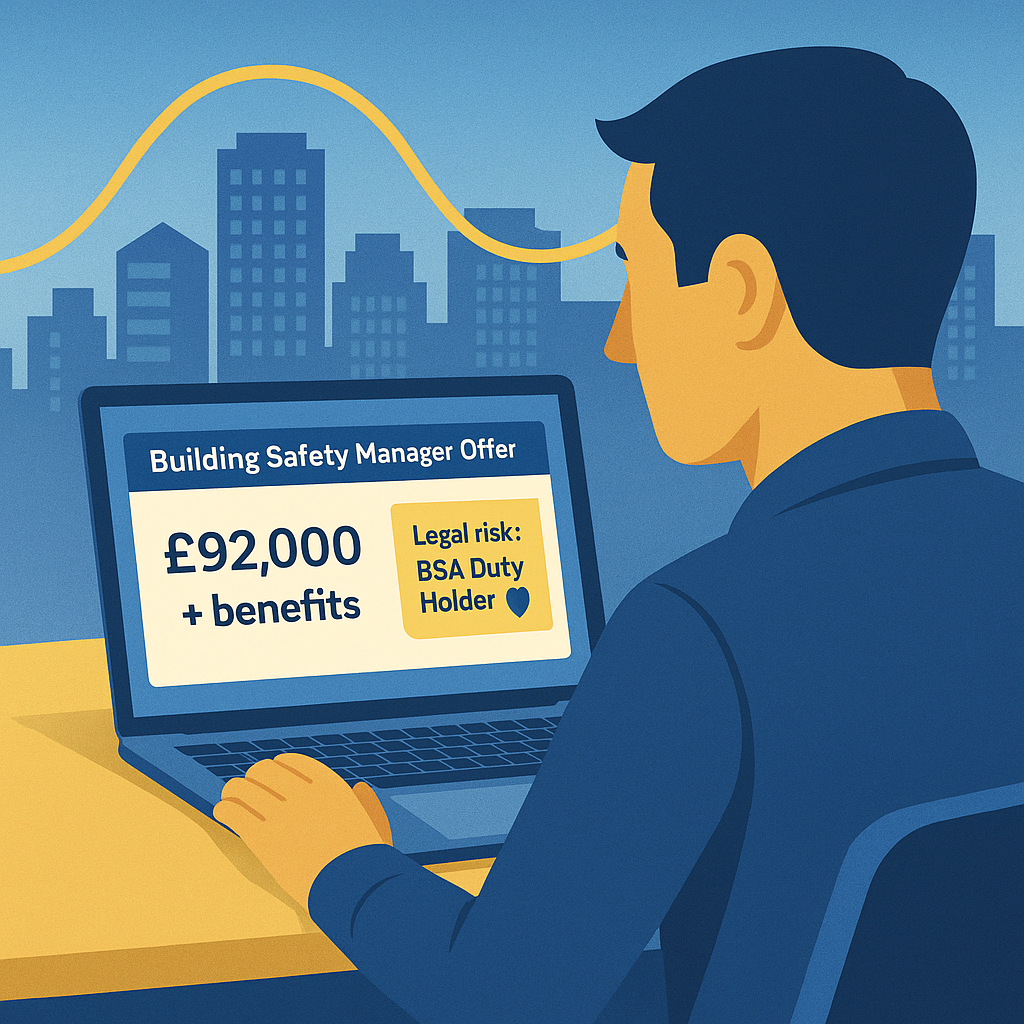
You have years of experience. You have earned the right qualifications. Now, you are ready to lead in UK building safety. You may be moving into a senior role, perhaps as a Building Safety Manager (BSM). The final step is to negotiate your total Salary and Benefits package.
The Building Safety Act (BSA) 2022 means your expertise is worth a lot. Therefore, your value is not just measured by years worked. Instead, it is measured by the high legal risk you take on. The market needs proven safety pros. Consequently, your pay, including your Salary and Benefits, must match this high demand and high risk.
This guide will help you negotiate a package that pays you fairly for this legal risk. Crucially, it helps you get non salary resources. These resources keep your professional knowledge up to date, which the Regulator (BSR) requires. Ultimately, this protects both you and the employer.
Section 1: Pricing Your Value and Salary and Benefits
Your negotiation must be based on facts. These facts must show the legal and technical demands of the job. Therefore, know the market rate for high risk jobs before you start talking.
1.1 The High Pay for BSA Roles
The BSA creates new legal duties. This means you should be paid much more than for old roles. When talking pay, clearly link your Chartered Status (or PAS alignment) to reducing company risk. In short, your competence gives the employer safety assurance. Similarly, you must charge for that assurance.
1.2 Specific Role Benchmark Data
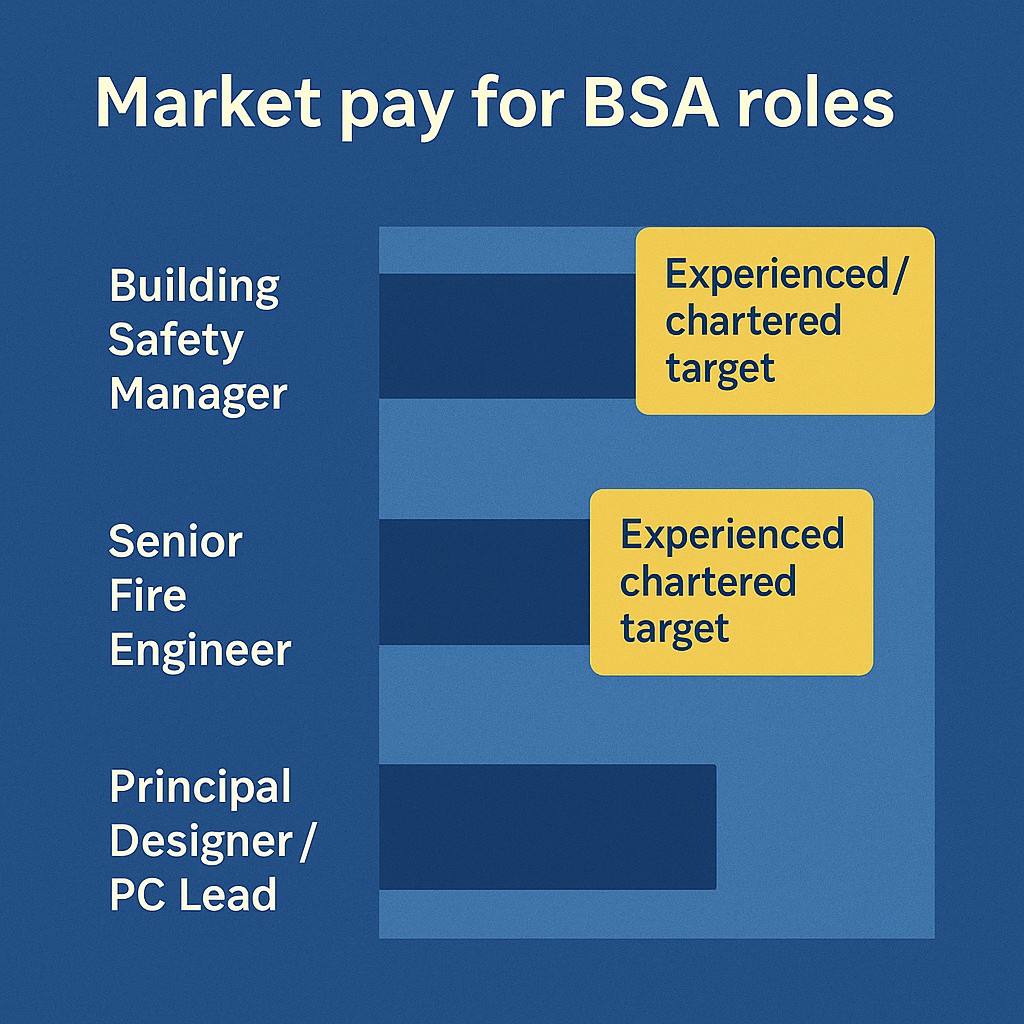
Pay changes by location (London pays more) and company type. However, clear pay ranges are emerging for BSA roles. Experienced pros should aim for the top end of the market. In addition, this reflects the heightened risk.
- Building Safety Manager (BSM): BSMs who manage the Safety Case often start near £75,000. They can earn over £100,000.
- Senior Fire Engineer: This job handles the technical core of the Safety Case. Experienced engineers should expect £85,000 to over £120,000.
- Principal Designer (PD)/Contractor (PC) Lead: These roles carry huge legal liability during construction. Pay starts around £80,000 and can rise to £125,000 or more.
1.3 How to Use Chartered Status in Your Salary and Benefits Talk
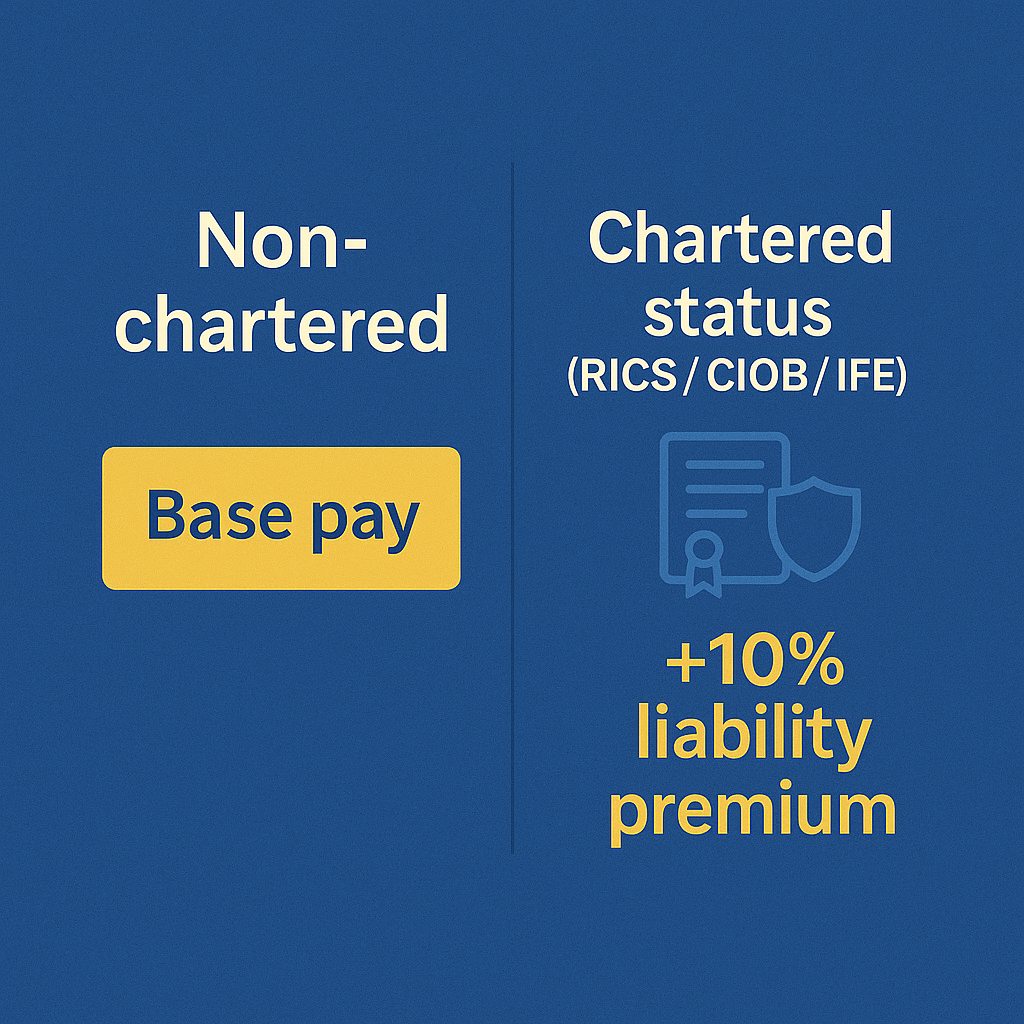
Your professional license is your best tool. If you have Chartered Status (RICS, CIOB, IFE), ask for at least a 10% pay rise over non-certified staff. Furthermore, this is market standard.
When you send your counter offer, state clearly: “My pay request of £X includes the market rate for a Chartered Engineer. This is because I am taking on the technical liability needed for this role.”
1.4 Market Research: Aim High
Never trust just one salary report. Instead, use three reliable sources (recruiters, industry guides) to find a full pay range.
- The Uplift Target: Moving to a BSA Duty Holder role? Aim for 15% to 20% more than your last salary. This uplift covers the extra risk and current market scarcity. Go into talks with a precise number, not a vague range. This is much more effective.
Section 2: Breaking Down Your Total Salary and Benefits
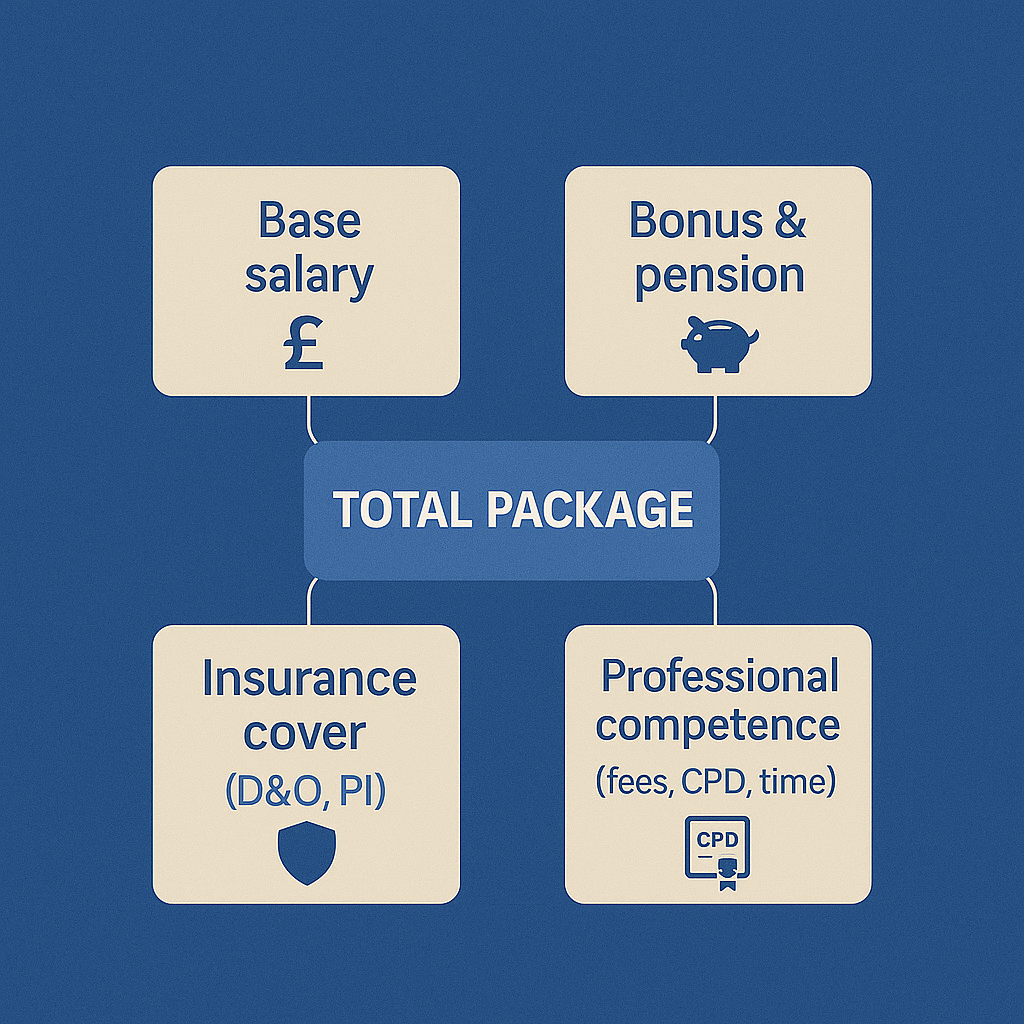
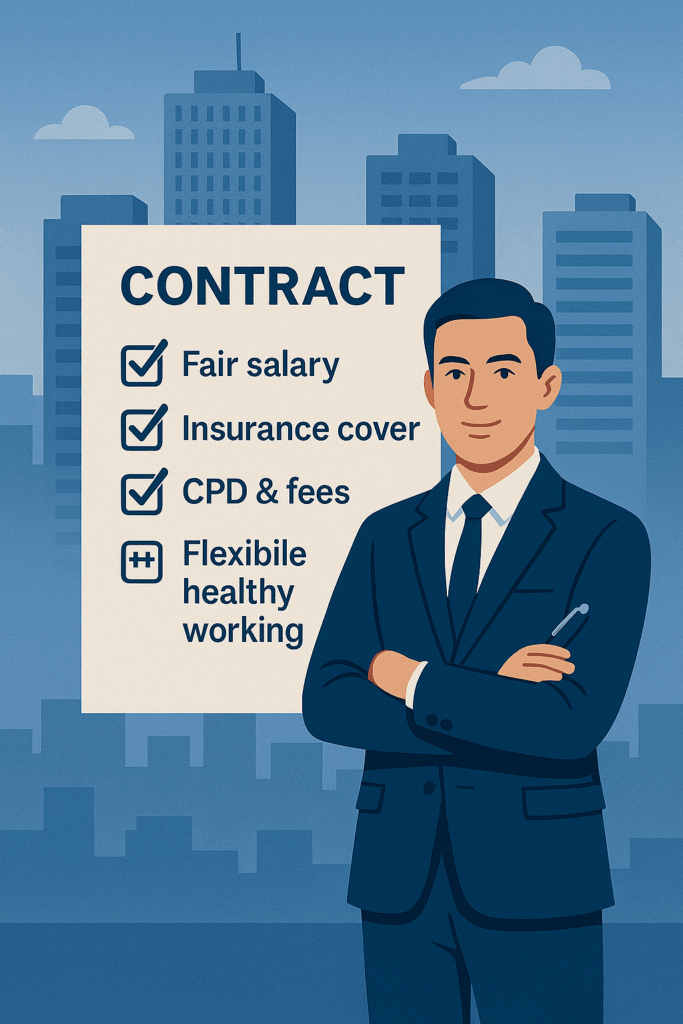
A safety pro in a BSA role needs dedicated, funded resources. Negotiating these benefits is not just asking for extras. Rather, it is getting the tools to do your legal duty, a benefit for both you and the company.
2.1 Liability Insurance: The Non Negotiable Benefit
Legal risk is high. Therefore, these insurance clauses are the most important part of your contract after the salary figure.
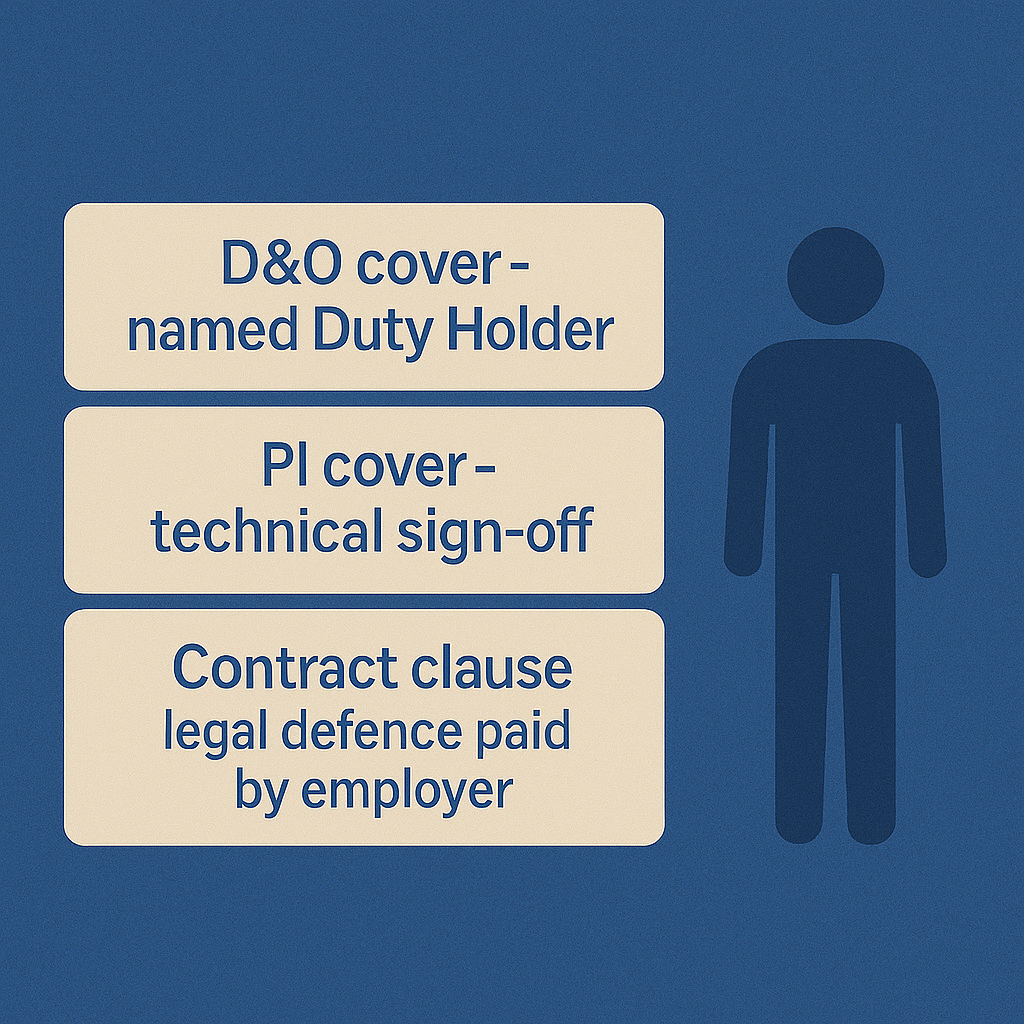
- Directors’ and Officers’ (D&O) Insurance: Make sure the company provides strong D&O insurance. Crucially, it must cover you as a named Duty Holder. This pays for your legal defence if a breach is alleged.
- Professional Indemnity (PI) Insurance: For design jobs, check that the company’s PI policy covers your technical sign off work. Furthermore, verify the terms.
- Contract Wording: Demand the contract clearly states the company will legally protect you and cover your costs for actions taken in your job. In addition, this ensures legal clarity.
2.2 Negotiating Professional Competence Resources
You must keep your knowledge current (SKEB). The employer must pay this cost.
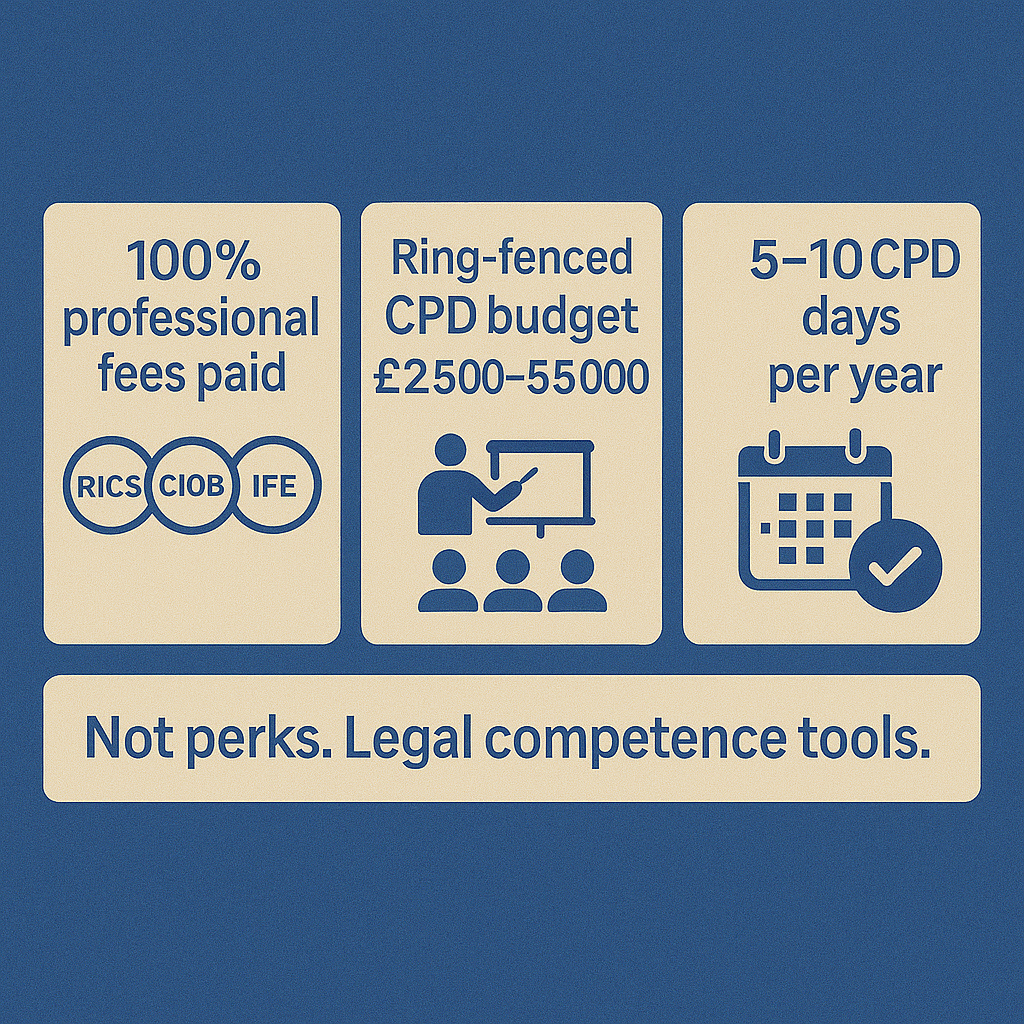
- Professional Fees: Insist the company pays 100% of all relevant annual membership fees (RICS, CIOB). Treat this as a legal requirement, not a perk. Similarly, it benefits the firm.
- Ring Fenced CPD Budget: Ask for a dedicated budget (usually £2,500 to £5,000 yearly). This fund must be specifically for BSA training (Safety Case authoring, Golden Thread courses). If the budget is not ring fenced, it can be easily cut later.
- Dedicated CPD Time: Negotiate fixed time off (e.g., 5 to 10 days per year) for training, seminars, and studying. Ultimately, this guarantees time for legal compliance without using your holiday days.
2.3 The Core Components: Salary, Bonus, and Pension
- Base Salary: Always negotiate from your high target figure. Use your market data and Chartered Status as leverage.
- Performance Bonus: Ask for a bonus tied clearly to safety goals (e.g., successful BSR Gateway sign-offs). However, avoid bonuses tied to cutting costs. This avoids conflicts with your safety duty.
- Pension Contributions: Ask for more than the legal minimum (e.g., aiming for 8% to 10%). This is a great tax benefit and builds your long-term wealth. Therefore, it’s a key part of your overall Salary and Benefits.
Section 3: Strategy: Preparation and Evidence
Success in negotiation is mostly about preparation. You must enter the discussion with a clear plan and strong facts.
3.1 Establishing Your Negotiation Figures
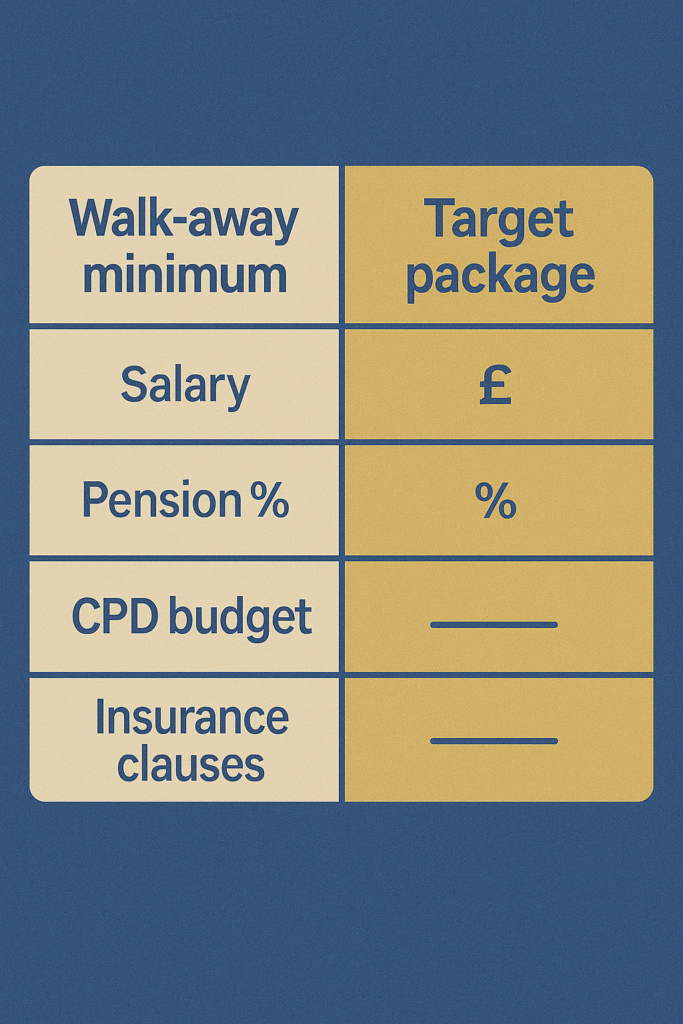
Know your absolute minimum pay package. This is your ‘walk away’ figure. Never accept less. At the same time, set your high ‘Target’ figure using market data and your Chartered Status premium.
3.2 Evidence and Quantification for Your Salary and Benefits
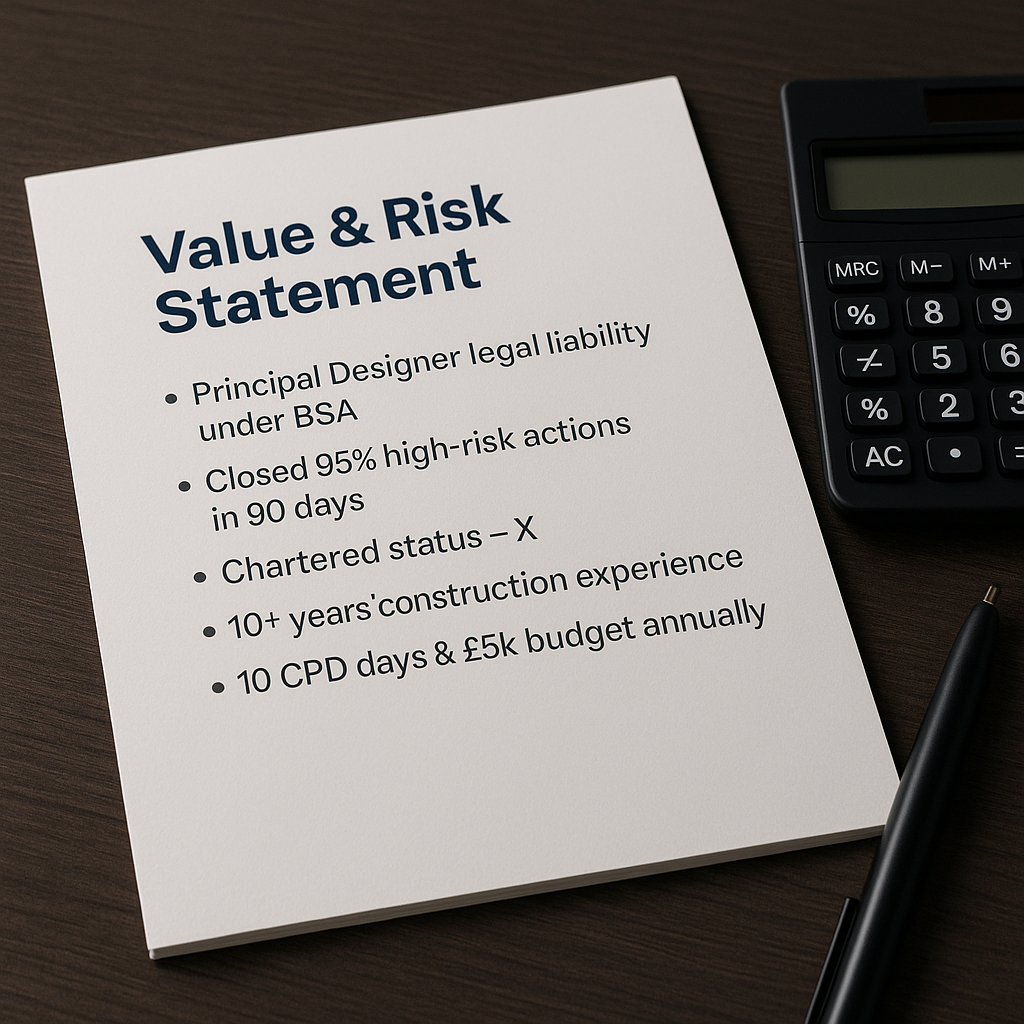
Treat the talk like a presentation of your value. Use data to remove feelings.
- The Liability Statement: Prepare a short statement of your worth. For example: “The market rate for a Principal Designer is £X. My request for £Y pay, plus D&O cover, reflects the high legal risk I will take on.”
- Itemised List: Give a clear, itemised list of non-salary items: Fees (£A), CPD Budget (£B), and a D&O clause request. Presenting these as necessary tools, not personal demands, makes them easier to approve. In addition, it looks professional.
3.3 Timing the Conversation
Do not talk about pay until you have a formal job offer. If asked for pay expectations early, answer: “My expectations match the market rate for a Chartered pro taking on this legal role. I can discuss figures after we confirm the full job scope.” Consequently, this delays commitment.

Section 4: Execution: Mastering the Negotiation Conversation
The negotiation should look professional. This should show you are a strategic leader who handles risk well—the qualities your employer is hiring you for.
4.1 Responding to the First Offer
Let the employer offer first. Your reply should be polite but firm.
- Example Response: “Thank you for the offer. I want this job. However, to match my Senior Fire Engineer expertise and market rates, I hoped for a base salary closer to £X. Furthermore, I need to confirm the D&O insurance fully covers my legal sign-off duties.”
- Never Accept Immediately: Always negotiate at least one item. This shows you are thorough and professional. Indeed, it is expected.
4.2 Handling Low Offers and Pivoting to Other Benefits
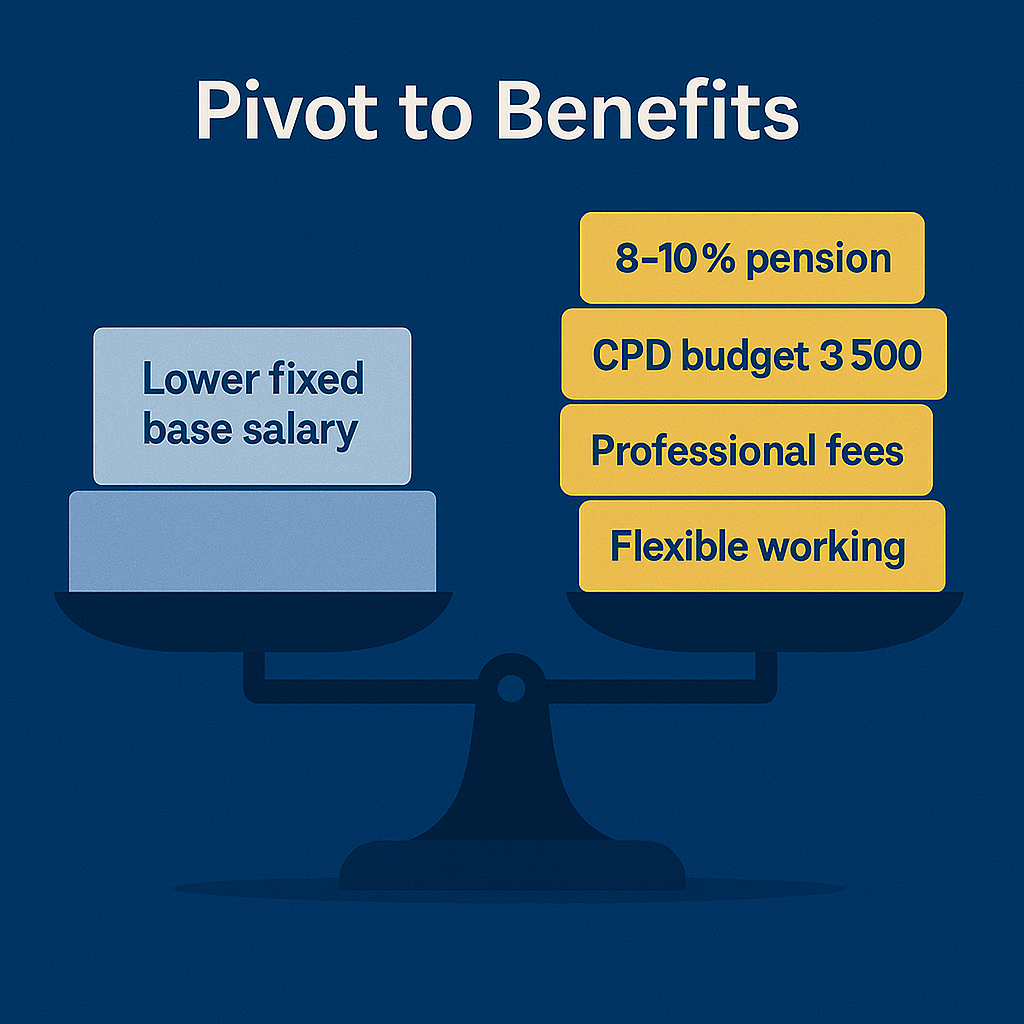
If the base salary is fixed low, move the talk to non salary items. Budgets here are often more flexible.
- Pivot Strategy: “I understand the base salary is fixed at £Y. Therefore, to make up the market difference and ensure I stay competent for the BSR, I propose an 8% pension contribution and a guaranteed CPD budget of £3,500, covering all my professional fees.”
- Use Silence: After making a counter proposal, stop talking. The other party will likely speak first with a concession. Therefore, silence is a powerful tool.
Section 5: Maximising Essential Work Life Benefits
For high stress jobs, work life balance is vital. It helps keep your professional focus and judgment sharp.
5.1 Negotiating Flexible Working Arrangements
Flexible working helps you manage your job and find time for CPD.
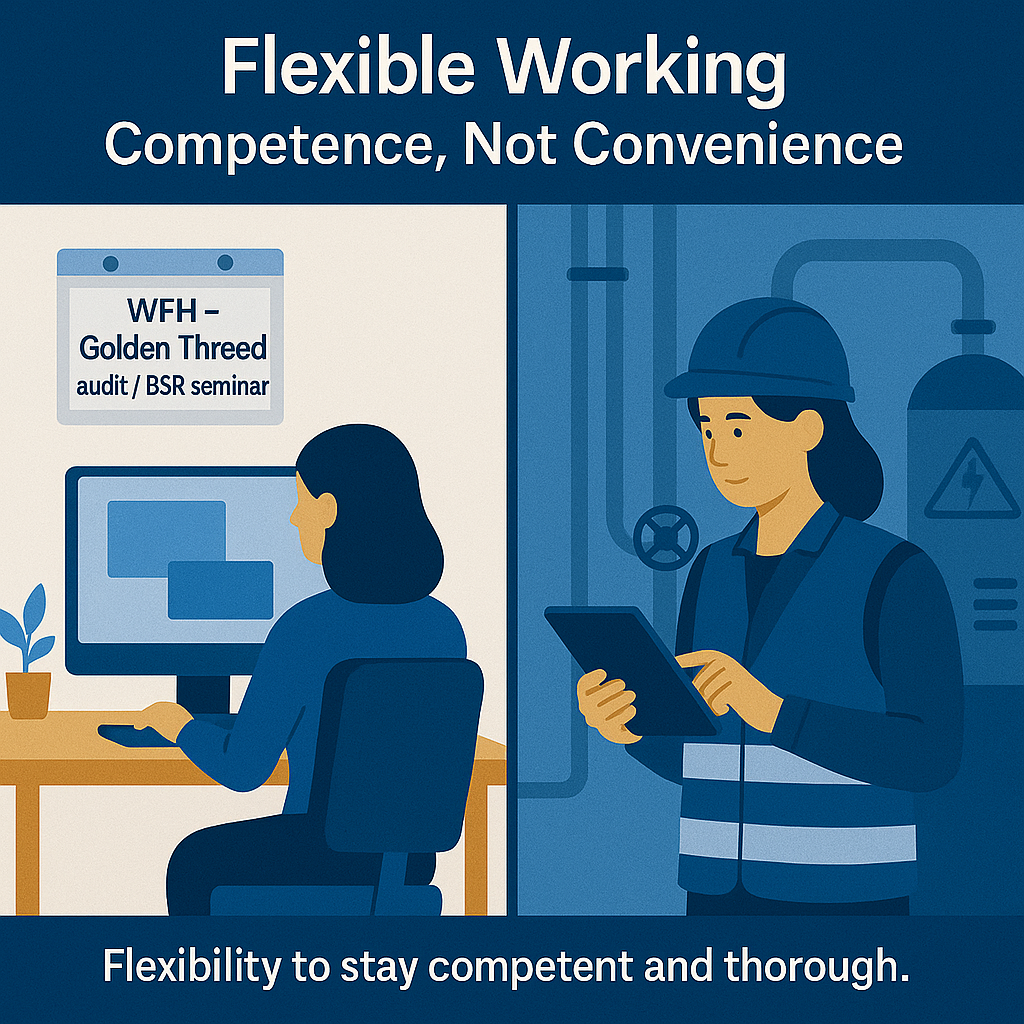
- The Competence Rationale: Ask for flexibility based on the need to stay competent, not personal ease. For example: “I need two guaranteed work-from-home days weekly. This allows for focused Golden Thread auditing and attending external BSR seminars.”
- Flexibility Clause: Ensure the final contract confirms the flexible arrangement clearly. In addition, get this in writing.
5.2 Health, Wellbeing, and Other Benefits
A healthy professional is more competent.
- Private Medical Insurance (PMI): Get good PMI (for family, if needed). This is standard for senior roles. In addition, it reduces worry.
- Mental Health Support: Ask about Employee Assistance Programmes (EAPs). Furthermore, these are valuable resources.
- Annual Leave: Negotiate an extra two to five days of holiday. High performing pros need time to rest. Consequently, this impacts overall job satisfaction.
Conclusion: Negotiation as a Professional Duty
The negotiation for a senior building safety role is the final test of your business skill. It demonstrates your ability to manage risk and get the tools needed to do your job legally. By using data, proving your Chartered Status, and securing essential non salary benefits (like insurance and CPD funds), you ensure your total Salary and Benefits package reflects the seriousness of your legal role.
Do not see this stage as just asking for money. Instead, see it as strategically securing the protection needed to remain a competent professional under the BSR. Negotiate with authority.