Building safety is risky. There are two sides to this. First, government and developers look positive. For instance, they talk about big plans. Their goal is to fix every unsafe home. However, the truth is in the cold, hard data. Indeed, government data shows slow speed. It shows slow cladding remediation in England.
This difference matters a lot. In fact, it is not just a theory. Instead, it shows the gap between a safe and dangerous building. Also, it separates a good owner from a bad one. Specifically, the data is from September 2025. Thus, this shows the UK’s status now. It is seven years after the Grenfell tragedy.
The numbers show progress in urgent areas. But, a deep delay is still clear. Clearly, this delay affects resident safety. Therefore, all people must understand this cladding remediation data. Ultimately, it helps you judge safe groups. It helps versus those in denial. In short, this analysis offers a clear view of a changing industry.
The Reality of Cladding Remediation Progress
To understand the situation well, we must first look past the total figures. Instead, we must check progress across funding schemes. Also, we must check building heights. The September 2025 data tracks 5,558 homes. They are over eleven metres high. Consequently, these buildings have found unsafe cladding. Moreover, the government department, DLUHC, watches their progress carefully.
High Rise Success in Cladding Remediation: Learning from ACM
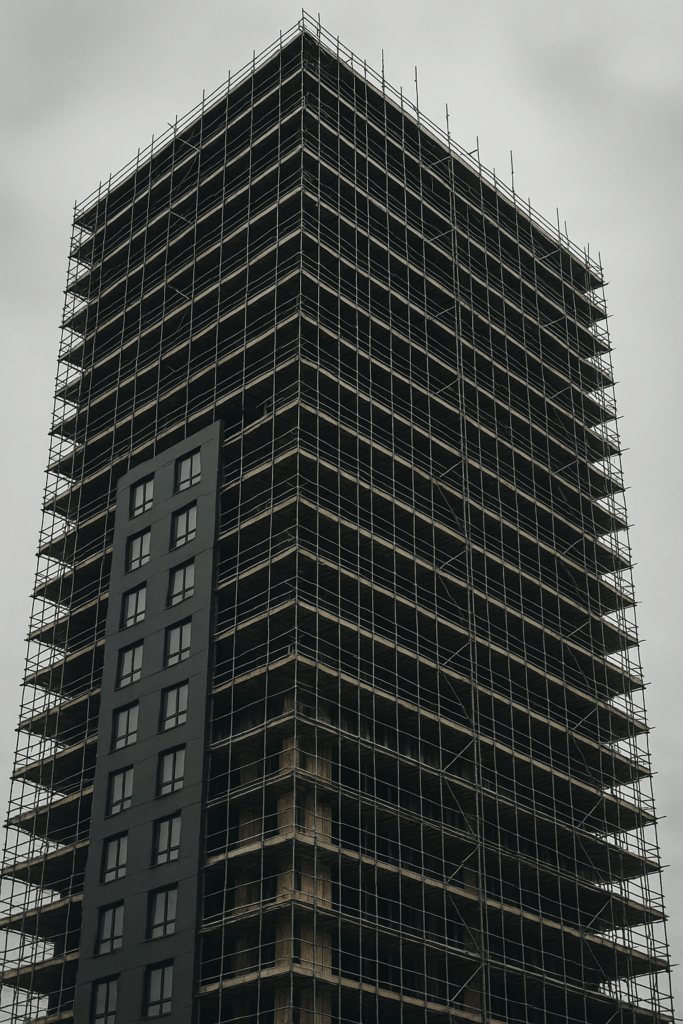
The best news is the progress made on the most dangerous material. To clarify, that material is Aluminium Composite Material, or ACM. This material caused the Grenfell tragedy. Then, it became the focus of the strongest government action. So, this focus has worked well.
We see great progress in high rise residential and public buildings. They are over eighteen metres. They use ACM cladding systems.
- A Near Complete Mission: A total of 498 buildings—an impressive 97% of the total—have either started or completed repair works.
- Sign Off Lag: 91% have finished the physical repair. But only 88% have received the final Building Control sign off. This difference shows the delay after physical work is done. Crucially, it proves the need to finish the digital golden thread records.
The near completion of the ACM cladding remediation programme shows what is possible. This happens when government, funding, and enforcement work together quickly.
The Non-ACM and Mid Rise Remediation Logjam
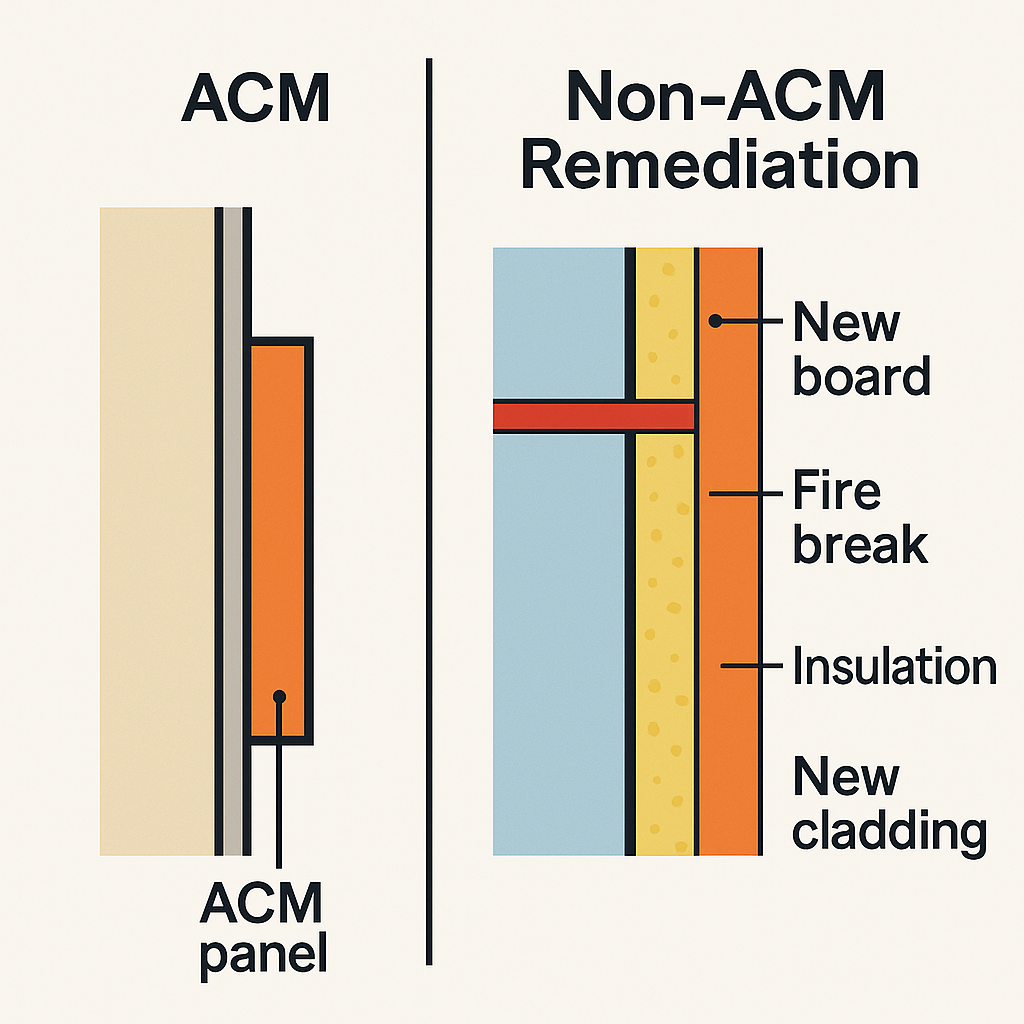
The non ACM cladding situation is less clear. This is also true for mid rise buildings. They are eleven to eighteen metres. Non ACM cladding burns. For example, it includes HPL and combustible insulation. As a result, this is the biggest part of the current crisis. The government created the BSF and the newer CSS. Specifically, they did this to fix this major cladding problem.
The overall September 2025 data reveals a huge issue. We monitored 5,558 buildings over eleven metres high. They have all unsafe cladding types.
- The 52% Stasis: More than half, specifically 52% (2,864 buildings), have not yet started repairs.
- Remediation Underway: Only 14% (759 buildings) have started but not yet completed the work.
- Completed Work: A total of 35% (1,935 buildings) have completed repairs. This includes those waiting for final sign off.
This suggests that new laws and funding are not speeding up progress. Therefore, the sector will not meet the tough new deadlines. As a result, most identified unsafe buildings remain dangerous. Essentially, they are simply waiting for a start date.
New Deadlines and Legal Pressure
The government saw this slow progress. So, they changed their approach. They moved from simple money help. They moved to legally required deadlines. Serious fines and criminal penalties now back these deadlines. Ultimately, this legal pressure should break the 52% delay in cladding remediation.
Statutory Cladding Remediation Deadlines are Now Fixed
New laws introduced clear timetables. Consequently, building owners must now follow these rules.
- High Rise (18m+) Deadline: The final deadline for completed works in buildings 18 metres or over is the end of 2029. No negotiation is possible.
- Mid Rise (11m+) Mandate: By the end of 2029, every 11 metre plus building must be fixed. Alternatively, its owner must set a confirmed, legal date for completion of cladding remediation. Otherwise, buildings between eleven and eighteen metres not fixed or scheduled by this date will face checks and legal action.
These deadlines create a legal Duty to Remediate. This means the building owner has a clear legal duty. Consequently, the penalties for not following these rules are severe. They include huge fines. Also, there is the real threat of criminal charges. Furthermore, Principal Accountable Persons could even face prison. This happens if they fail to act without a good reason.
Increased Enforcement Action on Non Compliance
The Building Safety Regulator (BSR) now has much more power. Similarly, Local authorities also received more money. They received more power to take action. They follow the Housing Act 2004 and the Building Safety Act 2022. Clearly, the numbers show this action is rising. Indeed, Local authorities have increasingly used their powers. They use them against owners who do not follow the rules.
The BSR issues several notices. These include Improvement Notices. They also issue Hazard Awareness Notices. In the worst cases, it means Prohibition Orders. However, we must know that an enforcement notice often starts a long legal fight. Still, many buildings have not started cladding remediation. Thus, this suggests that enforcement must now become normal. Therefore, the fifty two percent of buildings still stuck will likely stay that way without this ultimate threat.
The Cost of Denial and Non Compliance
The biggest challenge for the BSR remains the group of stubborn landlords and developers. Unfortunately, these actors refuse to take responsibility. Often, they try to use every legal loophole. They use delay to avoid their moral and legal duties.
Opacity of Building Ownership and Delaying Cladding Remediation
One reason for delay is the issue of developer contracts. Over fifty major developers signed a contract. They signed it with the government. In it, they promised to fix all critical fire safety faults. This covers faults they caused over the past thirty years. Yet, the data on the actual speed of work is mixed. Developers found over 2,300 buildings with critical fire safety faults. However, only 49% of these buildings have started or completed repairs, according to reports. This shows that signing the contract is one step. Actually, speeding up the work is another step. Ultimately, this depends on developer priorities.
Another constant problem is the lack of clarity about building ownership. Luckily, the new law tries to fix this. Often, we find it hard to find the responsible person. Complex company structures frequently hide them. This lack of clear ownership details has been a powerful tool for denial. In effect, it allows landlords to ignore notices. It lets them delay funding applications. Therefore, new powers to force this information are vital. They help in closing this gap. They help in enforcing cladding remediation.
What Leaders in Building Safety Do
The current situation clearly separates the leaders from the slower groups. Thus, skilled, smart firms do not wait for a notice. Instead, they act right away. They use the data to guide a quick, safety first plan. This makes them stable. It makes them desired employers for candidates.
Serious landlords treat the golden thread of information as a key tool for managing risk. It is not just a rule to follow. They invest heavily in digital systems. This creates a clear record of their building’s design, build, and management. This quick approach helps them to:
- Identify Faults Quickly: They can instantly find where unsafe materials are. This simplifies the work. It speeds up the start of cladding remediation.
- Accelerate Handover: They provide full, reliable information to contractors and the BSR. This greatly speeds up the rule-based and funding process.
These firms do not rely on one funding path. They apply for government money (BSF or CSS). They also chase the developer through legal channels. Crucially, they take on upfront costs. For instance, examples are detailed investigative surveys and full design work. This ensures their projects are “shovel ready.” They know a ready scheme is more attractive to a funding body or a contractor. In turn, this greatly cuts the time needed for cladding remediation to begin.
Investing in Personnel and Competence for Remediation
The best firms know that skill is key. So, they are quickly hiring and training personnel for the new roles. These roles are created by the Building Safety Act. Specifically, these roles include:
- Principal Accountable Persons (PAPs): These individuals possess true technical and legal knowledge. They are not just a board member given a title.
- Building Safety Managers (BSMs): These are highly skilled, hands on managers. They maintain the golden thread and manage safety cases for high rise buildings.
By investing in high quality, certified professionals, these firms ensure true skill in managing their buildings’ risks. They are not just following rules. Moreover, they understand that a qualified team reduces legal risk. It also speeds up project delivery. Ultimately, this changes a compliance cost into a smart business benefit. These firms will lead the charge in effective cladding remediation.
Conclusion: The Mandate to Complete Cladding Remediation
The September 2025 cladding remediation data paints a clear picture. The sector’s overall pace is too slow. Yet, there is hope. We mostly fixed the ACM crisis. This proves that strong action works. New legal deadlines are not suggestions. They are hard, required rules. The deadline for high rise is 2029. All 11-metre buildings must have a confirmed fix date by 2029. Finally, this will really change the world of building safety management.
The message to the industry is clear: the time for denial is over. In the near future, firms that keep delaying will soon face the new enforcement regime. Undoubtedly, they will face unlimited financial and personal legal risks.
For high risk professionals and for leaseholders, the data gives a crucial way to judge. First, do not judge your building owner or future employer by their press releases. Instead, judge them by their numbers. Are they in the 48% that has started or completed work? Or the 52% still stuck in denial? The industry must stop viewing cladding remediation as a cost. Rather, it must start seeing it as a moral and legal need. Therefore, it is a core part of responsible asset management. Only when strong leadership and constant enforcement break the delay will the raw data reflect a reality where all residents truly feel safe in their homes.