What UK Professionals Really Earn: Building Safety Salary Benchmarks
This report gives employers clear, data driven salary and day rate norms. These rates cover core building safety roles. Furthermore, we include comments on key pay factors. Specifically, we designed this report to help employers set fair packages. Ultimately, this reduces time to hire and helps retain good staff. Moreover, employers can use this alongside their own pay structures. The ranges below reflect typical offers accepted in the last 12 months. Clearly, this covers all of the UK. Therefore, this data provides reliable Building Safety Salary Benchmarks.
Method in Brief: Producing Building Safety Salary Benchmarks
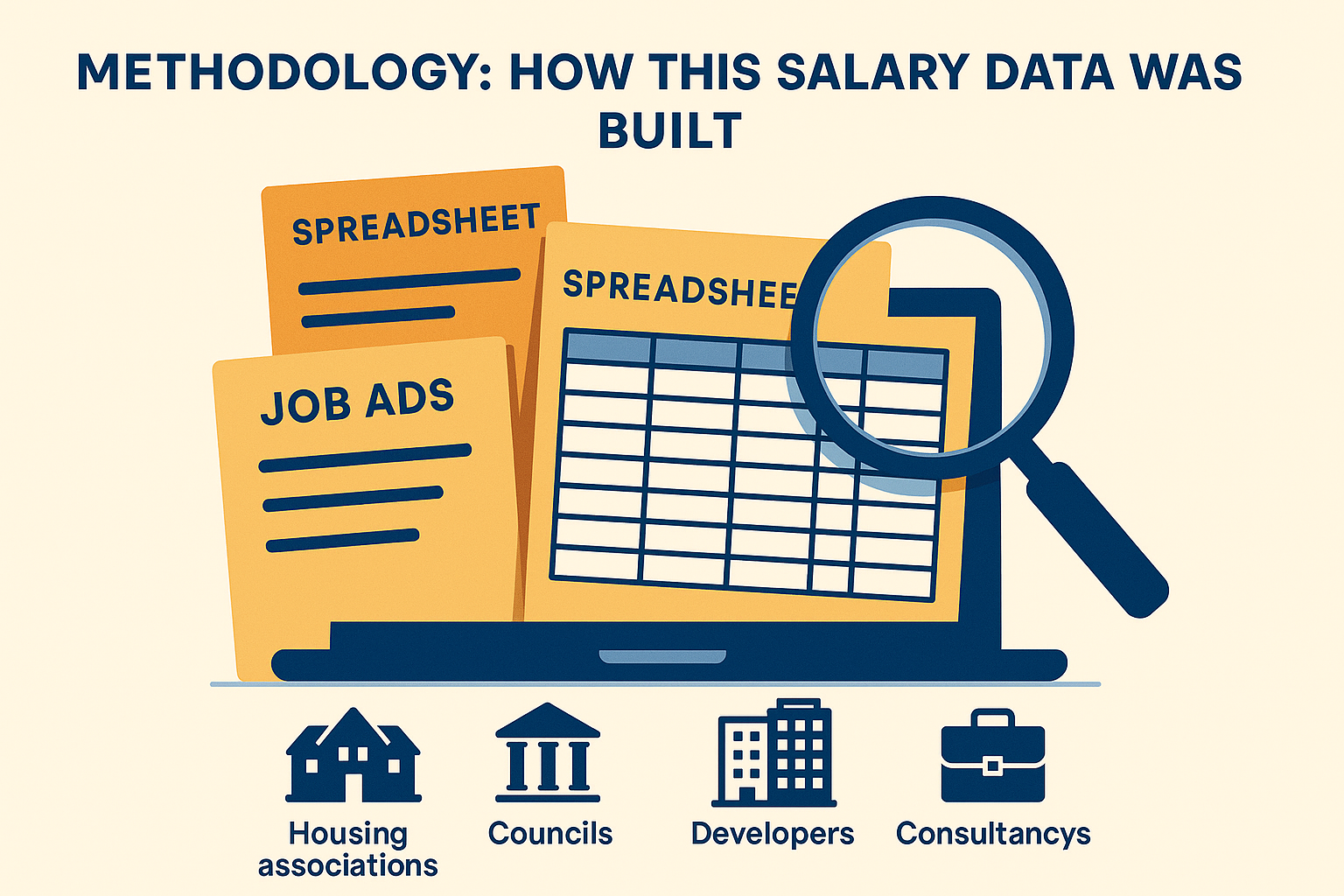
To produce these ranges, we combined live job data, accepted offers, and anonymised placements. In addition, this covered the whole UK building safety market. Included were housing providers, local authorities, major developers, and technical consultancies. We present ranges as base salary bands. This excludes employer costs unless we state otherwise. Day rates assume a standard 7 to 8 hour day. Naturally, individual offers will vary. This is because of portfolio risk, governance maturity, location, and benefits.
Market Context: Why Building Safety Salaries Are Still Rising
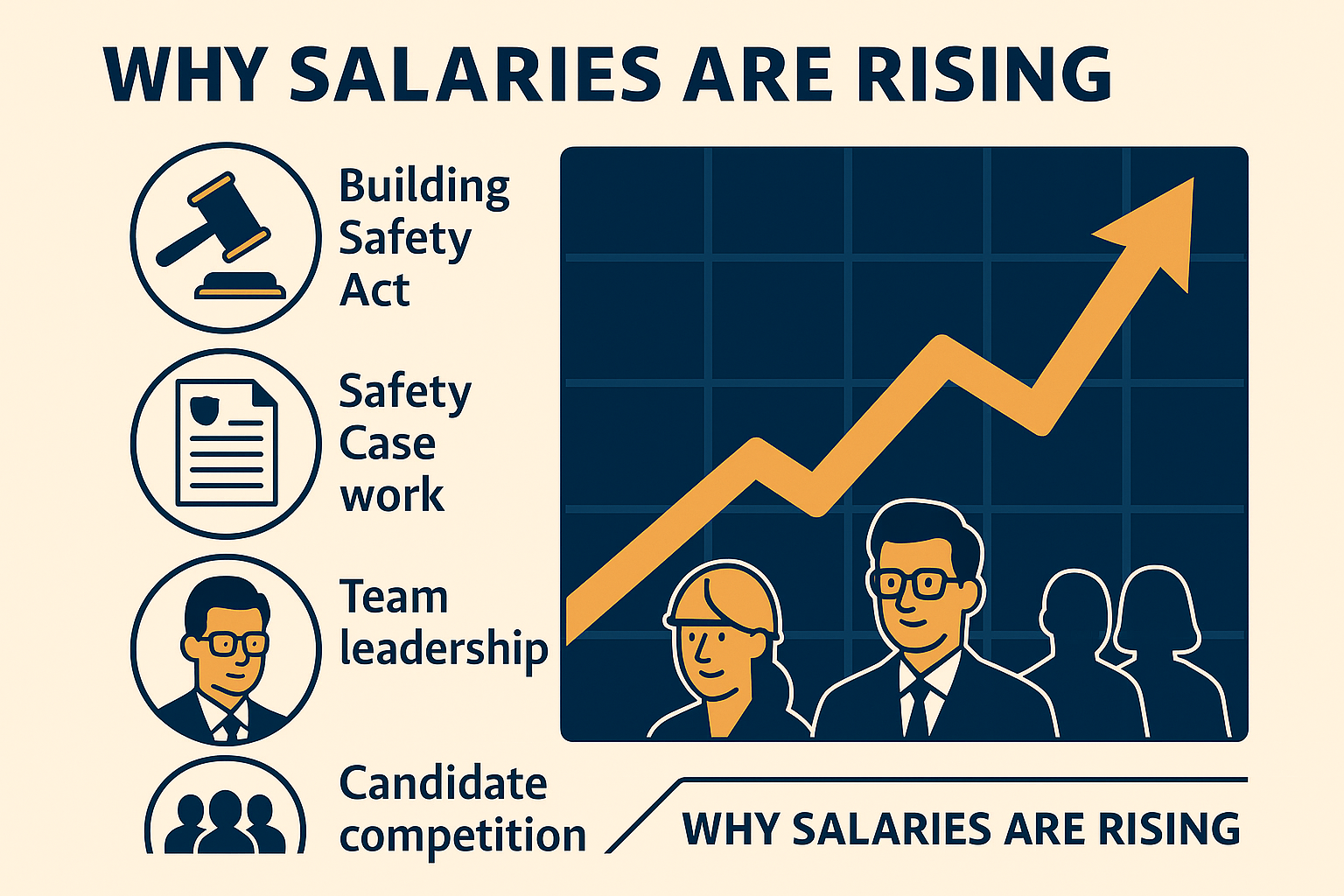
Several factors continue to push pay up:
- First, we see greater accountability under the Building Safety Act.
- Second, we notice a lack of skills in evidence heavy roles. Indeed, this includes Safety Case and Golden Thread roles.
- Third, we developed a growing need for leaders. These leaders must integrate residents, contractors, and regulators.
- Finally, we maintain competition for the same professionals. Social landlords, developers, and consultants all compete.
However, where governance is weak or defect risk is high, employers tend to pay more. Consequently, these factors influence the Building Safety Salary Benchmarks.
Permanent Building Safety Salary Benchmarks (Base Per Annum)
The figures below show typical accepted base salaries. Later, we add adjustments for location, complexity, and sector. These Building Safety Salary Benchmarks reflect the market norm.
- Building Safety Manager (portfolio HRBs): £55,000–£80,000
- Senior/Lead Building Safety Manager: £70,000–£90,000
- Head of Building Safety: £85,000–£115,000
- Director of Building Safety: £110,000–£150,000+
- Safety Case Manager / Author: £45,000–£65,000
- Golden Thread / Digital Evidence Manager: £55,000–£85,000
- Resident Engagement Lead: £40,000–£58,000
- Compliance Lead: £48,000–£68,000
- Fire Risk Assessor (competent): £40,000–£55,000
- Senior Fire Risk Assessor (complex stock): £55,000–£75,000
- Fire Engineer (intermediate): £35,000–£55,000
- Fire Engineer (chartered or senior): £60,000–£90,000
- Building Control Surveyor (experienced): £45,000–£70,000
- Principal/Registered Building Inspector: £65,000–£90,000
- Clerk of Works (fire and safety): £42,000–£58,000
- Remediation Project Manager (façade): £55,000–£80,000
- Smoke Control/MEP Specialist: £60,000–£85,000
In short, where employers include a large pension (public sector) or performance bonus (private sector), the total pay package can increase overall value by 8–25 per cent.
Contract and Interim Building Safety Salary Day Rates
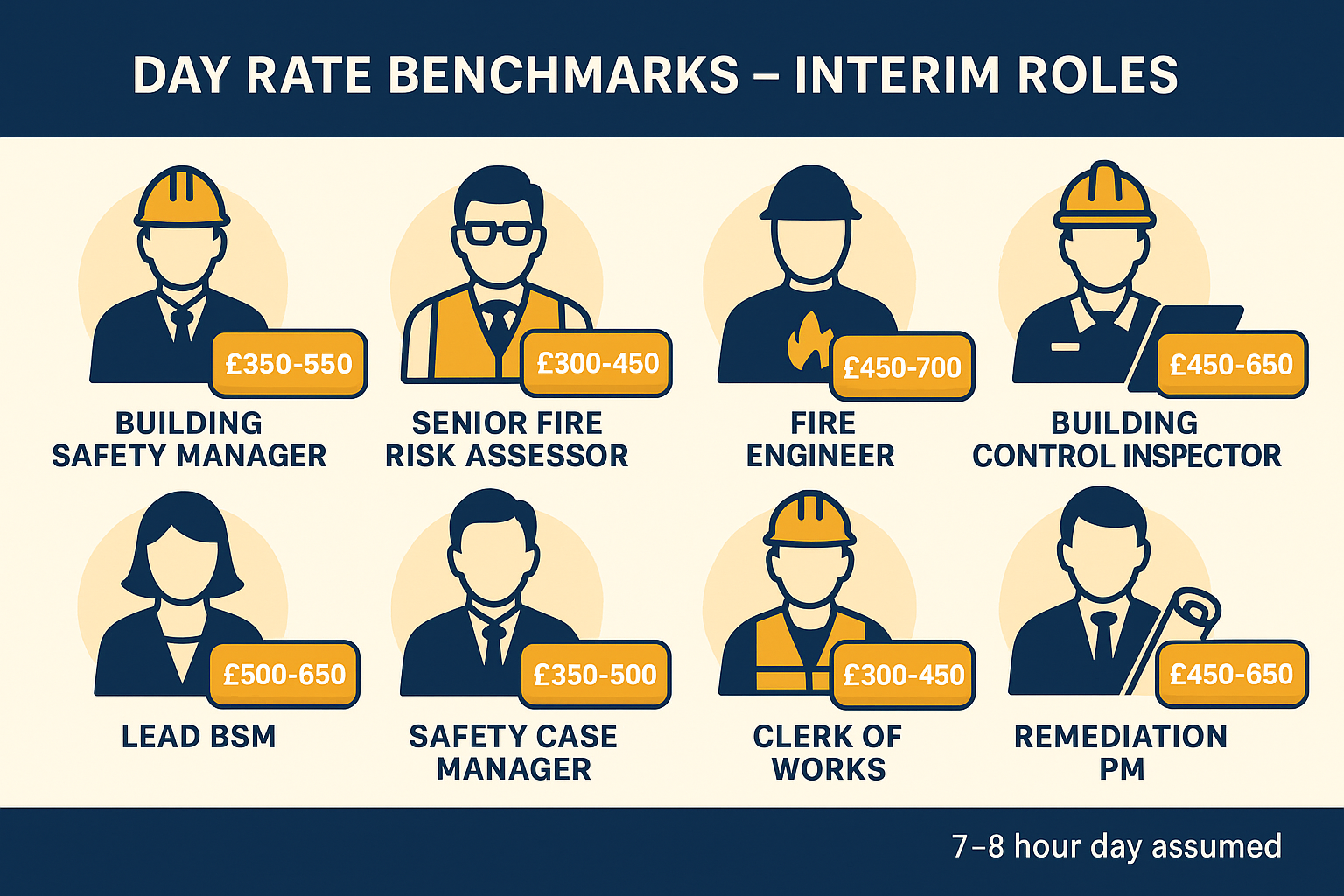
- Building Safety Manager (portfolio HRBs): £350–£550/day
- Senior/Lead Building Safety Manager: £500–£650/day
- Head of Building Safety (interim): £600–£800/day
- Director of Building Safety (assurance): £800–£1,200/day
- Safety Case Manager / Author: £350–£500/day
- Golden Thread / Digital Evidence Manager: £450–£650/day
- Fire Risk Assessor: £300–£450/day
- Fire Engineer (senior/chartered): £450–£700/day
- Building Control Surveyor / Registered Inspector: £450–£650/day
- Clerk of Works (fire): £300–£450/day
- Remediation Project Manager (façade): £450–£650/day
Inside IR35 roles typically reduce net take home pay. Nevertheless, some employers offer slightly higher day rates or longer contracts to compensate. Crucially, interim leadership roles often command the highest pay. Generally, this is true when roles relate to regulator deadlines. These rates update the Building Safety Salary Benchmarks.
Adjustments That Commonly Apply to Building Safety Salaries
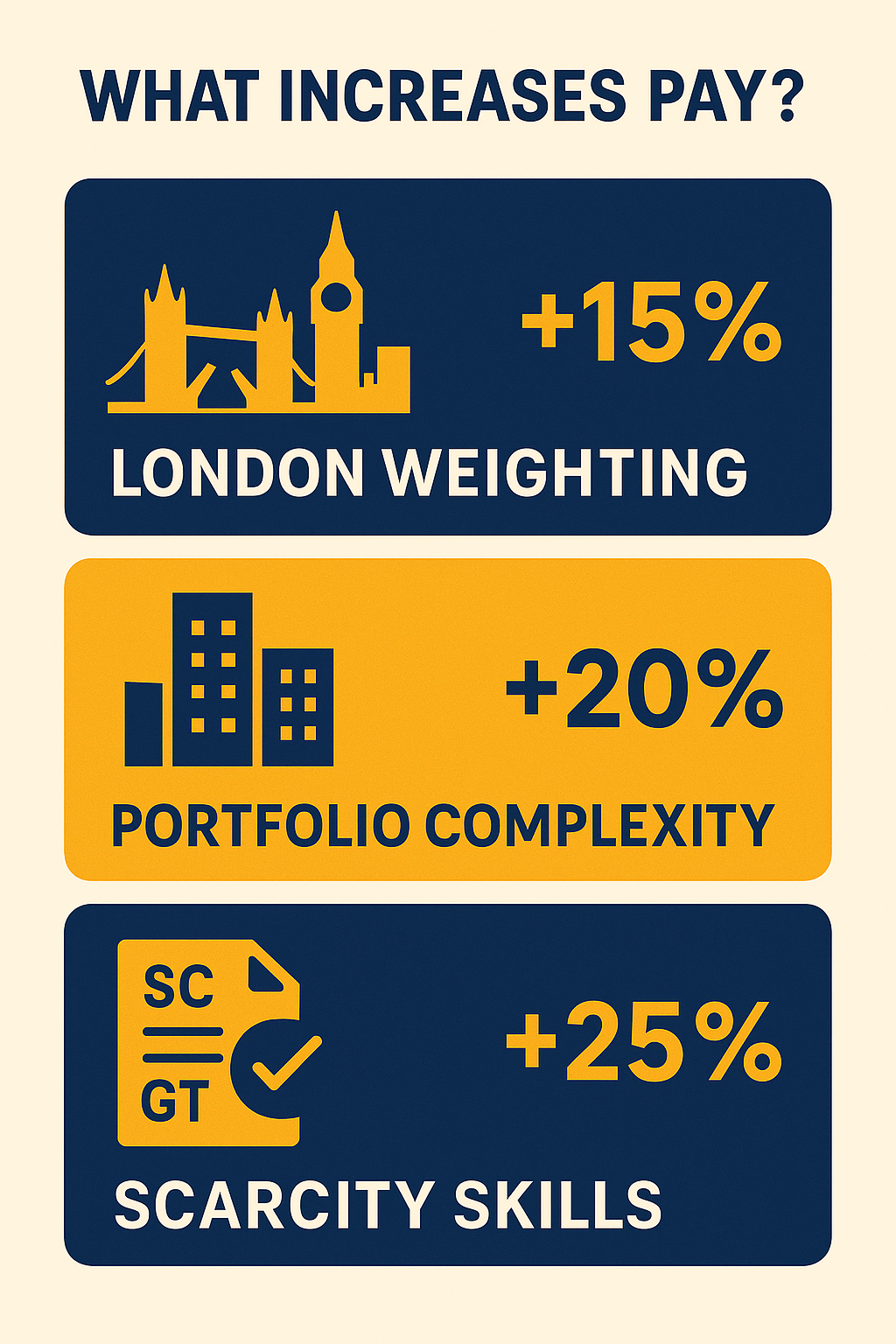
- London and inner commuter weighting: We see +8–15 per cent on base pay. For example, sometimes this is a specific London allowance.
- Portfolio complexity premium: Employers apply +10–20 per cent. This covers complex mixed use or legacy defects.
- Scarcity skills premium: We give +10–25 per cent. Specifically, this covers specific skills like Safety Case authoring.
- Public sector pension equivalence: Base pay may be lower. However, the high employer contribution (often 18–22 per cent) can outweigh private sector bonuses.
- Contract uplift versus permanent: Similarly, total cash in a year can be 1.6–2.0× the permanent base. But, you lose pension security, paid leave, or progression signalling.
Sector by Sector Notes on Building Safety Salary Benchmarks
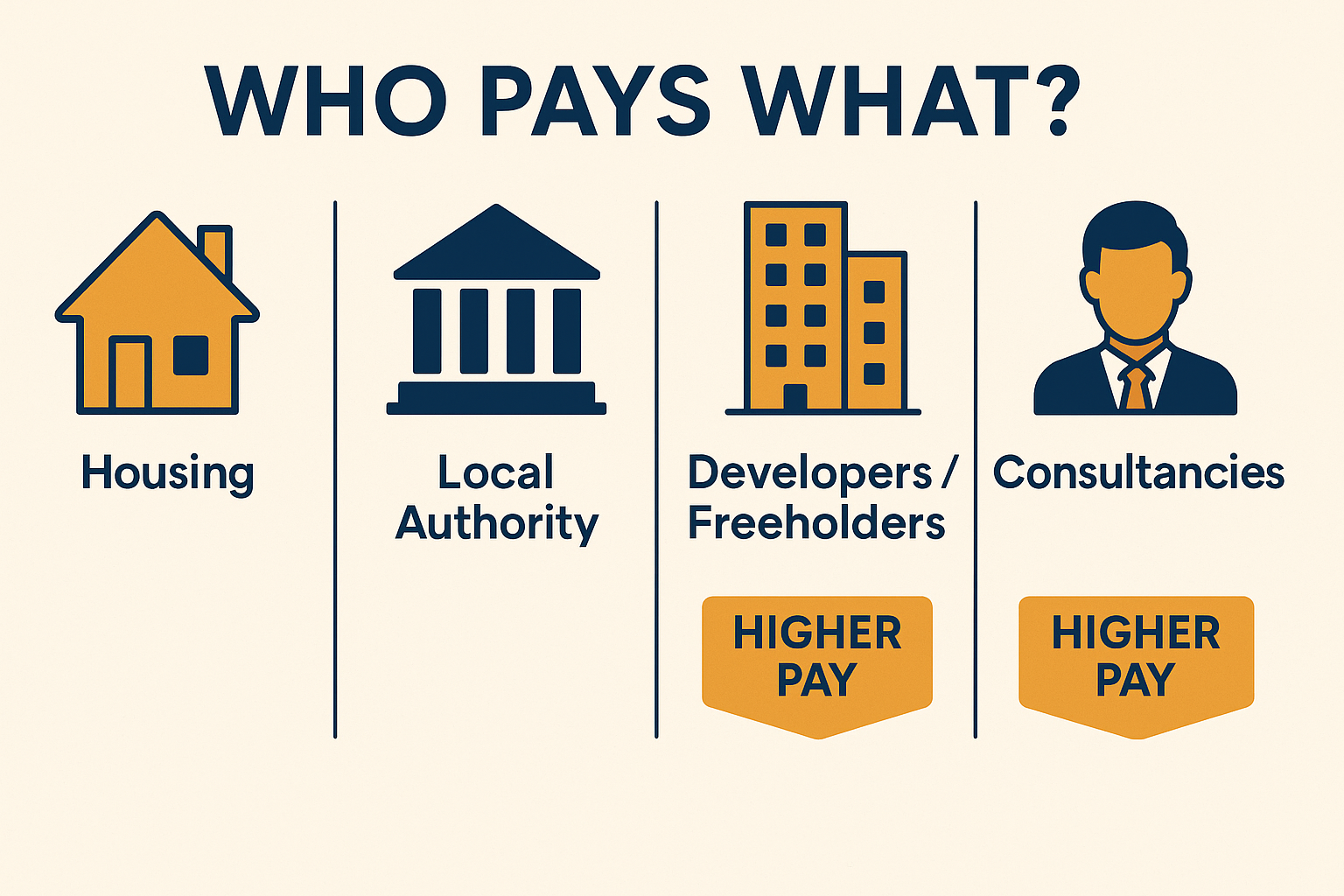
Housing Associations and ALMOs
We see strong demand for Building Safety Managers and Safety Case roles. Pensions and work life balance help retain staff. Of course, London weighting is common. In general, base pay is mid market. Total reward value, however, is often stronger. These roles are essential when reviewing Building Safety Salary Benchmarks.
Local Authorities
We find steady demand for Building Control Surveyors and safety leaders. Job frameworks may limit pay. However, pensions and job security are the draw. Therefore, they widely use interim staff for peak times.
Developers and Freeholders
We give premiums for remediation Project Managers and façade specialists. Also, they pay directors who can manage long term defect programmes. Bonuses are more common. Consequently, flexible working varies due to site needs.
Specialist Consultancies
Career variety and training are strong. Therefore, base pay ranges widely based on billable rate. Senior fire engineers command higher pay. This is true when they meet clients and can win new work.

What Moves a Candidate from “Interested” to “Accepted”
- A clear mandate and written decision rights.
- Transparent salary band with a credible midpoint.
- Funded CPD and chartership fees, plus professional time off.
- Modern flexible working with predictable site days.
- Investment in tools: evidence platforms and admin support.
- Thoughtful resident engagement policy, not just ticking boxes.
- A 90 day plan with visible sponsor access.
However, most declined offers fail. Generally, this is because they lack clear roles or progression plans.
Designing Salary Bands That Work for Building Safety Roles
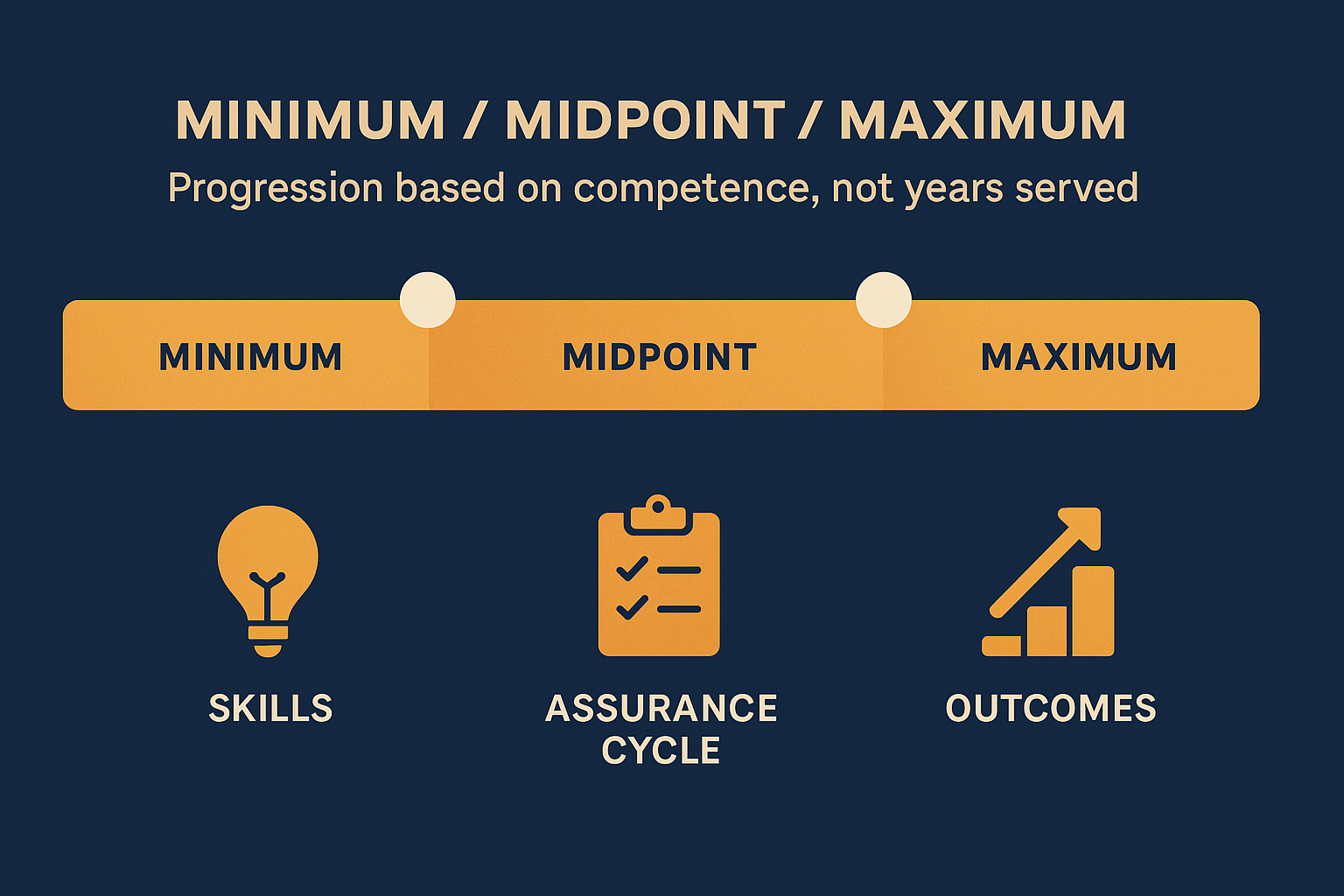
First, employers create and publish three points per role internally:
- Minimum: the entry rate for someone competent but still learning.
- Midpoint: the fully competent rate in your setting (your “market rate”).
- Maximum: employers reserve this for those delivering high level impact.
Competence, not time served, decides movement through the band. For instance, a Building Safety Manager moves from £60,000 to £70,000. The move is based on running a full assurance cycle for two high rise buildings.
Role by Role Deep Dives and Pay Guidance (Building Safety Salary Benchmarks)
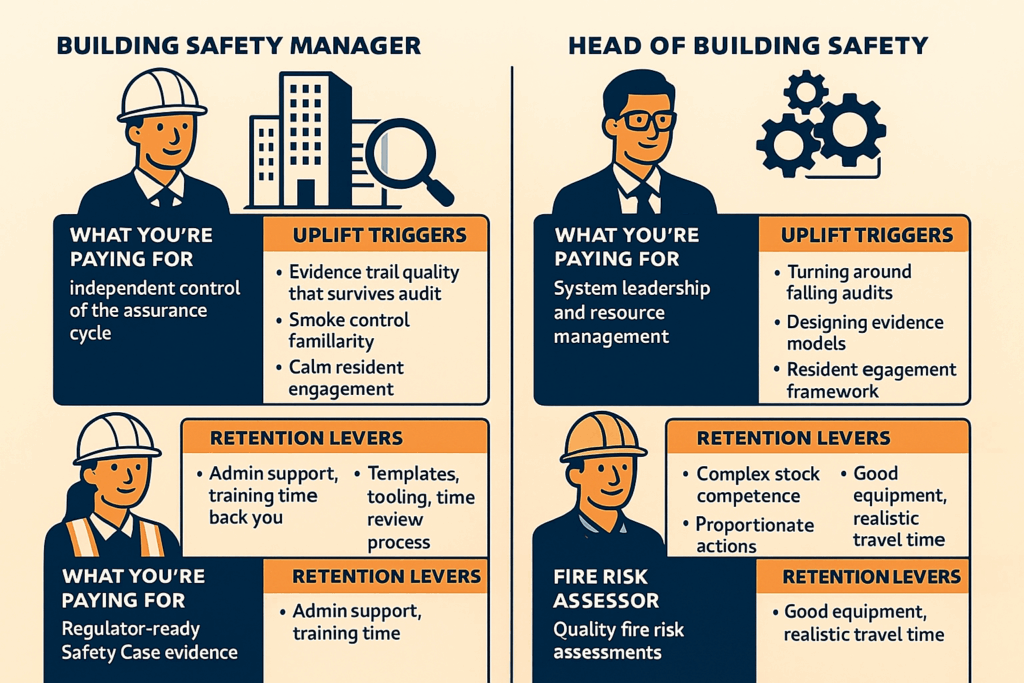
Building Safety Manager (Portfolio HRBs) – £55,000–£80,000
What you’re really paying for: You buy independent control of the assurance cycle. This includes risk checks, contractor control, and evidence quality. Therefore, the premium goes to those who can defend Safety Case positions.
Common uplift triggers:
- Evidence trail quality that survives audit.
- Smoke control or complex MEP familiarity.
- Calm resident engagement in stressful situations.
Retention levers:
In addition, we provide admin support, training time, and visible senior backing.
Head of Building Safety – £85,000–£115,000
What you’re really paying for: You gain system leadership. This means setting standards and managing resources. Crucially, we expect this person to fix legacy issues without burning out teams.
Common uplift triggers:
- Turning around failing audits across large estates.
- Designing an evidence operating model for Golden Thread quality.
- Building a pragmatic resident engagement framework.
Retention levers:
Moreover, we offer budget certainty and a route to director level influence.
Director of Building Safety – £110,000–£150,000+
What you’re really paying for: You secure control of enterprise risk. This means integrating safety governance with finance and legal strategy. You pay for someone who can win board trust while making tough choices.
Common uplift triggers
- Successful regulator engagement during key moments.
- Multi year remediation oversight with clear risk reduction.
- Culture change that lasts.
Retention levers:
Finally, we use clear board sponsorship and a stable operating model.
Safety Case Manager / Author – £45,000–£65,000
What you’re really paying for: You obtain reliable, regulator ready Safety Case evidence packs. You also get the discipline to keep them updated.
Common uplift triggers:
- Multi building throughput without a drop in quality.
- Strong metadata and version control.
- Ability to brief non technical leaders well.
Retention levers:
Therefore, we offer templates, tooling, and clear review processes.
Golden Thread / Digital Evidence Manager – £55,000–£85,000
What you’re really paying for: You achieve data quality at scale. This means standards for naming, metadata, and evidence pipelines. Reviewing the Building Safety Salary Benchmarks for this role is key.
Common uplift triggers:
- Successful platform migrations.
- API/reporting build that boards trust.
- Training others to use the systems.
Retention levers:
In conclusion, we provide autonomy to set standards and budget for new tools.
Fire Risk Assessor – £40,000–£55,000; Senior £55,000–£75,000
What you’re really paying for: You gain quality Fire Risk Assessment reports. You get proportionate actions and consistent field work. Senior rates reflect complex stock competence. These reflect the current Building Safety Salary Benchmarks.
Retention levers:
In short, we provide good equipment, realistic travel time, and clear follow up on actions.
Fire Engineer – £35,000–£55,000 (Grad/Intermediate); £60,000–£90,000 (Chartered/Senior)
What you’re really paying for: You secure design assurance and performance based solutions. In other words, you get credible challenge to clients.
Retention levers:
Specifically, we offer chartership support and varied work.
Building Control Surveyor / Registered Inspector – £45,000–£70,000; Principal £65,000–£90,000
What you’re really paying for: You buy regulatory confidence on complex buildings. You also get consistent use of standards.
Retention levers:
Ultimately, we provide varied work and technology that reduces admin.
Clerk of Works (Fire) – £42,000–£58,000
What you’re really paying for: You secure on site honesty. This means checking build quality on fire critical parts.
Retention levers:
Consequently, we use a reasonable patch size and prompt action on findings.
Remediation Project Manager (Façade) – £55,000–£80,000
What you’re really paying for: You gain technical delivery in sensitive political settings. This work must also limit resident impact.
Retention levers:
Therefore, we provide clear project steps and quality control.
Benefits and Total Reward Signals Candidates Notice

- CPD and chartership fees paid in full and time protected for training.
- 30+ days paid leave including bank holidays. Public sector often gives more.
- Enhanced pension contributions or structured bonuses.
- Hybrid working with predictable site expectations.
- Health, employee assistance, and support after incidents.
- Tools and support staff that let professionals focus on risk, not just paperwork.
In fact, clear total reward shortens negotiation time and improves offer acceptance.
Offer Design: A Simple Framework for Building Safety Salaries
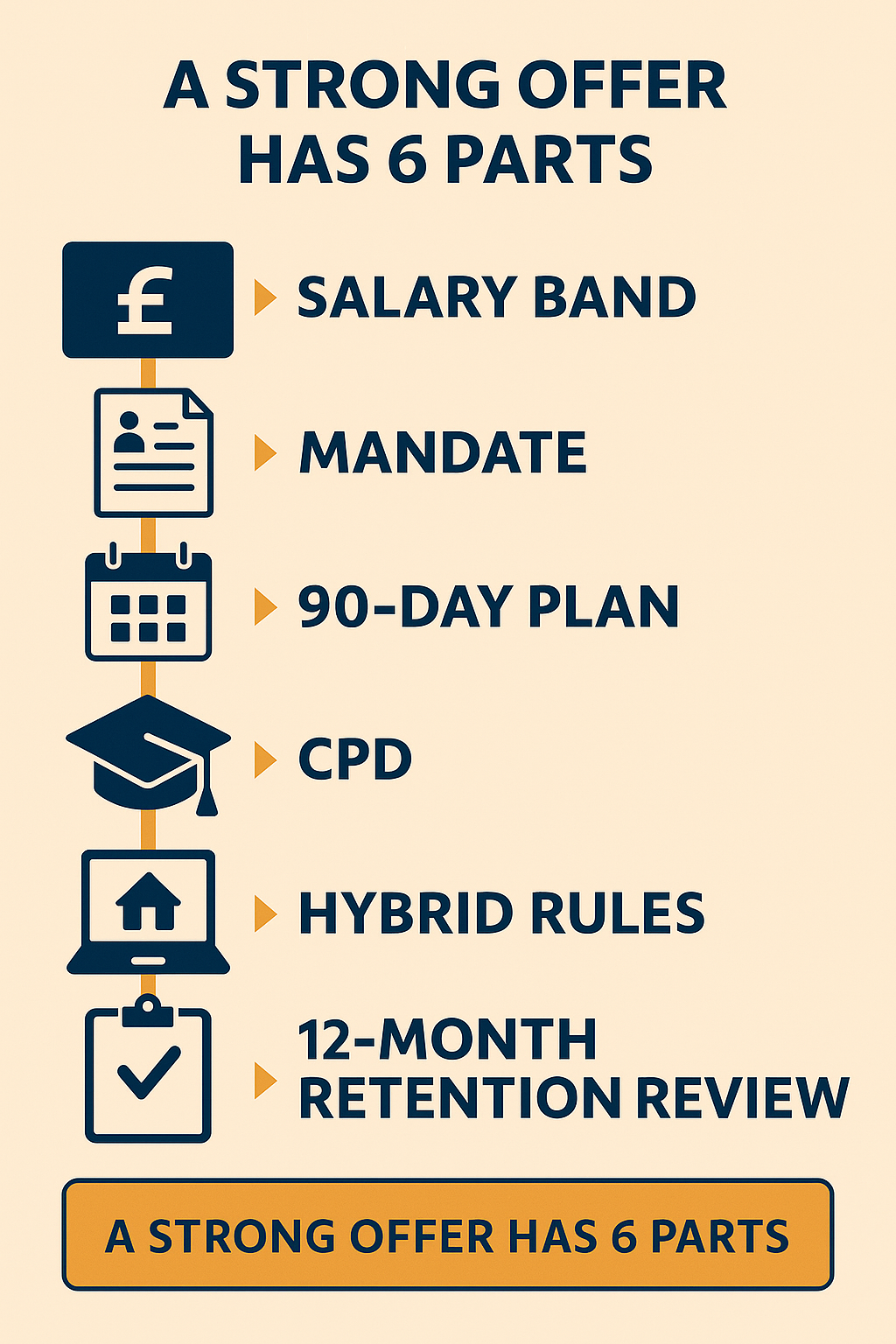
- Publish the band and your midpoint for the scope.
- State the mandate, decision rights, and escalation route in writing.
- Attach a 90 day plan outline. This plan includes success measures.
- List training support and when it is available.
- Clarify hybrid/site expectations and any on call work.
- Include a retention review at 12 months tied to outcomes, not time served.
Overall, this approach shows maturity and reduces candidate worry.
Annual Pay Review Hygiene
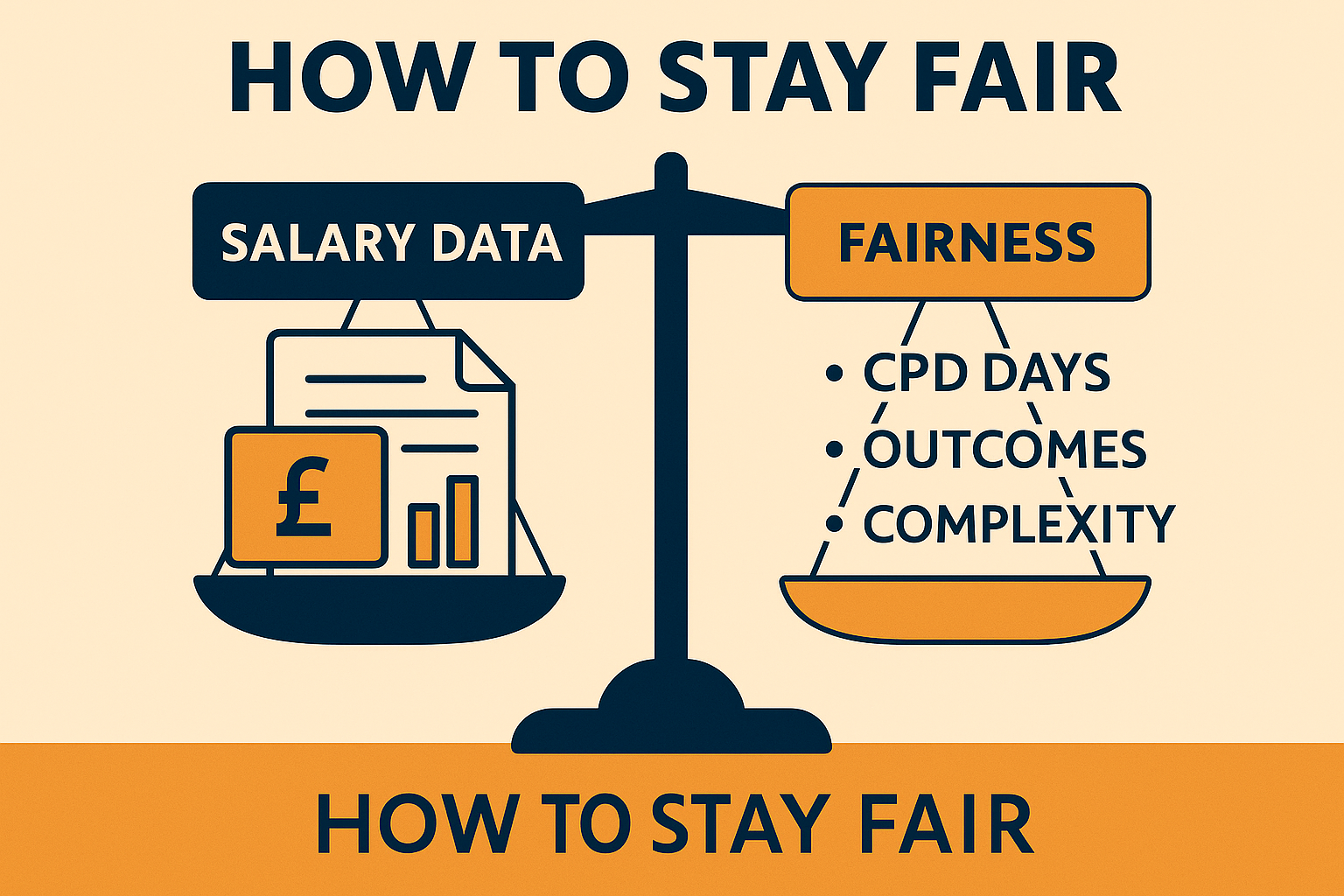
- Use external and internal pay data. Consequently, we adjust pay for portfolio complexity.
- Reward prevention and mature safety work, not only reacting to incidents.
- Track pay fairness across staff. Moreover, we fix unfair gaps each year.
- In addition, we offer extra CPD days or clear future pay rises when budgets are tight.
Frequently Asked Questions About Building Safety Salary Benchmarks
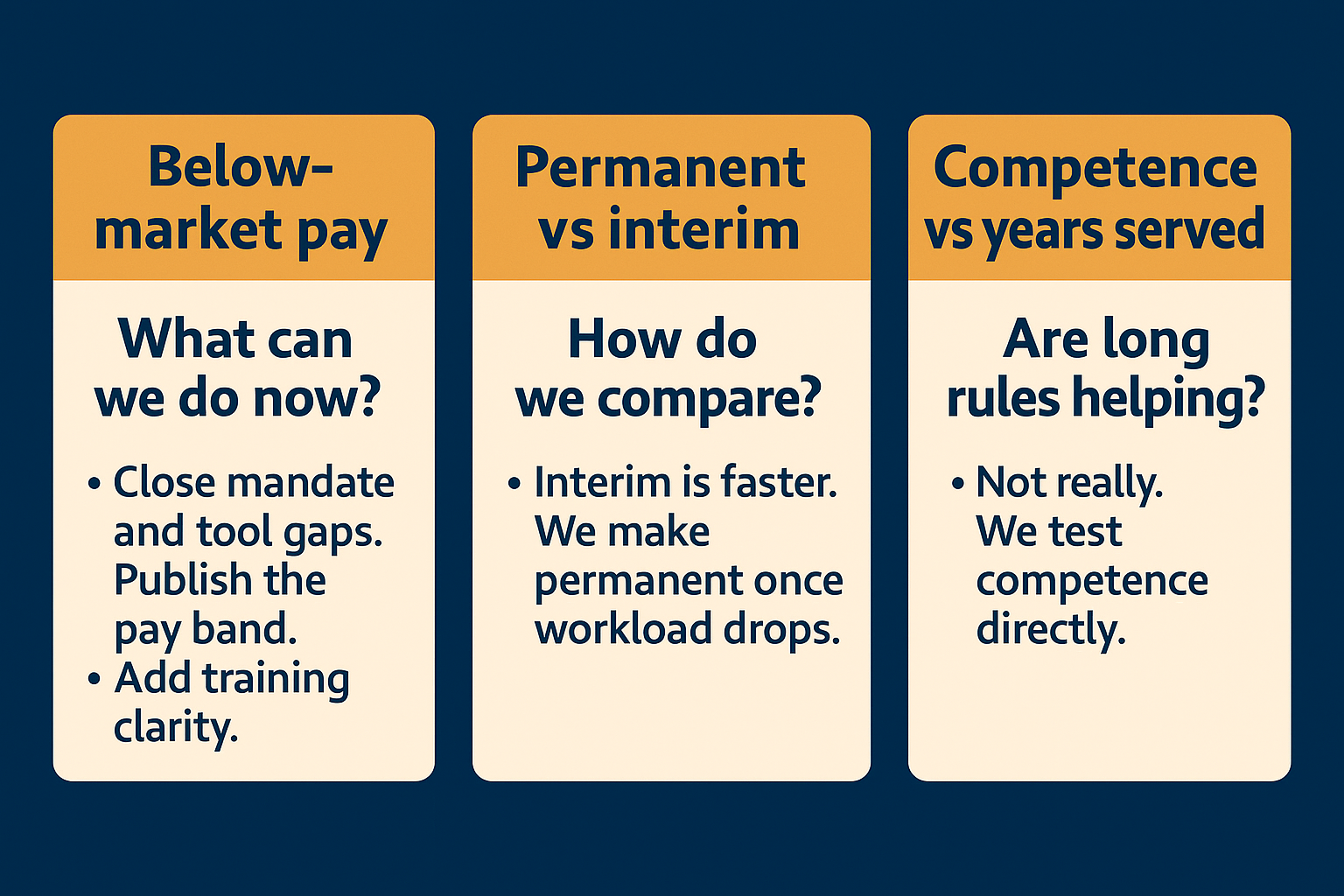
Our base pay is below market. What can we do now?
Employers close the mandate and tool gaps. They publish the pay band and add clarity on training. Indeed, many candidates accept a fair process even if base pay is mid market. Remember that these methods influence the Building Safety Salary Benchmarks over time.
How do we compare permanent versus interim for an urgent gap?
Interim is faster and offers a surge of staff. Therefore, we use it to steady the ship. Employers make the role permanent once the workload is manageable.
Are long “years served” rules helping?
Not really. Instead, we test competence directly. Audit outcomes and resident engagement are better ways to predict success than years alone.
Quick Reference Tables for Building Safety Salary Benchmarks
Core Permanent Building Safety Salary Benchmarks (Base, UK Wide)
- BSM: £55–80k | Senior/Lead BSM: £70–90k | Head: £85–115k | Director: £110–150k+
- Safety Case Manager: £45–65k | Golden Thread Manager: £55–85k
- Resident Engagement Lead: £40–58k | Compliance Lead: £48–68k
- Fire Risk Assessor: £40–55k | Senior FRA: £55–75k
- Fire Engineer (intermediate): £35–55k | Chartered/Senior: £60–90k
- Building Control Surveyor: £45–70k | Principal/Registered: £65–90k
- Clerk of Works (fire): £42–58k | Remediation PM: £55–80k
Typical Day Rates
- BSM: £350–550 | Lead BSM: £500–650 | Head: £600–800 | Director: £800–1,200
- Safety Case: £350–500 | Golden Thread: £450–650 | FRA: £300–450
- Fire Engineer: £450–700 | BC Surveyor: £450–650 | Clerk of Works: £300–450 | Remediation PM: £450–650
Common Adjustments
- London/inner commuter: +8–15% | Complexity premium: +10–20% | Scarcity skills: +10–25%
- Overall, Public sector pension value often offsets lower headline base.
How to Use This Report in Practice
- Refresh your bands: you map each role to minimum, midpoint, and maximum.
- Sense check your adverts: if you want top candidates, your pay band must be right.
- Train hiring panels: they assess competence with exercises.
- Plan retention: you agree a skills matrix and training sprints before hiring.
- Track outcomes: you monitor time to offer and staff retention.
A pay number alone will not get the person you need. However, clarity, capability, and culture close the deal.
Conclusion
Building safety is a tough job market. This is because the work is demanding and regulated. Therefore, employers who win talent combine fair pay with clear job roles. They use modern tools and respect professional growth.
In summary, we use these Building Safety Salary Benchmarks to help employers set realistic pay. Then, they focus on what matters most to candidates: meaningful work and good leadership. That combination will shorten hiring time and raise resident safety.