The Building Safety Regulator (BSR) recently shared new details on how they review applications for Higher-Risk Buildings (HRBs). Specifically, this update explains the exact steps for the BSR building control approval process. It helps developers and designers understand why the BSR accepts some plans and sends others back. Consequently, by following these rules, the industry can work more effectively with the regulator to keep buildings safe.
Why BSR Building Control Requires Detailed Plans
The most important takeaway is that submitting full, detailed paperwork is now a strict legal rule. In the past, some teams provided basic summaries because they hoped to fill in the blanks later. However, under the new BSR building control system, the regulator no longer allows this.
Because the BSR must ensure every building is safe before work starts, they need to see exactly how you will meet safety standards. Therefore, you must provide clear proof for fire safety, structural integrity, and the materials you plan to use. If you submit vague documents, BSR building control will stop your project before it begins.
Understanding the BSR Building Control “Approval with Requirements” (AwR)
The BSR knows that construction is complex. To help, they created the Approval with Requirements (AwR) process. This serves as a helpful middle ground for the BSR building control team and the applicant.
How AwR Works
If your main design follows the law, the BSR calls this “substantive compliance.” In these cases, BSR might approve your design even if you omit small, non-critical details.
However, there is a catch. You must submit those missing details later. Furthermore, the BSR will set a specific date for this submission. This allows you to move forward on the main structure while you finalise smaller items. Similarly, you must remember that this only applies to parts of the building that do not affect the overall safety “big picture” during the review.
Three Main Reasons Rejects Applications
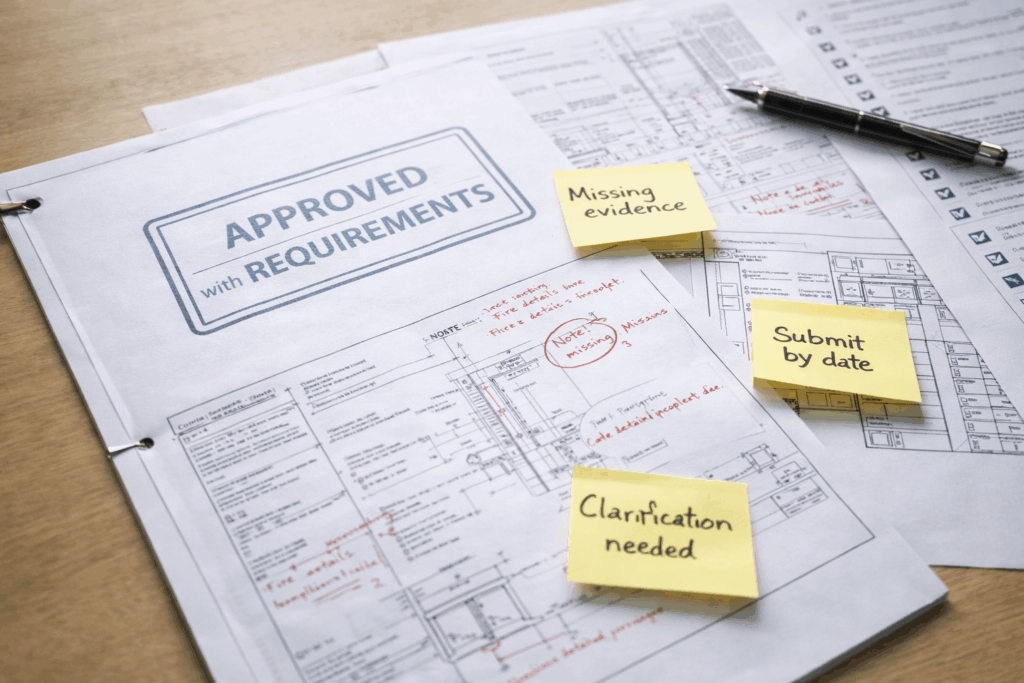
To save time and money, you should know why applications may be rejected. The regulator has listed three main reasons:
- Clear Non-Compliance: If the plans show the building will break safety laws, the BSR will reject it. For example, BSR building control will say no if fire exits are too small or the structure is weak.
- Information Gaps: If you leave out important data, the BSR cannot do its job. Moreover, the BSR cannot guess if a building is safe. If the BSR building control team cannot see the full proof, they must reject the application.
- Lack of Communication: The BSR building control process involves many questions. If the BSR asks for more information and you do not reply quickly, they will reject the application as a result.
How BSR Building Control Reviews Attached Structures
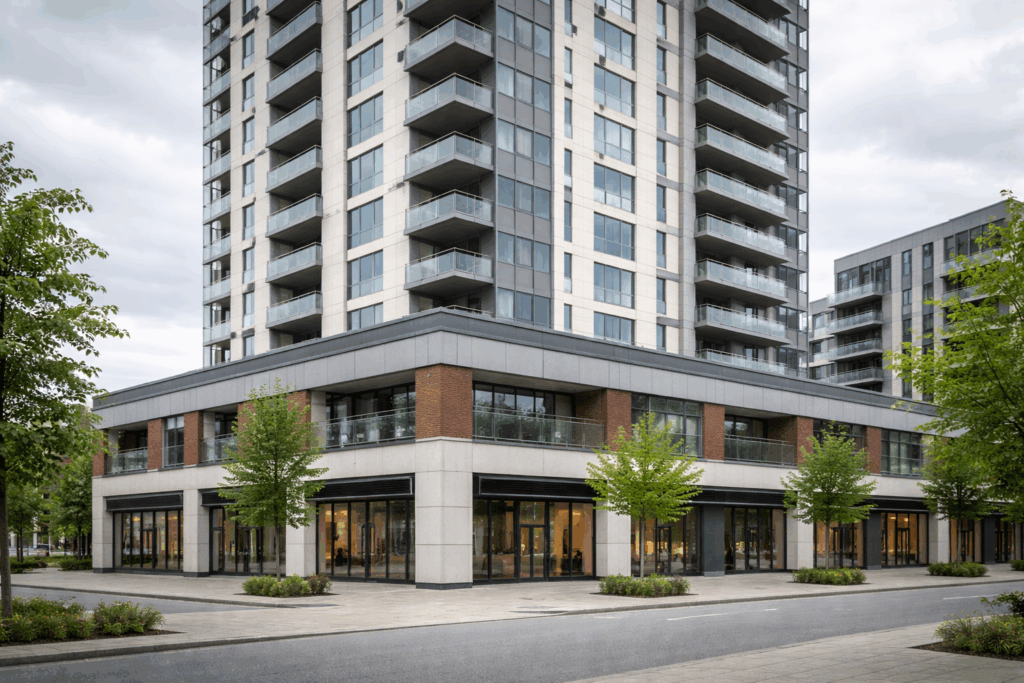
Many high-rise buildings connect to smaller shops or parking decks. The BSR has clarified how they look at these “attached structures.”
If you join a smaller building to an HRB, the review often includes it. This happens if the two buildings share a foundation or a fire wall. Because a fire in a small shop could spread to the high-rise flats above, the regulator views both as one single risk. Thus, you must include these attached sections in your BSR building control safety plans to avoid delays.
How to Get Your Approval
To succeed with BSR building control, you should change how you prepare. First, treat your paperwork as the most important part of the job. Second, make sure you hire a “Principal Designer” who is an expert. Indeed, they should know the new laws inside and out.
Finally, check your application for any “gaps” before you send it to BSR building control. Ask yourself: “Does this document prove the building is safe, or does it just say it will be?” Consequently, being honest and thorough from the start is the fastest way to get your project moving through BSR building control.
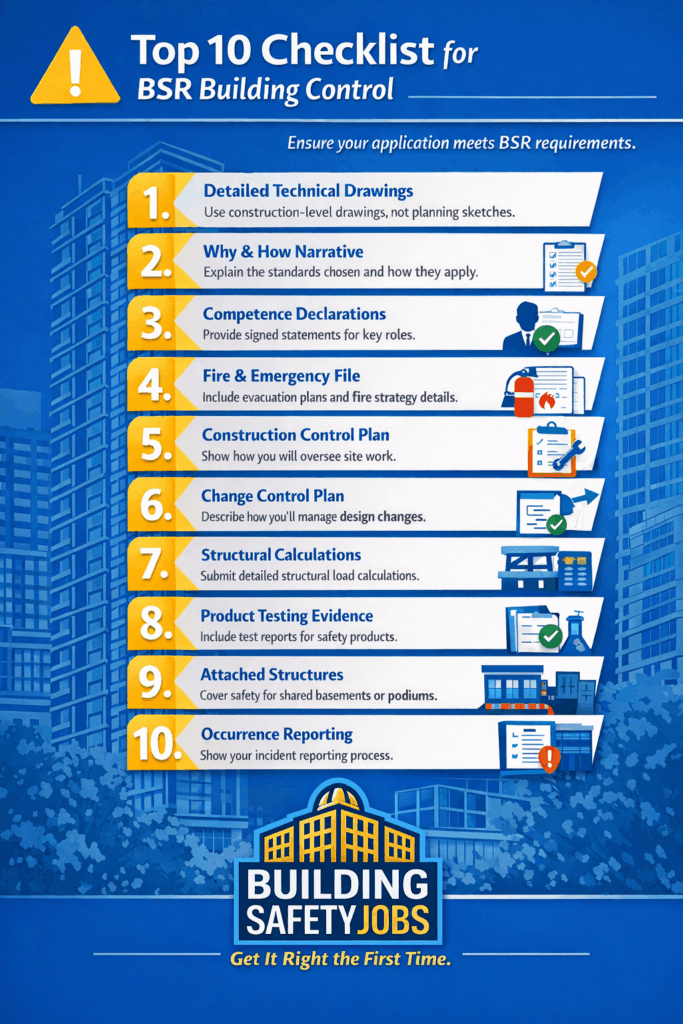
Top 10 Checklist” for BSR Building Control