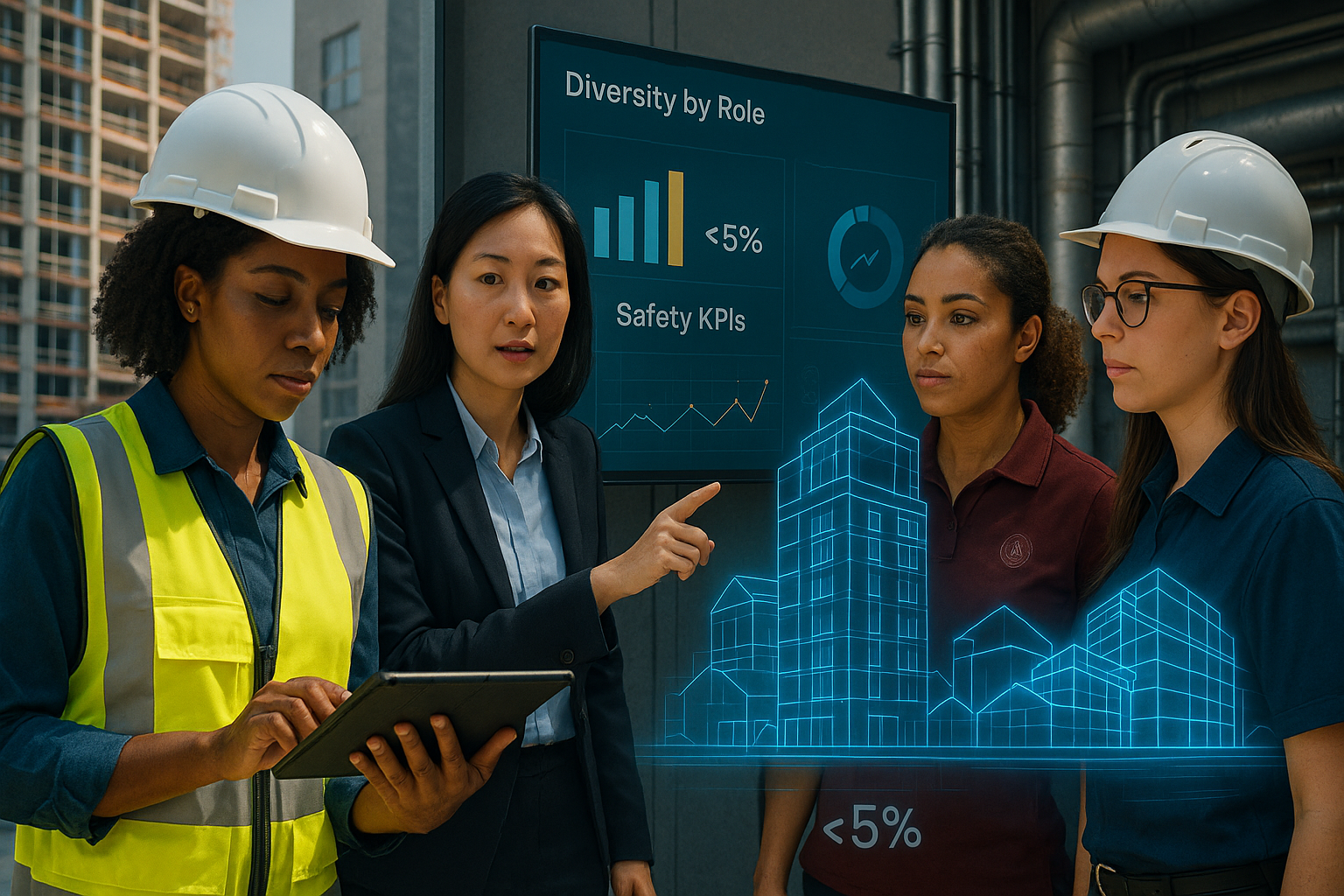
Building firms talk about progress. Safety firms also talk about progress. But, many people ask if this change is real. They ask if it is just good PR. The Women in Construction movement is the main topic here. New facts are complex. However, these facts give an answer.
Women in Construction make up 15% of the UK workforce. This number seems fine. But, a closer look shows women are still missing in key areas. They are absent where firms make money. They are also absent where big choices happen.
Therefore, few women are on the tools. They are almost absent in top safety jobs. This article looks past the bright pictures. It uses facts from groups like UK Construction Week. Furthermore, it uses facts from The Access Group. Recruiters like Approach Personnel also gave facts.
Specifically, we check the true state for Women in Construction in 2025. Finally, we find where the work culture fails. As a result, we provide clear steps. These steps are for bosses and workers. They aim to make real, lasting change.
Representation: Where Do Women in Construction Actually Work?
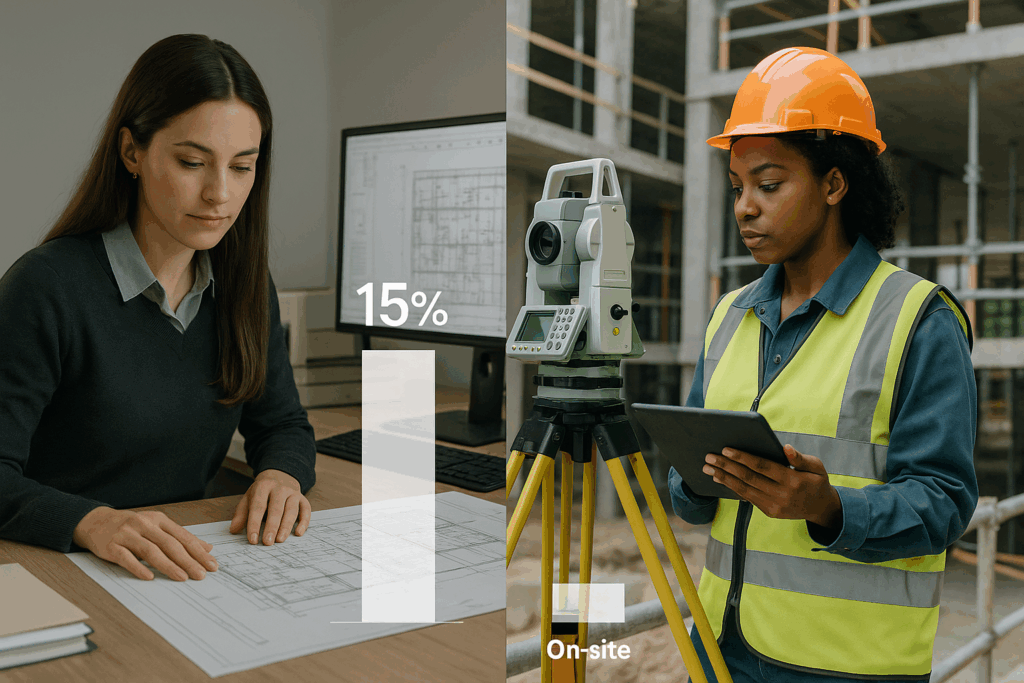
The title says Women in Construction are 15% of workers. But, this often hides a key truth. Women mostly work in office roles.
Specifically, they hold jobs in HR, marketing, and finance. As a result, their actual site presence is low. Site presence is vital. This is where firms build things. It is also where we enforce safety rules.
Site vs Office: The Two Tier System for Women in Construction
The UK construction world has two different parts. These are the site and the office. Indeed, most women work in the office.
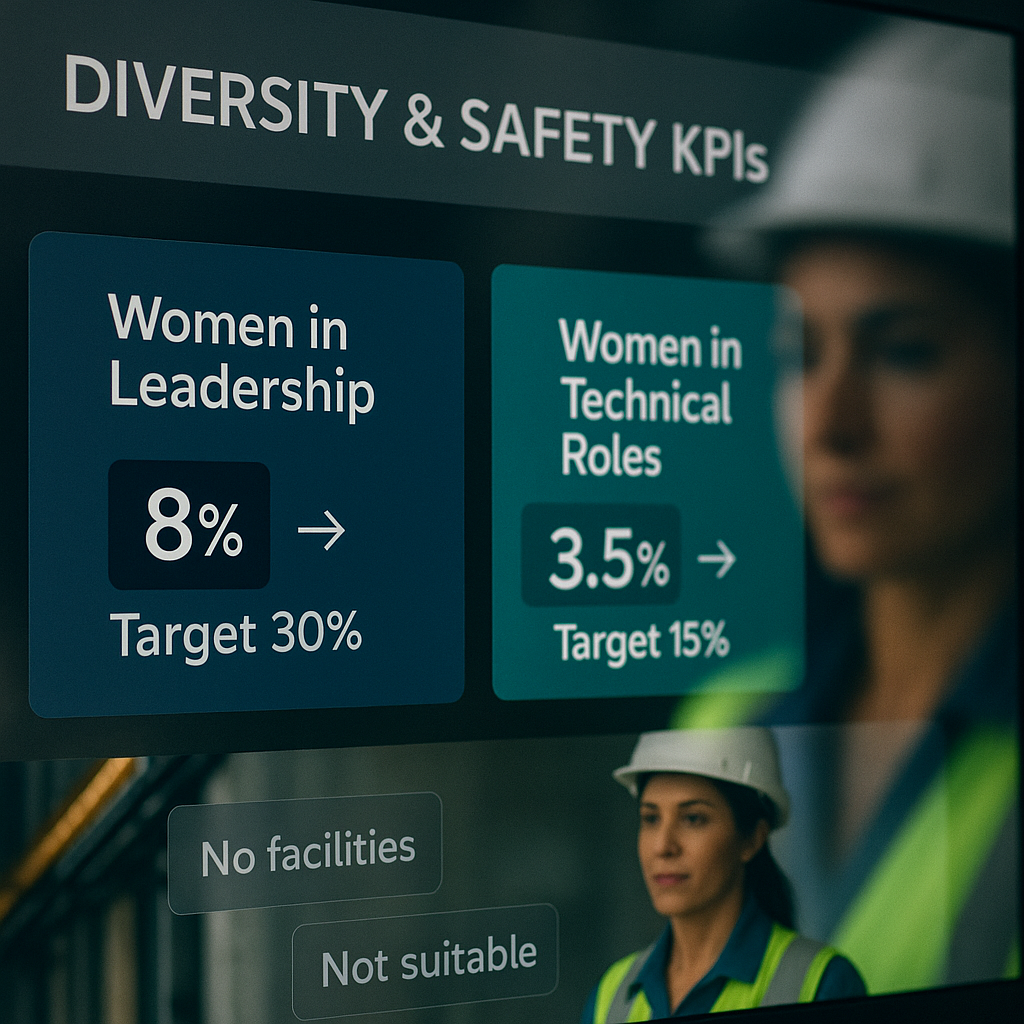
If we look only at women in site trades, numbers drop low. These numbers often fall below 4%.
- Trades and Apprenticeships: Figures show a small rise in female apprenticeships this year. But, this growth is too slow. It cannot meet the industry’s need for skilled workers. Clearly, the existing culture is a big problem.
- Management: Women have better luck moving into project management. They also do well in quantity surveying. Still, the number drops fast at the director level. So, the industry points to female Project Managers with pride. But, these roles are often not with the top decision makers.
- Building Safety Specialists: The Building Safety Act created a new, vital professional class. Data suggests that women take roles like Building Safety Manager. Yet, they often lack the needed site time. Crucially, they need this time to match the power of a Principal Contractor. Thus, the sector must train women. This training must give them the technical skills the new law requires.

Technical and Safety Critical Roles for Women in Construction
Underrepresentation is worst in technical and safety critical jobs. These roles directly save lives. They also ensure rules are followed.
For example, top site managers have very few women. Structural engineers and safety directors also lack women. Furthermore, this is not just about being seen. Instead, it presents a real risk factor.
Having many views in safety planning leads to better risk spotting. Unfortunately, current senior teams badly lack this diversity.
Pay & Promotion Gaps for Women in Construction: The Sticky Ceiling

Recruitment is the first challenge. Pay and promotion are the second. These are often hidden problems. Equal pay laws exist. Still, the industry faces a large total pay gap.
This happens because fewer Women in Construction hold the best paid technical jobs. They also miss out on leadership spots.
The Leadership Deficit for Women in Construction
A look at top roles shows the biggest gaps are at the very top. This is true across construction and building safety. Facts reviewed by Approach Personnel show:
- Board Representation: Women hold less than 5% of Executive Director positions in large UK construction firms. This means a similar group of people sets the culture. They also set the direction for the whole industry.
- Safety Leadership: Men mostly hold jobs like Head of Health and Safety. Group SHE Director roles are similar. Principal Designer roles are similar. The voices guiding the Building Safety Act response miss a key female view.
- Technical Pay Disparity: A woman who is a technical site engineer may earn similar pay to a man. But, records show she is less likely to get the first promotion. This promotion could be to Site Manager or Project Director. This means the industry keeps the total career earnings for Women in Construction lower.
Also, many companies do not have clear plans for the next leader. This makes the problem worse. Promotions often rely on informal networks. These are often called the “old boys’ club.” So, women simply miss chances.
Exposing the Broken Culture: Discrimination and Reality for Women in Construction
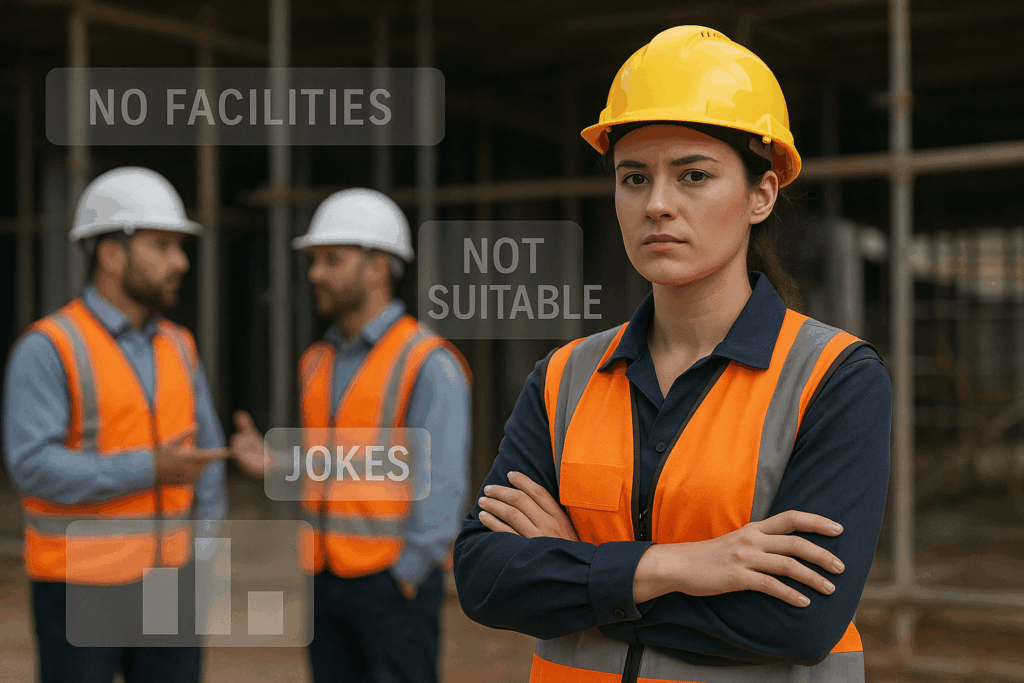
Industry bosses speak about being inclusive. But, many Women in Construction still face casual sexism. They also face clear unfair treatment. They also face hostile workplaces. So, we must show where the culture still fails. This is needed to reach true progress.
Recent Stories of Discrimination
In the past year, several reports and stories painted a bad picture. They show that the culture is stalling in some industry areas:
- The Isolation Factor: Female workers on site often report feeling alone. They feel they must work much harder to prove their skills. For instance, a 2024 survey found female managers get rude nicknames. Co workers question their instructions more often. They question them far more than male peers.
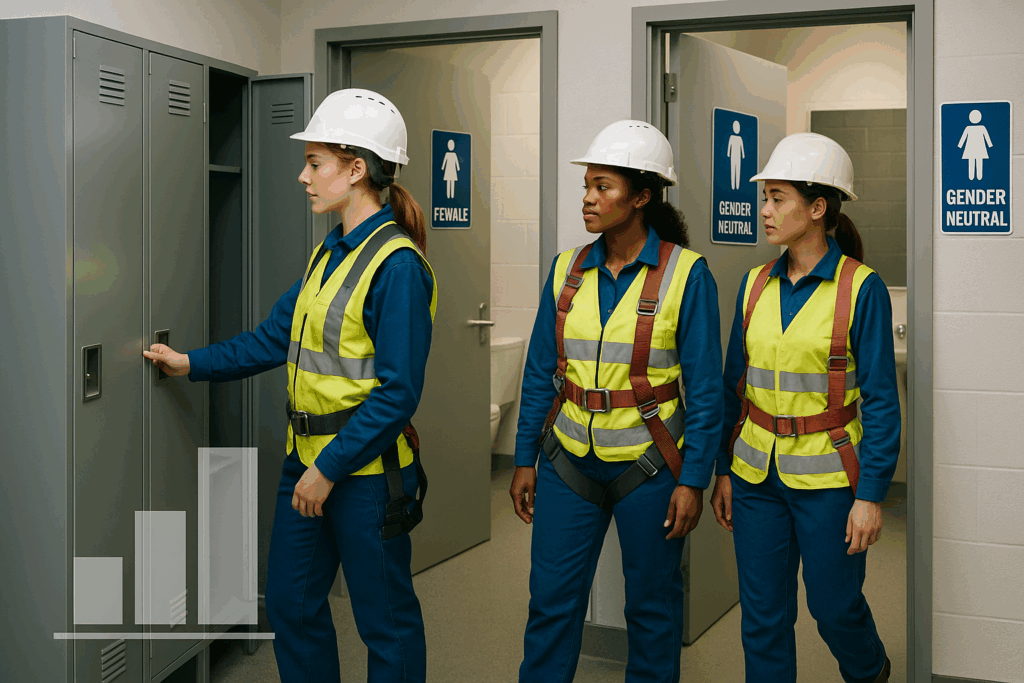
- Inadequate Facilities: The simple issue of poor or missing female changing rooms continues. Toilets on many sites are also lacking. This is more than just an issue. It strongly signals that firms do not expect women to stay long term.
- Hiring Bias: A study linked to UK Construction Week found proof of bias. Firms gave fewer interview calls to CVs with female names. This was true for site supervisor jobs. This happened even if their qualifications matched male candidates. Ultimately, this presents a subtle yet strong type of system error.
These culture issues force away talented women. These women could otherwise succeed. In short, PR cannot fix the problem. This is true if the daily site life is disrespectful or isolating.
Celebrating Progress: Good News Stories for Women in Construction

Despite the hurdles, many companies achieve real success. Individuals also achieve real success for Women in Construction. So, we must celebrate these good stories. They serve as models for others to follow.
The Mentorship Movement
Several large contractors started formal reverse mentorship schemes. They pair less experienced female staff with senior male bosses. This helps close the networking gap. It ensures female voices reach the highest business levels.
Inclusion in Design
Companies using tools from The Access Group report better staff involvement. This includes diverse staff early in the design stage. For example, having women on design teams leads to better plans. They design for gender neutral facilities. Also, this improves safety features that help all workers.
Apprenticeship Success
In 2024, government and colleges reported record numbers of women. These women finished T Level courses in construction and engineering. Groups like Women in Construction offer vital support networks. These networks ensure women move well from school into industry jobs.
Safety Leadership
Several women have taken important roles. These include Building Safety Directors in housing management firms. Clearly, this shows the industry now values new leadership. This is leadership focused on following the law after the Building Safety Act. This shift shows a real focus on skill over old ways in this important area.
Call to Action: Specific Targets for Change for Women in Construction
Moving past mere talk needs clear goals. So, Building Safety Journal (BSJ) asks for specific actions. It asks for right actions from employers and candidates about Women in Construction. This is done with industry partners.
Recommendations for Employers in Construction
Employers must stop checking general ‘workforce diversity.’ Instead, they must start measuring representation where it matters. This is in leadership. It is also on the tools.
- Set Leadership Targets: By 2028, aim for 30% female representation in all top leadership. This goal also applies to board positions. Publish reports on progress yearly.
- Mandate Bias Training: Move beyond simple training. Institute required, yearly training on hidden bias. This is for all staff who hire, promote, and check work.
- Review Facilities: Check all site facilities right away. Make sure changing rooms, toilets, and safety gear (PPE) are safe and designed for women.
- Sponsorship vs Mentorship: Start formal sponsorship schemes. Senior leaders must actively support one high potential woman. This support should help her reach the next leadership level. This provides real backing, unlike quiet mentorship.
Recommendations for Candidates in Construction
Women looking to move up must be ready to take action. They must be focused. They must demand better career paths. This applies to building safety and construction.
- Demand Transparency: Candidates must ask clear questions during interviews. Ask about flexible work rules. Also ask about parental leave. Finally, ask about the diversity of the teams they would join. This shows that culture is important.
- Seek Technical Acumen: Do not let a lack of site time stop you. Seek specific certificates or technical courses (like fire engineering). These courses prove the technical skills needed for top safety jobs. This is vital for having power. This is in a sector that respects knowledge.
- Use Industry Networks: Join professional groups. Use networks like UK Construction Week. Events backed by companies like Approach Personnel help you meet mentors. They also help you meet leaders outside your firm. Networking creates chances that simple job applications often miss.
Conclusion: The Data Demands Accountability for Women in Construction
The current facts on Women in Construction show a divided story. We know the issue exists. But, we are far from being truly fair. The 15% figure is a start, not a finish.
Real progress requires measuring the number of women earning the highest pay. It also requires measuring women holding the most powerful safety director jobs. Finally, it requires measuring women leading site teams.
True progress is not about adding a diverse face to an advert. Instead, it is about deeply changing the culture. This includes hiring, promotion, and daily site life. The Building Safety Act calls for skill. Skill has no gender.
Companies that fail to get, keep, and promote diverse talent are not just falling behind ethically. They actively limit their own performance and skill. The facts are clear. Now, the industry must deliver.