Your Quick Start Guide to Building Safety Apprenticeships
Are you aged 16–24 or starting a career switch? Then this guide is for you. It explains how to choose and succeed in apprenticeships. These jobs lead to key roles in building safety. The sector needs skilled, practical people. Therefore, starting with an apprenticeship gives you a salary, training, and vital site experience.
This guide covers which apprenticeship standards feed into safety careers. First, we will look at off the job learning. Next, we will see how the Apprenticeship Levy funds training. Furthermore, you will learn how to build a logbook. This logbook proves your skills. Crucially, you will also learn how to use a mentor well. By the end, you will have a clear shortlist of routes, a draft rotation plan, and a simple system for evidence and progress.
Section 1: Why Building Safety Apprenticeships are a Strong Choice
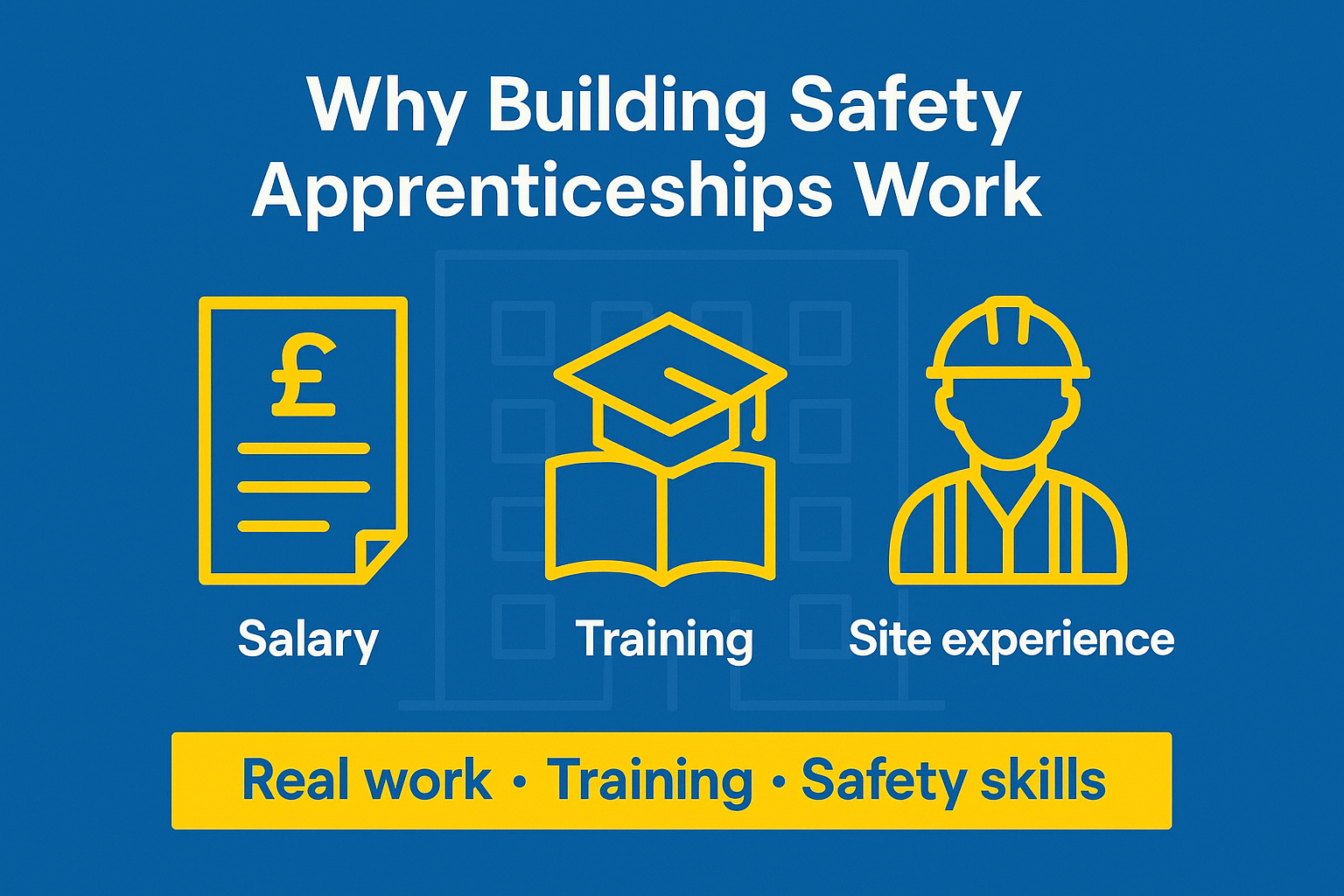
Apprenticeships combine real work, a salary, and training. Clearly, for safety careers, this mix is important. Employers need people who can produce evidence. In addition, they need people who work safely on site. Moreover, they need people who talk clearly. In short, an apprenticeship gives you supervised duty.
This means you learn how to do things right. For example, you learn to write down issues. You also learn to tag certificates. You learn to help with checks. Furthermore, you help residents and contractors. Therefore, that mix of skill and good sense turns a new starter into a trusted safety worker.
What You Will Learn during Your Apprenticeship
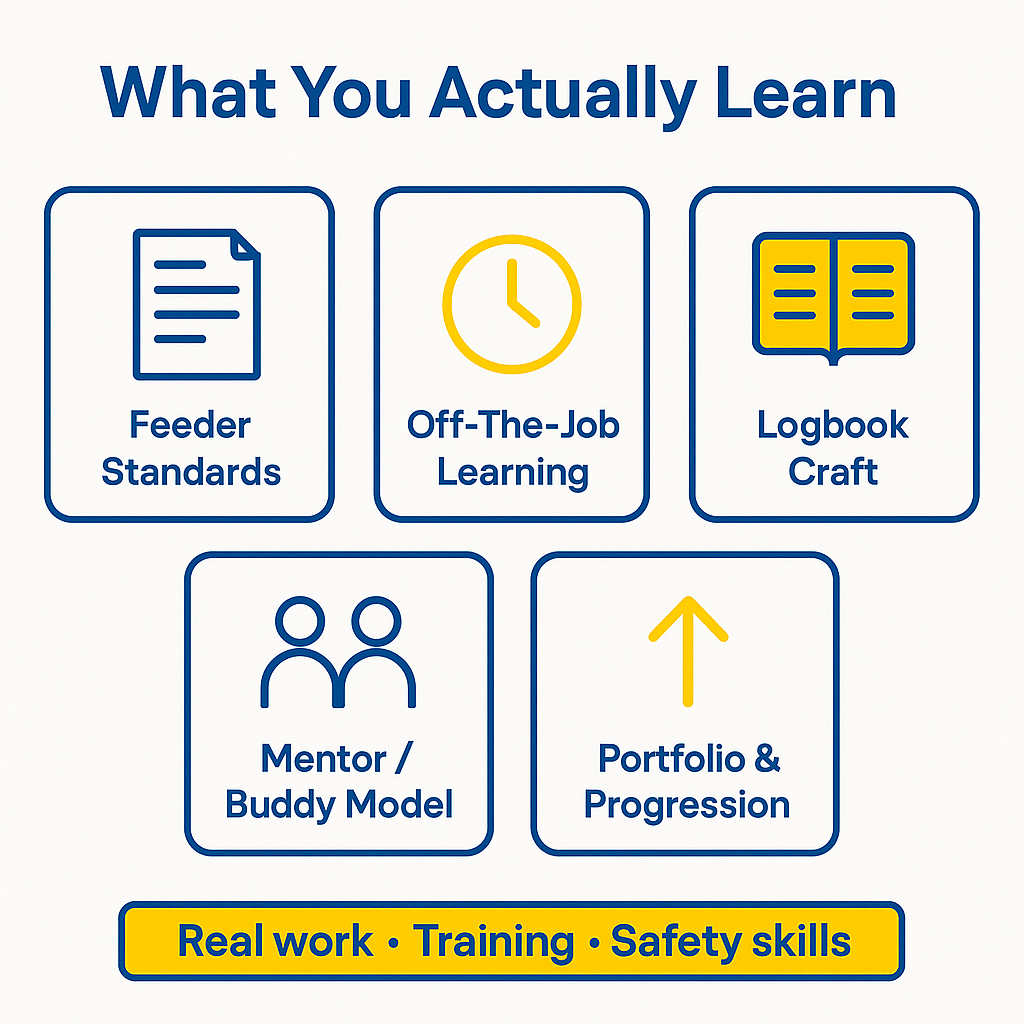
- Feeder Standards: Level 3–4 SHE Technician, Fire & Security Systems, Facilities/Construction Site Supervisor, and degree routes.
- Off-The-Job Learning: How it is scheduled, recorded, and funded.
- Logbook Craft: Tasks, evidence items, reflections, and mentor sign off.
- Mentor/Buddy Model: How to set up meetings and ask for useful feedback.
- Portfolio and Progression: How to use your logbook to step into safety roles.
Section 2: Feeder Apprenticeships: Picking Your Safety Route
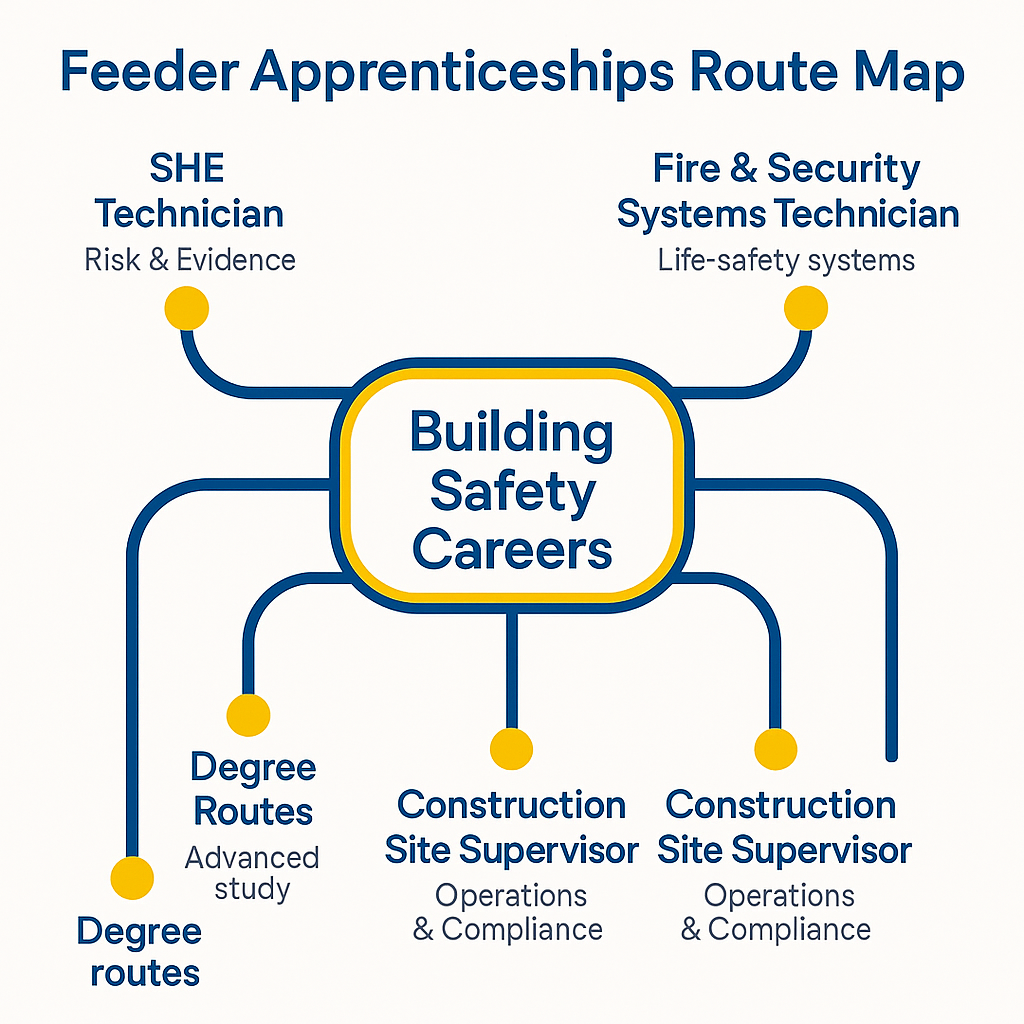
There is no single “building safety apprentice” standard now. Instead, several standards lead directly into safety jobs. Thus, choose based on what you like doing daily: technical systems, data work, or people and planning.
Level 3 Safety, Health And Environment (SHE) Technician Apprenticeships
- Fit: Wide safety knowledge across building sites and estates.
- Typical Duties: Help with risk checks, support accident reports, give short safety talks, keep action lists up to date.
- Why It Leads to Safety: It teaches risk thinking and evidence habits. Ultimately, this is a good start.
- Next Steps: Building Safety Coordinator support, compliance assistant, or NEBOSH certificates.

Level 3 Fire And Security Systems Technician Apprenticeships
- Fit: Hands on, technical; focused on life-safety systems (alarms, sensors).
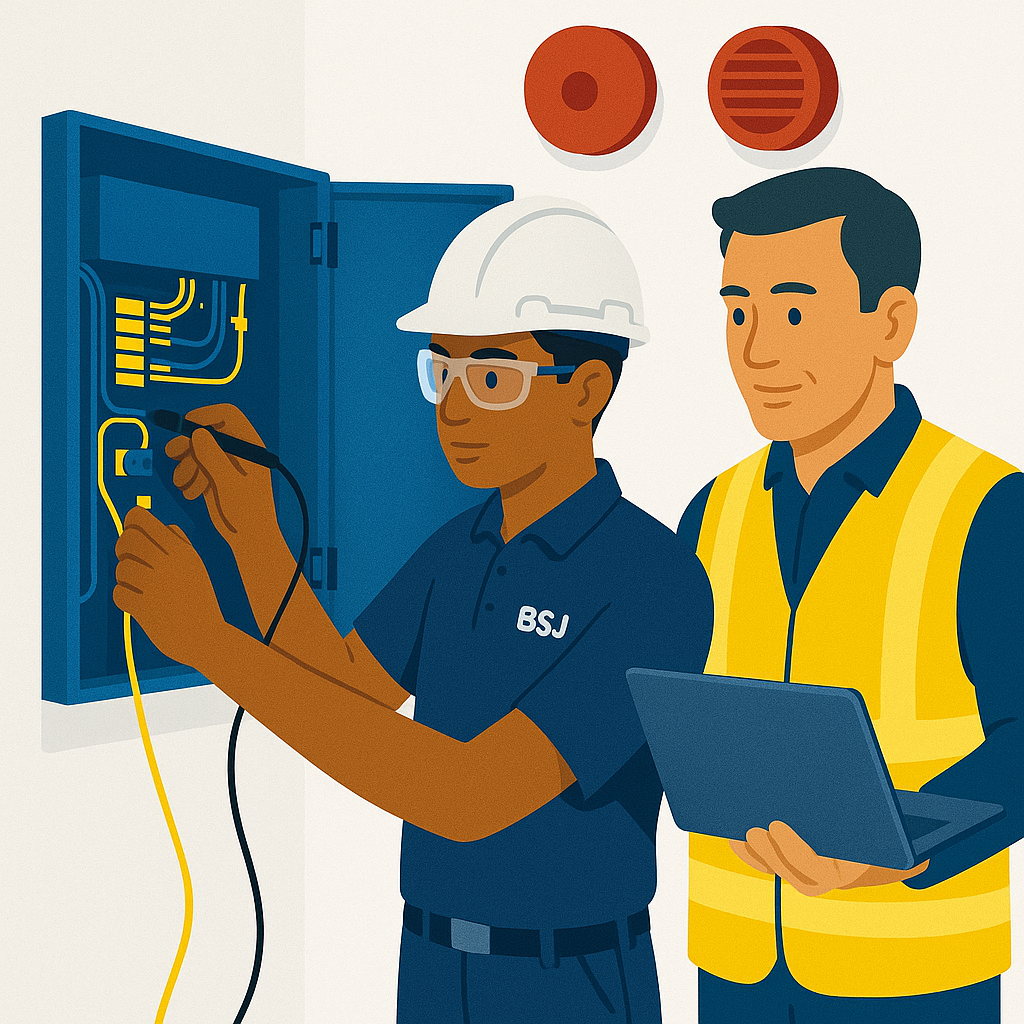
- Typical Duties: Install and start up systems, do routine checks, find faults, capture evidence for sign off.
- Why It Leads to Safety: Direct work with fire protection systems and compliance evidence. Indeed, this is very specific training.
- Next Steps: Fire systems engineer, life safety maintenance lead, or specialist check roles.
Level 4 Facilities Manager Apprenticeships
- Fit: People and operations; manage contractors, permits, and planned repair work.
- Typical Duties: Check method statements (RAMS), control permits, keep plant rooms tidy, track actions.
- Why It Leads to Safety: Places you at the centre of daily controls and evidence flow. Consequently, you learn management skills.
- Next Steps: Building Safety Coordinator, estates/asset compliance roles.
How To Decide
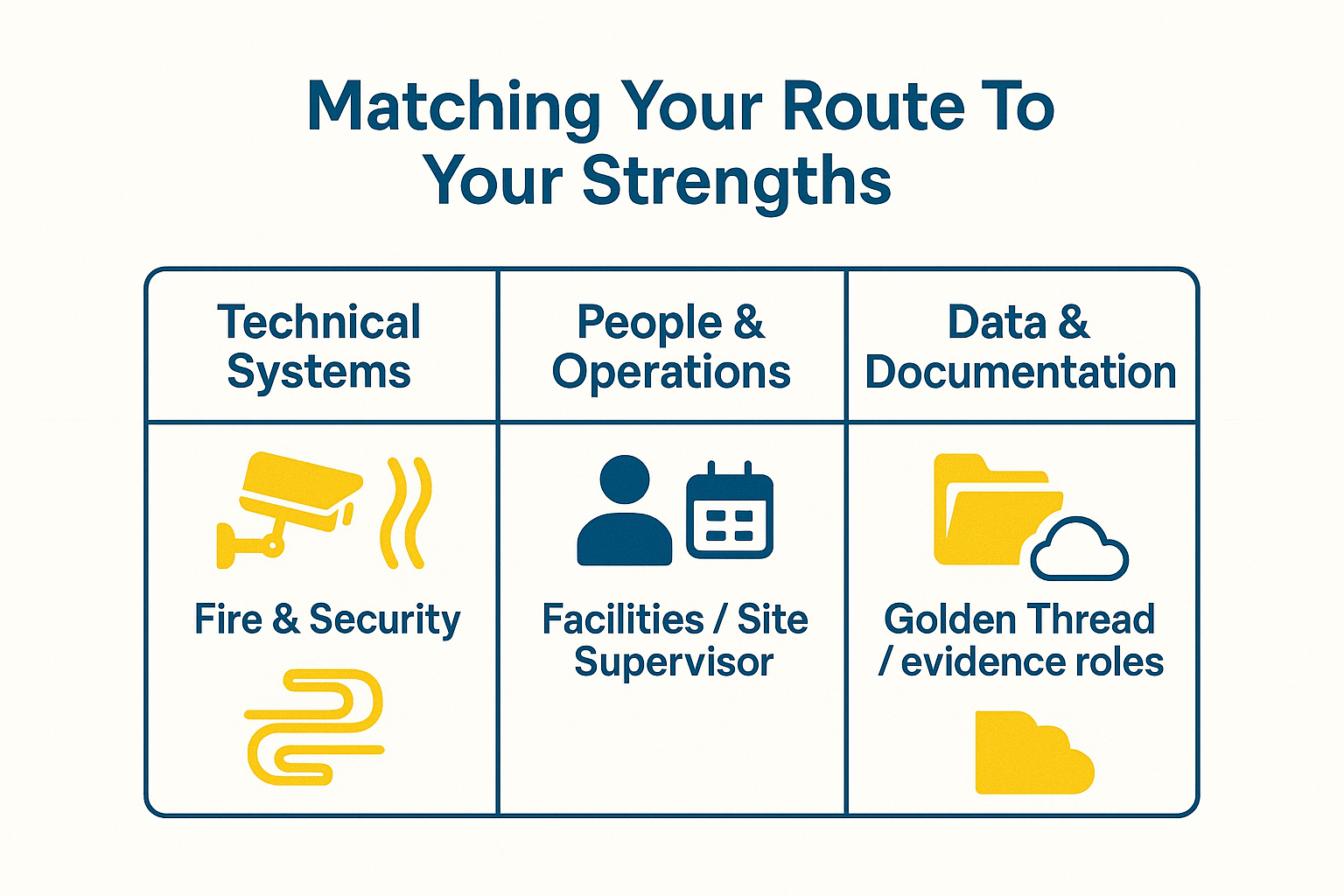
- You Like Technical Systems: Fire & Security Systems Technician.
- You Like People And Operations: Facilities or Construction Site Supervisor.
- You Like Data And Documentation: Any of the above, plus Golden Thread admin in your role. In short, match the role to your skills.
Section 3: Apprenticeships Funding and Logbook Craft
Off The Job Learning and the Apprenticeship Levy
Off the job learning is training during paid hours. However, it is not your normal work. For instance, it could be classroom time, watching a specialist, or doing a skills project. Importantly, it must be logged and match your standard.
- Typical Volume: A set part of your working time during the programme. This means you schedule learning regularly.
- Eligible Activities: Teaching by a provider, supervised projects, mock tests.
- Recording: Keep dates, topics, time spent, what you learned, and notes. Above all, keep records clear.
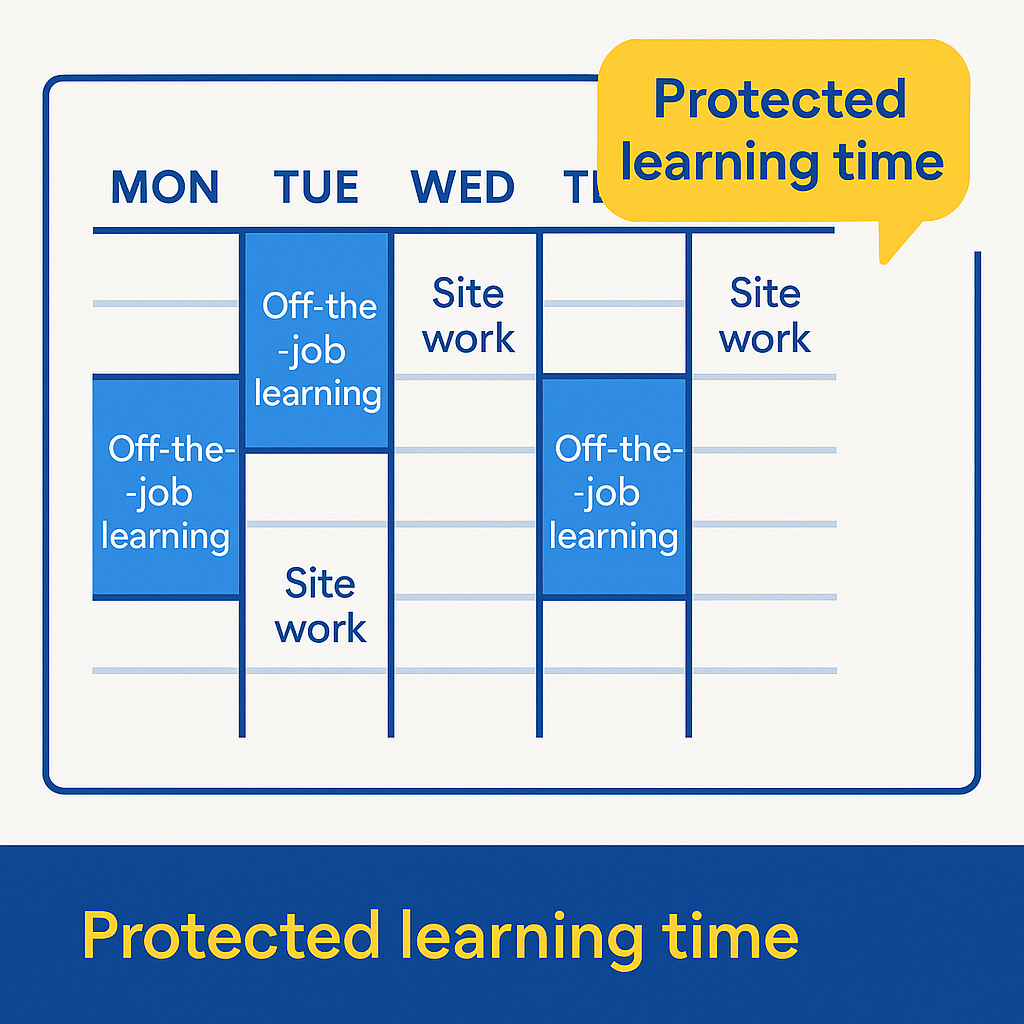
The Apprenticeship Levy pays for training. Consequently, training costs are usually covered. However, you must protect time for off the job learning in your work rota. Otherwise, that time may be used for other tasks. Therefore, schedule it carefully.
- Ask Early: How is this time set aside in my week?
- Protect It: Add sessions to your calendar. Agree on expectations with your manager.
Logbook Craft: What Good Evidence Looks Like
Your logbook is your proof of skill. It must show you did tasks correctly. In addition, it must show you saw the risk and learned from advice. Therefore, it should be tidy and easy for assessors to check.
Core Sections To Maintain
- Task Entries: Date, place, purpose, standard used, outcome.
- Evidence Items: Photos (with notes), certificates, tracker screenshots.
- Learning Reflections: What you learned, risks you saw, how you will do it better next time. Furthermore, reflections show depth of thought.
- Mentor Sign Off: A quick note that confirms your work and quality. Hence, always get it signed.
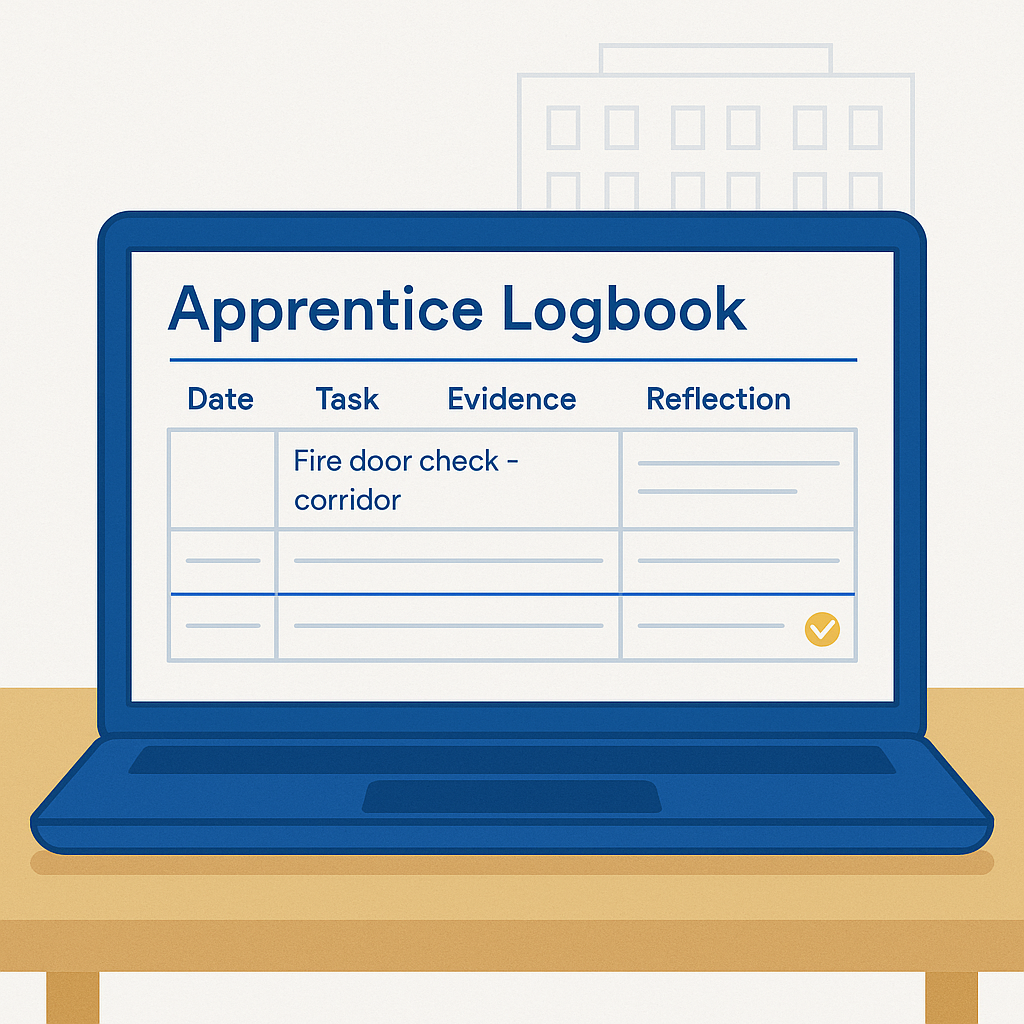
How To Write a Strong Task Entry
For example, a Fire Door Check entry should detail the scope and method. It should also include findings (e.g., two doors not closing), action raised, evidence links, and a reflection. Finally, ensure the entry is easy to trace.
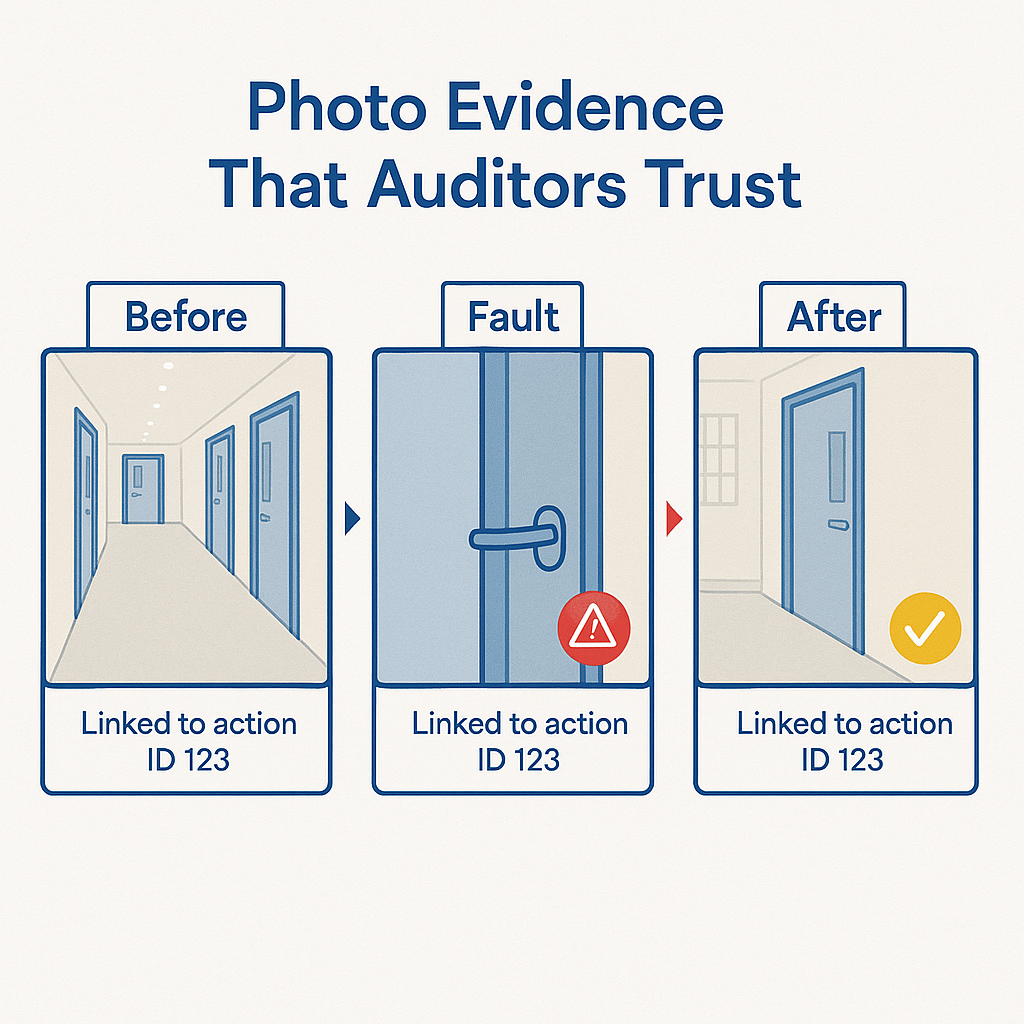
Photo Evidence That Auditors Trust
- Wide Shot: Shows the area (corridor, plant bay). Similarly, a close up is needed.
- Close-Up: Shows detail, asset label, and fault clearly.
- After Shot: Shows a fix was completed.
- Caption: One line linking the photo to the action ID and place. Furthermore, the caption must be accurate.
Section 4: Mentor Model and Progression
The Mentor/Buddy Model: Getting Real Growth
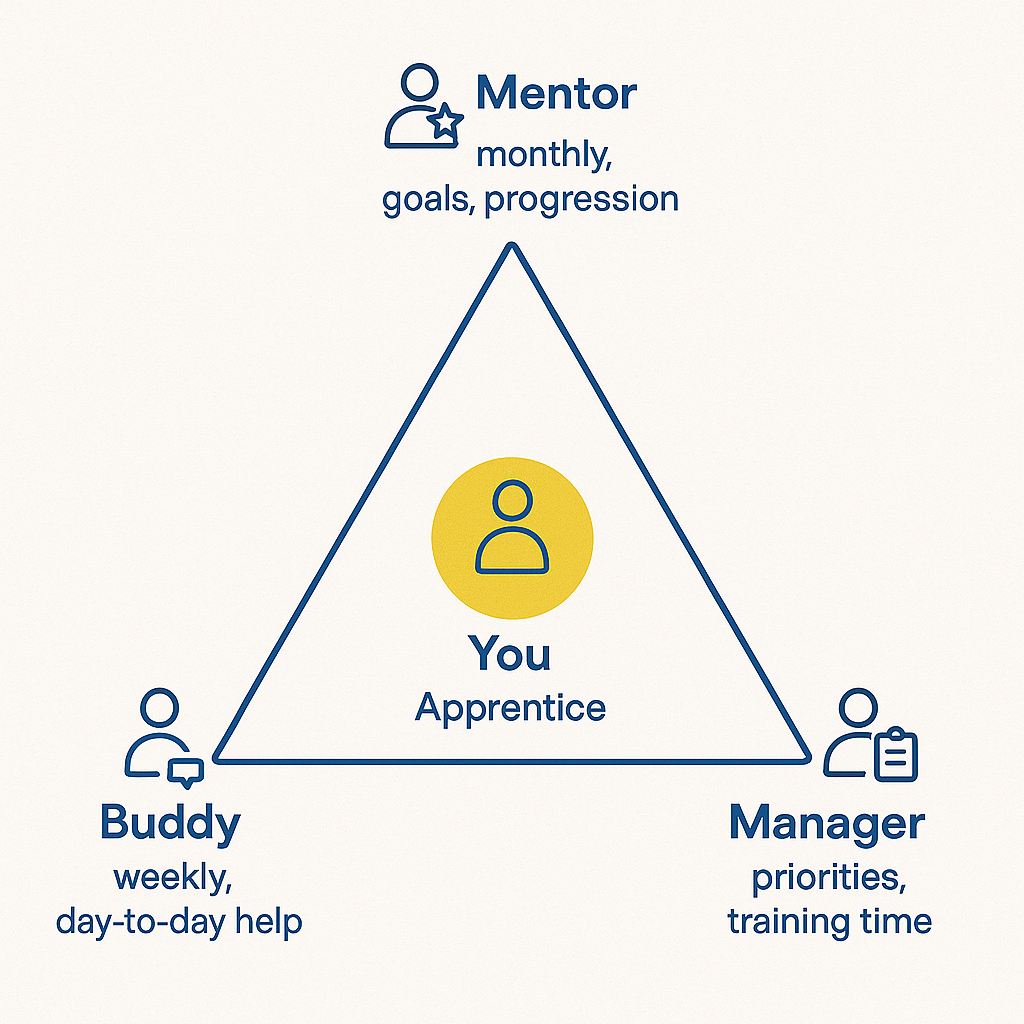
A mentor gives you direction. Conversely, a buddy helps day to day. Thus, use both resources. In other words, you need structured support, not just random chats.
- Mentor: Monthly 30–45 minutes; reviews progress, sets goals, approves work. Hence, the mentor guides your long-term path.
- Buddy: Weekly quick chat; unblocks tasks, checks notes, helps with site work. As a result, small issues are solved quickly.
- Manager: Confirms priorities, approves training time, signs off safety duties. Therefore, respect the manager’s role.
Standing Agenda For Monthly Mentor Meetings
- Highlights: Two good things since the last meeting (what you did and why it mattered). This allows you to showcase success.
- Evidence: One logbook entry to review (is it ready for assessment?). Specifically, check the quality.
- Gaps: One skill you are struggling with (agree one action to fix it).
- Next 30 Days: Three tasks with dates (e.g., complete plant-room check).
- Support: What you need from the mentor (access, training, contacts).

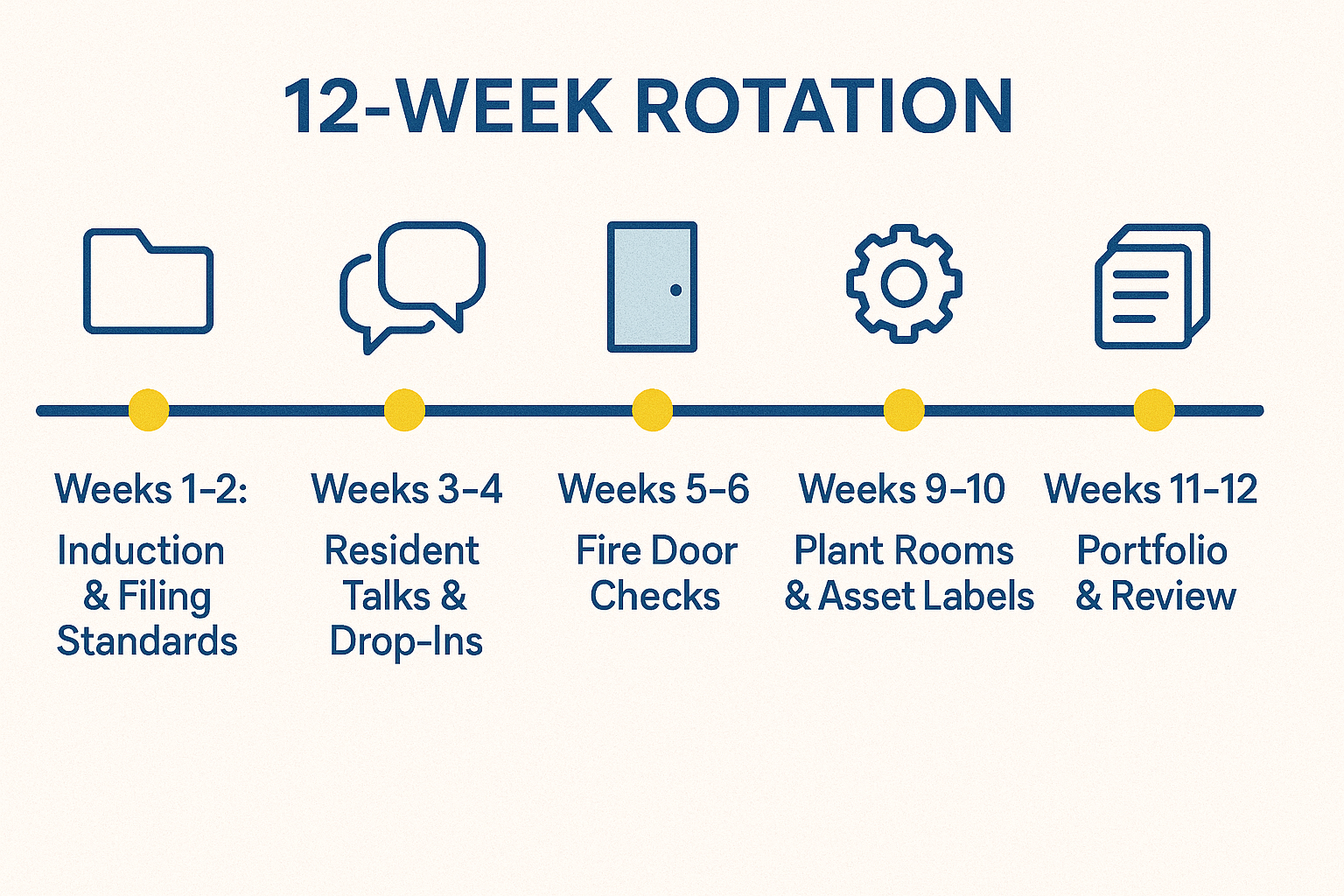
Designing A 12-Week Rotation Plan
A rotation plan keeps learning focused. It also proves you added value beyond just watching. In fact, it is crucial for showing progress.
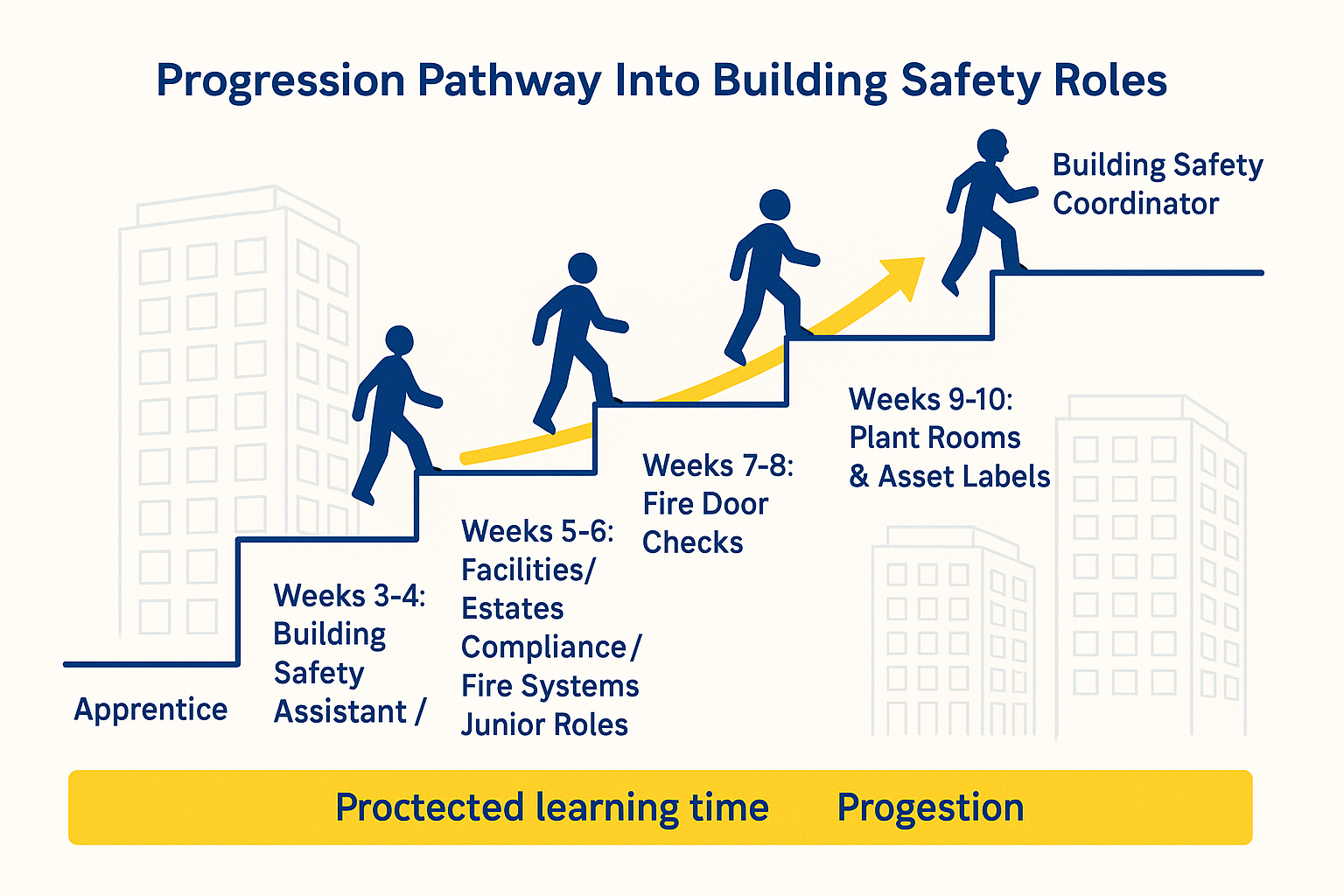
- Weeks 1–2: Induction and File Tidy Up. This includes setting up filing standards.
- Weeks 3–4: Resident Talk and Drop-Ins (write a notice).
- Weeks 5–6: Fire Door Check (supervised). Meanwhile, you build technical skills.
- Weeks 7–8: Contractor Work RAMS and Permits. Moreover, you learn control processes.
- Weeks 9–10: Plant Room Tidy and Asset Labelling.
- Weeks 11–12: Small Portfolio and Review (put together five log entries).
Where This Leads: Roles and Progression
With a completed rotation and a tidy logbook, you are ready for:
- Building Safety Assistant/Coordinator Support. This is the first step.
- Facilities/Estates Compliance Roles.
- Fire Systems Junior Roles.
From there, add courses. Then, with two to four years of structured growth, you can aim for Building Safety Coordinator, then Building Safety Manager or specialist assurance roles.