Your Quick Start Guide: Building Safety Careers in the UK
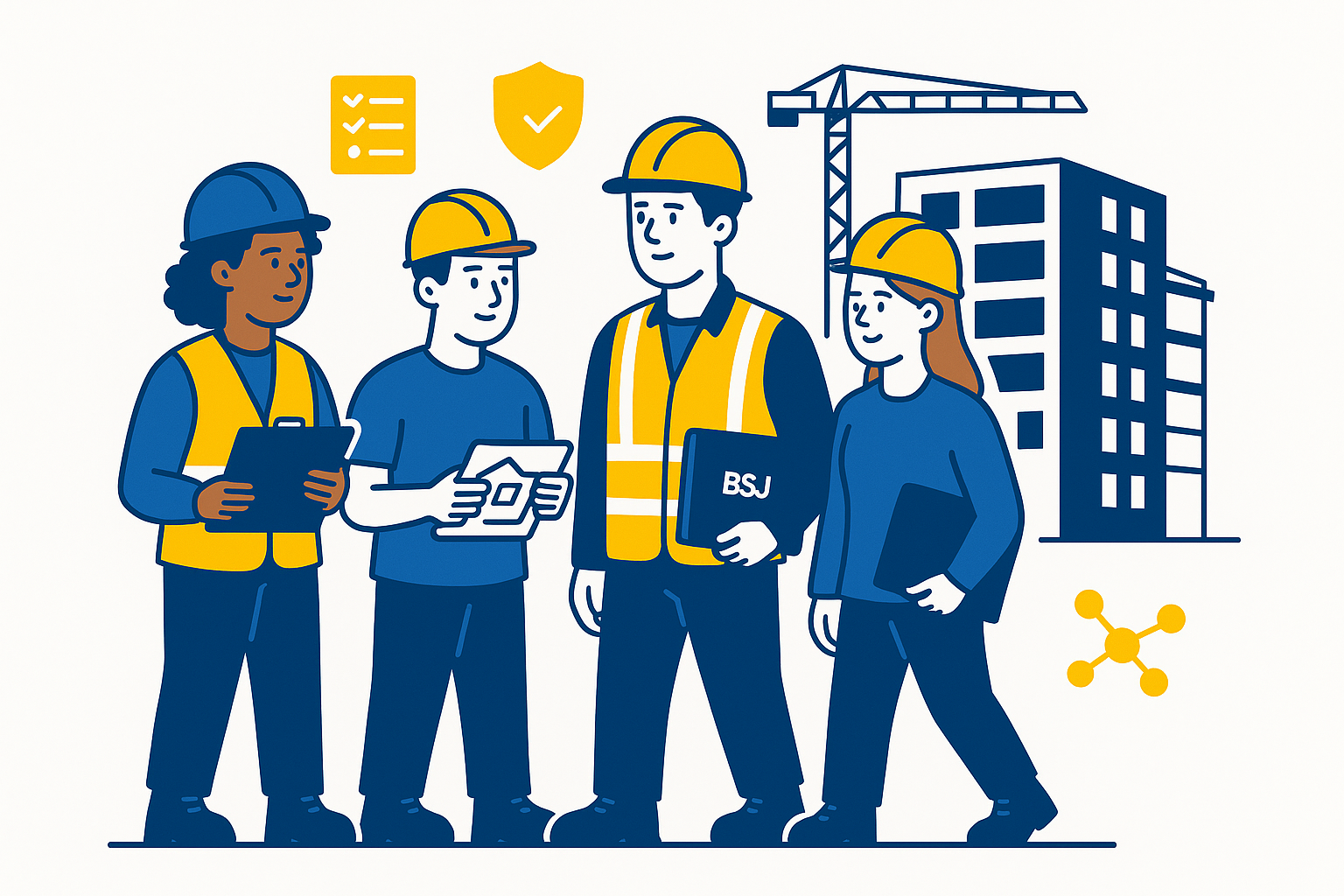
This practical training guide is written for 16–19 year-olds in the UK who want to start a rewarding career in Building Safety. We explain the routes, including Building Safety Apprenticeships, that actually get you onto a construction site, what employers expect on day one, and how to build a small but credible portfolio to land your first job or apprenticeship. You will learn exactly how T Levels and Level 3 apprenticeships work, which certificates to get, how to behave safely on live sites, and how to log evidence so your new skills are officially recognised.
Section 1: The Value of Early Building Safety Careers
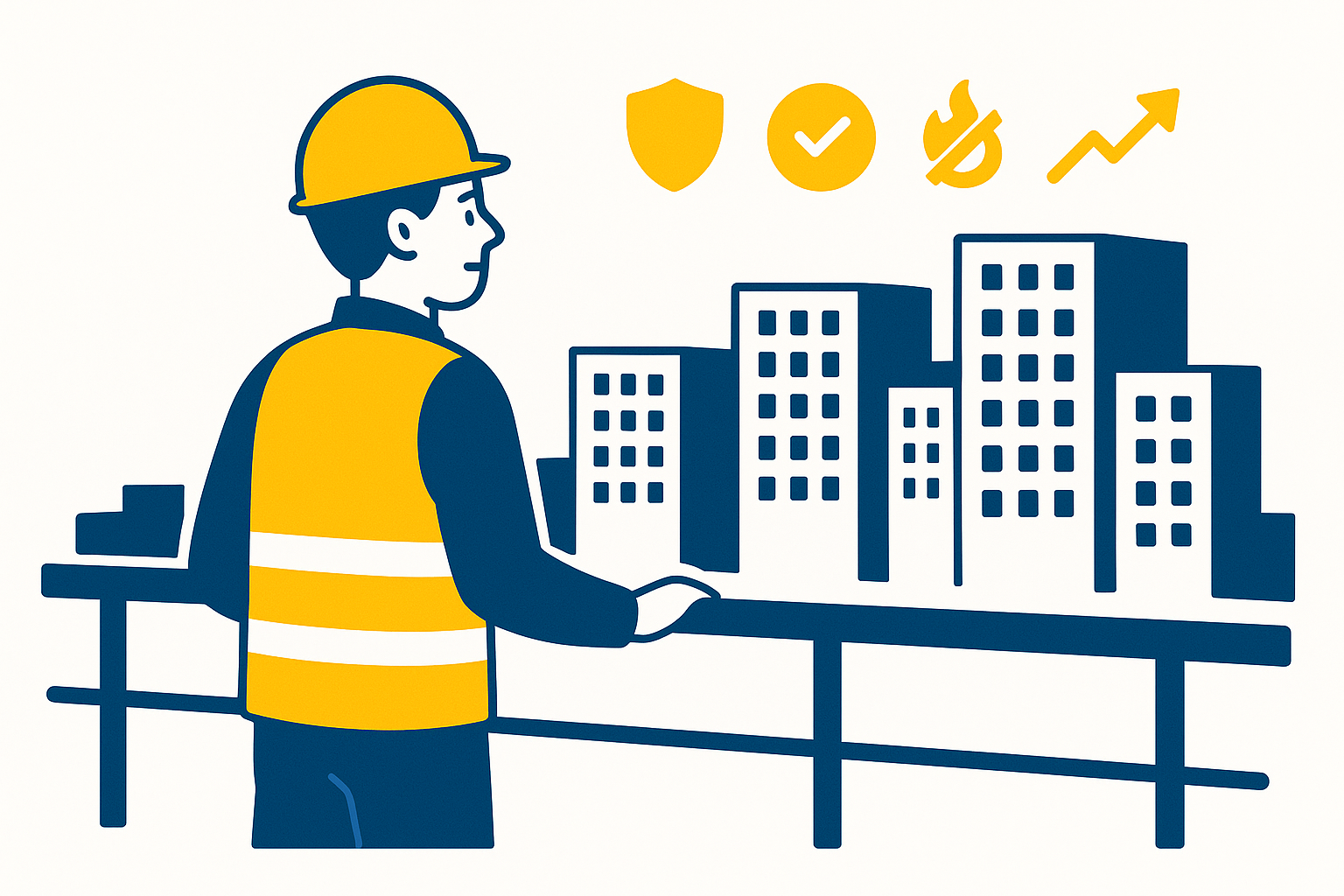
Building Safety is an excellent career choice right now.
- Real Impact: You will help keep people safe in their homes and workplaces.
- Strong Demand: New UK laws mean more organisations need safety aware staff. Therefore, securing a Building Safety Apprenticeship positions you perfectly for this demand.
- Multiple Entry Points: You can start from college, an apprenticeship, or a junior site role. Furthermore, you can progress into management, data, fire engineering, or building control roles later.
- Paid Learning: Building Safety Apprenticeships let you earn while you qualify. In addition, T Levels include a long industry placement that gives you real work experience.
Route Overview: T Levels vs. Building Safety Apprenticeships
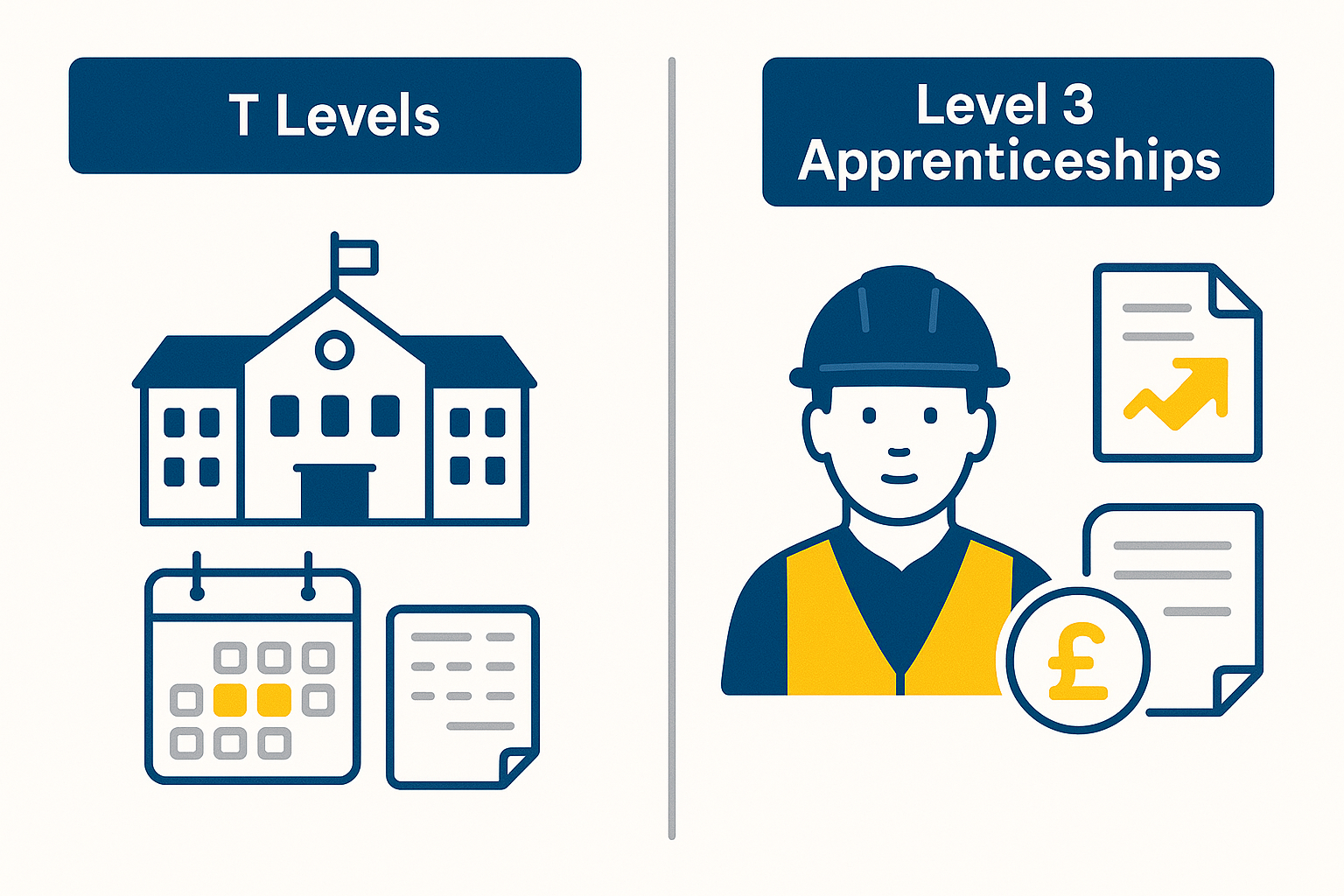
Both routes can lead to the same great careers; however, they sequence the learning differently.
T Levels (College with a Long Industry Placement)
You study mostly at college but must complete a minimum of 315+ hours of industry placement. Therefore, you build knowledge first, and then apply it on placement days. This route is ideal for learners who want structured teaching alongside supervised work experience.
Level 3 Building Safety Apprenticeships (Employed and Paid from Day One)
You are employed, paid a salary, and learn on the job. You also get set minimum ‘off the job’ training. As a result, you pick up skills faster in real settings and complete assignments with your training provider. This is the best route for learners who want to earn immediately and prefer hands on learning in a Building Safety career.
Which is right for you? Choose T Levels if you prefer a classroom foundation plus a quality placement. Alternatively, choose an apprenticeship if you are ready to work, can balance work and study, and have an employer lined up.
T Levels that Feed into Building Safety Apprenticeships
Two T Levels are especially relevant for a career in Building Safety:
1. Design, Surveying & Planning for Construction (DSP)

Core Learning: Construction methods, surveying basics, health and safety, and digital tools. Why it Helps: You will learn how buildings are designed and documented. Consequently, this is very useful for later safety roles and reviewing evidence. Placement Ideas: Shadow a Building Safety team, clerk of works, building control, or a fire risk assessor. Moreover, assist with document checks, basic site observations, and collecting safe photo evidence.
2. Building Services Engineering for Construction (BSE)
Core Learning: Electrical/mechanical systems, controls, energy, and safe systems of work.
Why it Helps: Safety relies on knowing how plant rooms, smoke extract, alarms, and ventilation work. Therefore, this knowledge is key.
Placement Ideas: Support maintenance teams, observe planned maintenance, learn permit to work basics, and help with asset labelling and data.
Placement Structure: The 315+ hours can be structured in a few ways: 1–2 days per week during term, or block placements (e.g., four to six weeks), or a mix. Indeed, you must agree on a schedule that works for your provider and your host employer.
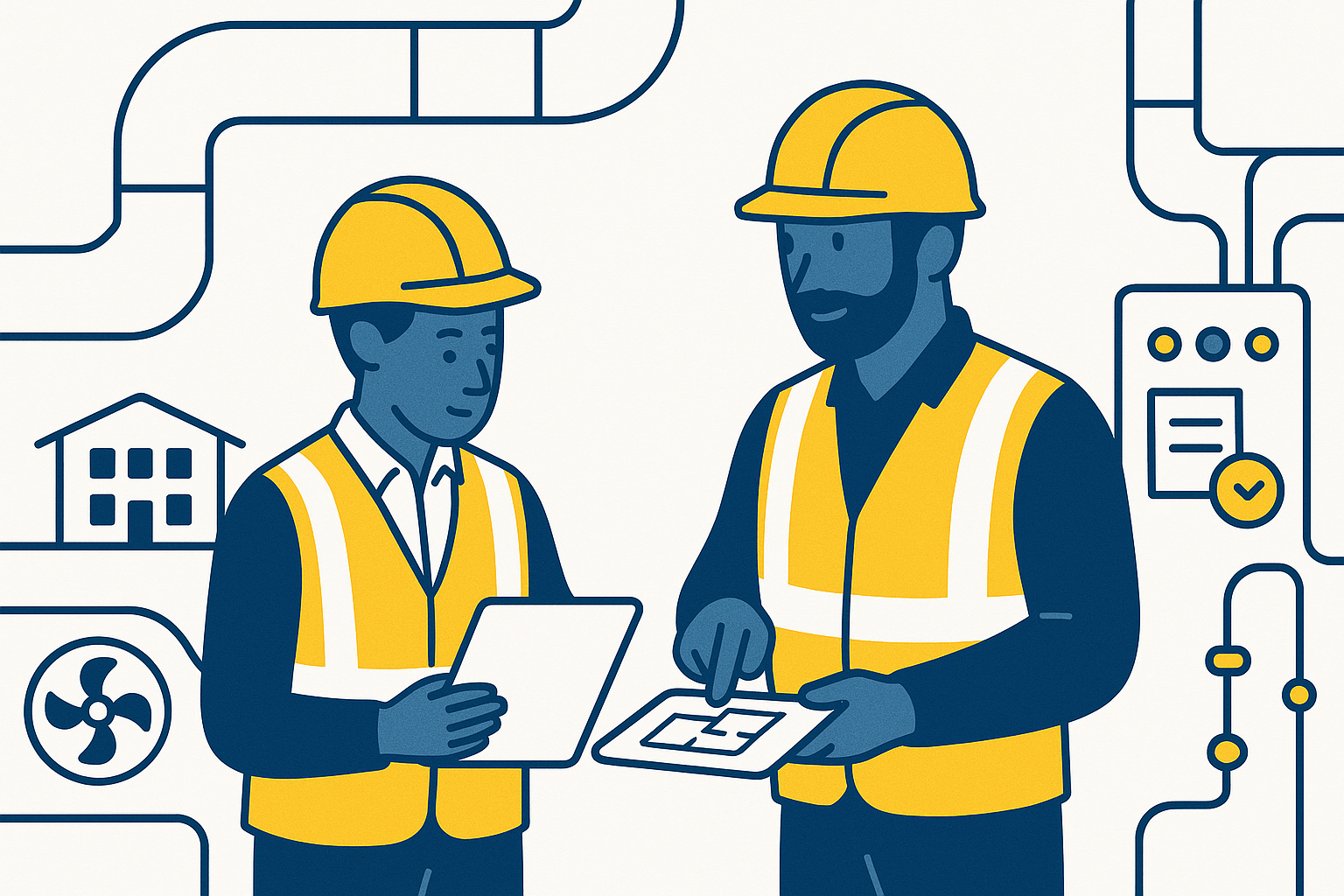
Key Level 3 Building Safety Apprenticeships
Here are three key Level 3 Building Safety Apprenticeships:
| Apprenticeship Name | Focus and Why it Fits |
| Safety, Health & Environment Technician (SHE Technician) – Level 3 | Focuses on health and safety rules, risk assessment basics, and incident reporting. Crucially, you will build the safety mindset and habits needed on site. |
| Fire Emergency & Security Systems Technician – Level 3 | Focuses on installing and maintaining fire alarms, emergency systems, and security systems. Therefore, this links directly to life safety systems and fault finding. |
| Data Technician – Level 3 (The Golden Thread) | Focuses on data collection, quality checks, and version control. Building Safety needs clean, traceable records, so you become the person who keeps the evidence reliable. |
Choosing a Provider: Look for good completion rates, clear project work, and positive employer feedback. Always ask how your off the job hours are protected in the work rota. Finally, ask to see an example of a good portfolio.
Section 2: Site Readiness for Building Safety Apprenticeships
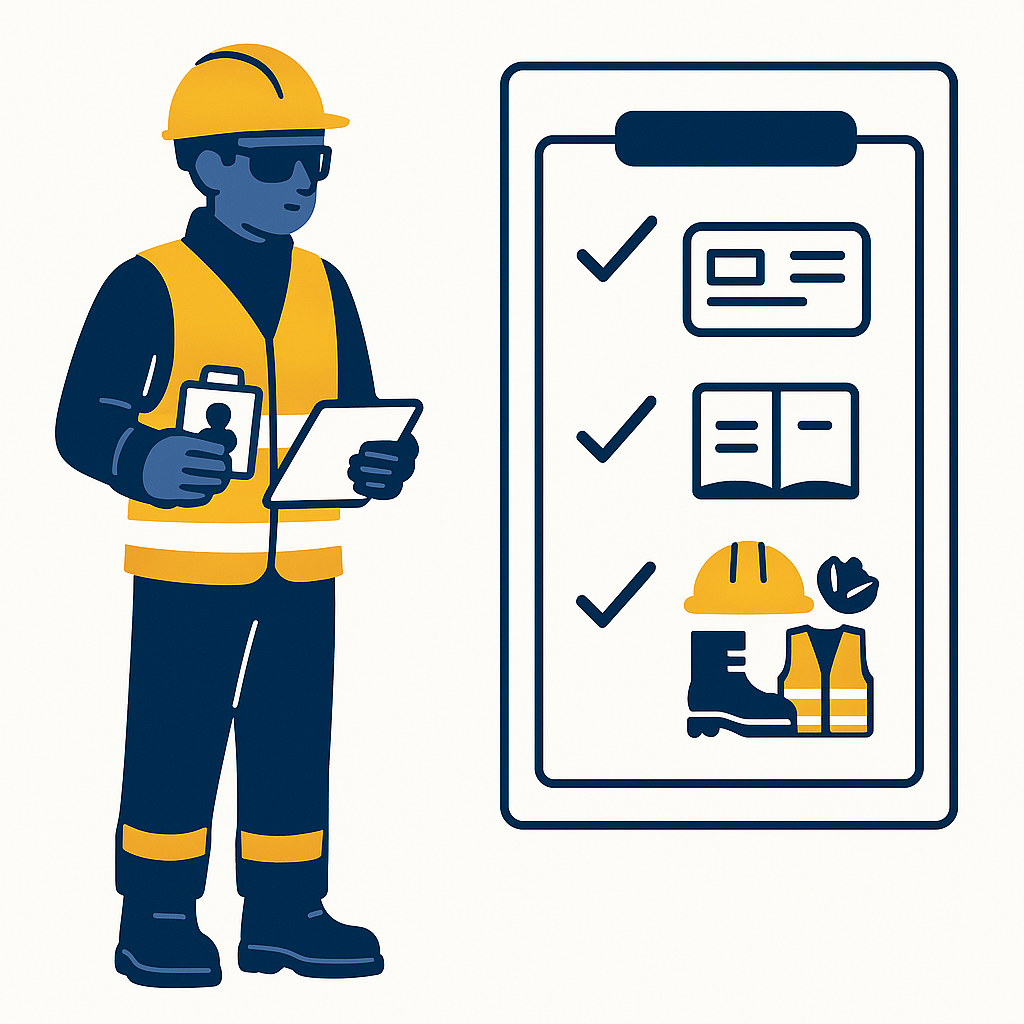
You must be prepared before you step onto a working site for your Building Safety Apprenticeship.
1. CSCS (Construction Skills Certification Scheme) Card
- Why: Most sites require a CSCS card to prove you understand basic safety.
- How: Complete the relevant Health, Safety & Environment test. Afterward, apply for the right card (often Labourer, Apprentice, or Trainee while you train).
2. CITB Health & Safety Awareness (HSA)
- Why: This course teaches essential site rules, hazards, and safe behaviour.
- Tip: Do this alongside or before applying for your CSCS card to streamline your preparation.
3. PPE (Personal Protective Equipment)
- Minimum Kit: Hard hat, high-vis vest/jacket, safety boots (with toe protection), gloves, and eye protection.
- Good Practice: Keep spares and label your kit clearly. Remember to store it clean and dry.
4. Induction Etiquette
- Arrive early with your ID, CSCS/CITB proof, and any required site forms.
- Listen and Note: Record supervisor names, emergency routes, muster points, and local rules. Moreover, never interrupt the brief.
- Ask if Unsure: Never guess. If a task feels unsafe, stop work and check with your supervisor.
Section 3: Early Competencies for Building Safety
Aim to master these three skills in your first three months.
1. Evidence Logging (The Golden Thread)
- What it is: Recording tasks in a way that someone else can trust later.
- Why it Matters: Building Safety requires reliable, auditable records. Consequently, your logging process must be flawless.
- How to Start: Use a simple log with columns for the date, task, location/asset, standard/reference, and supervisor sign off.
2. Basic Fire Door Observations
- What to Check (with a Mentor): Does the door close fully? Are the intumescent strips present? Are gaps within tolerance? Are hinges secure? Is the signage correct? Are there any wedges/blocks?
- Important: You must observe and report rather than approve or certify. Therefore, a competent person must inspect and sign off the work.
3. Resident Safe Conduct
- Be Respectful: Introduce yourself and explain what you are doing and why in plain English.
- Protect Privacy: Do not take photos of people or personal information; instead, focus on the building element itself.
- Keep Areas Tidy: Do not block corridors or exits. Always follow fire door rules.
- Report Hazards: If you see something dangerous, stop, inform your supervisor, and make the area safe if you are trained to do so. In fact, reporting is your primary duty.
Section 4: Your Starter Portfolio for Building Safety Apprenticeships
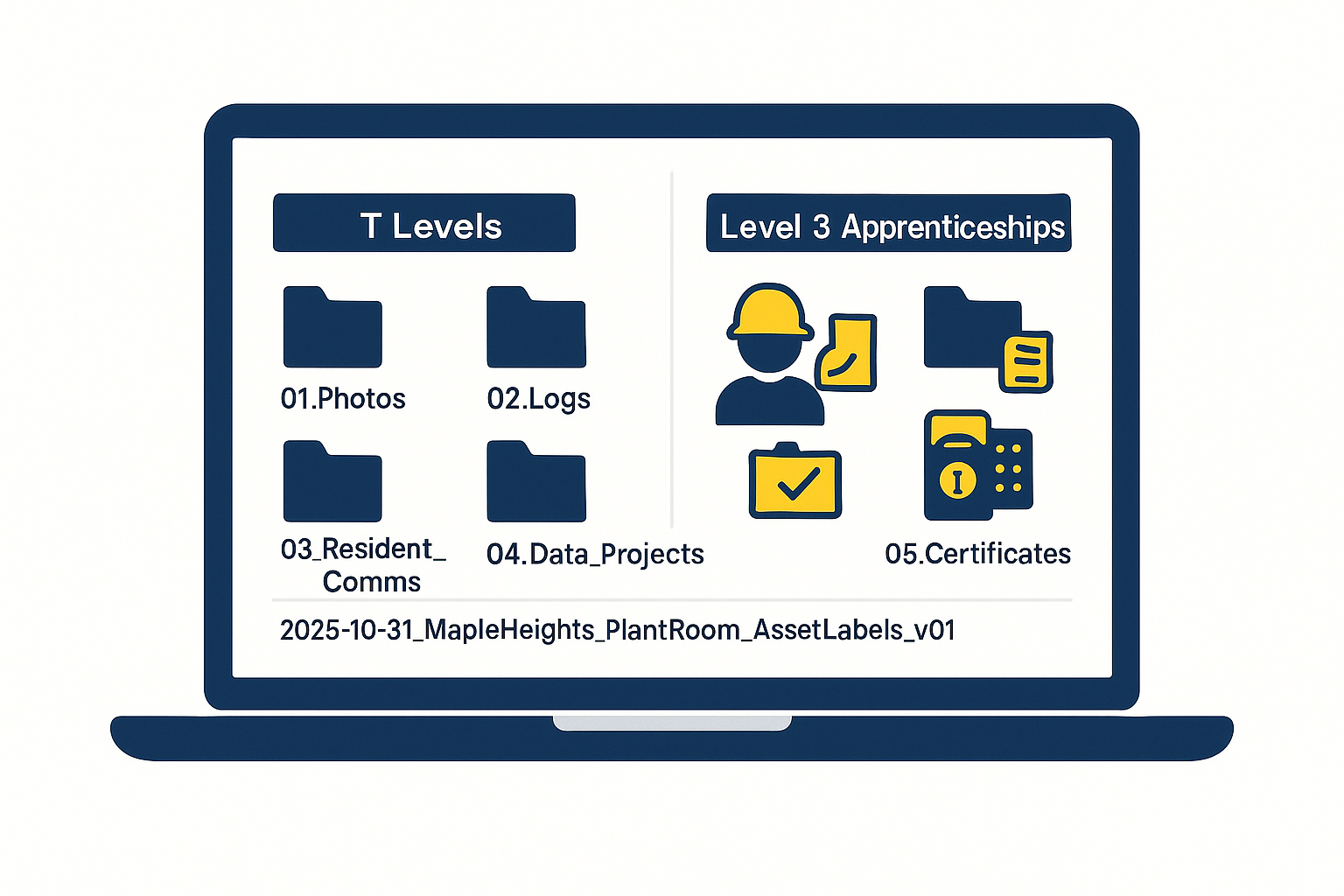
Aim to build a compact digital portfolio. This will show employers that you can work safely and keep good records. Be sure to keep personal details and addresses anonymised.
| What to Include | Naming Conventions (Be Consistent!) |
| Photo Sets of tasks (e.g., asset label before/after verification) with clear captions. | YYYY-MM-DD_Building_Room/Area_Task_v01 |
| Two Short Write ups of site observations (e.g., fire door check or a plant room review). | Example: 2025-10-31_MapleHeights_PlantRoom_AssetLabels_v01 |
| A Mini Data Project (e.g., clean up a certificate list or create a simple action tracker). | For photos in a set: 2025-10-31_MapleHeights_PlantRoom_AssetLabels_01.jpg |
| A Resident Notice Draft (150 words) about a safe access change, reviewed by your mentor. | Keep a simple folder structure: 01_Photos, 02_Logs, 03_Resident_Comms, 04_Data_Projects, 05_Certificates_and_Training. |
| A CPD Log of what you learned (courses, toolbox talks, site inductions). |
Mini Projects to Complete During Your Apprenticeship
These small projects add big value to your portfolio:
- Project A: Certificate List Tidy up (2–3 hours): Export a certificate list for one building. Check for missing dates, expired certificates, or poor naming. Fix file names and add missing data. For instance, update file names. Deliverable: a one page summary of issues and fixes.
- Project B: Fire Door Observation Sample (with supervision): Agree on a small sample (e.g., five doors). Use a checklist for closers, gaps, and signage. Record photos of issues. Furthermore, log all findings carefully. Deliverable: a short report with the checklist and photos.
- Project C: Resident Notice Draft (1 hour): Write a 150 word notice about a temporary access change. Use plain English, dates, times, and a contact point. Consequently, the notice must be clear. Deliverable: a draft reviewed by your mentor.
Professional Conduct for Building Safety Roles
Good communication is essential for Building Safety.
- Plain English: Describe what you are doing and why in a way that a non-technical person understands. Avoid jargon. If you must use acronyms, explain them clearly.
- Note Taking: Use a small notebook or notes app to record times, locations, names, and agreed actions. Write neatly; after all, your notes could be reviewed later. Moreover, date all entries.
- Photo Evidence: Get permission from your supervisor first. Include context shots (wider area) and detail shots (close ups). Never photograph people or personal items. Instead, focus on the building element.
- Escalation: If you find a serious hazard, stop and inform your supervisor at once. Do not attempt repairs or isolation unless you are trained and authorised. Instead, follow the strict safety protocol.
Golden Thread Data Basics

The Golden Thread is a reliable record of building safety information that must be accurate, accessible, and up to date across a building’s life. Your role in the Building Safety career is to help keep that data clean.
Your Part in It:
- Use the agreed naming convention every time.
- In addition, add metadata (e.g., asset ID, location, date, certificate type).
- Version files properly: v01, v02, final.
- Keep a change log of what you moved, renamed, or corrected. Therefore, traceability is maintained.
Small Wins that Add Value: Fix three file names a day. Add missing dates for one certificate type. Tag photos with the room/area reference.
Section 5: Skills Progression After Building Safety Apprenticeships
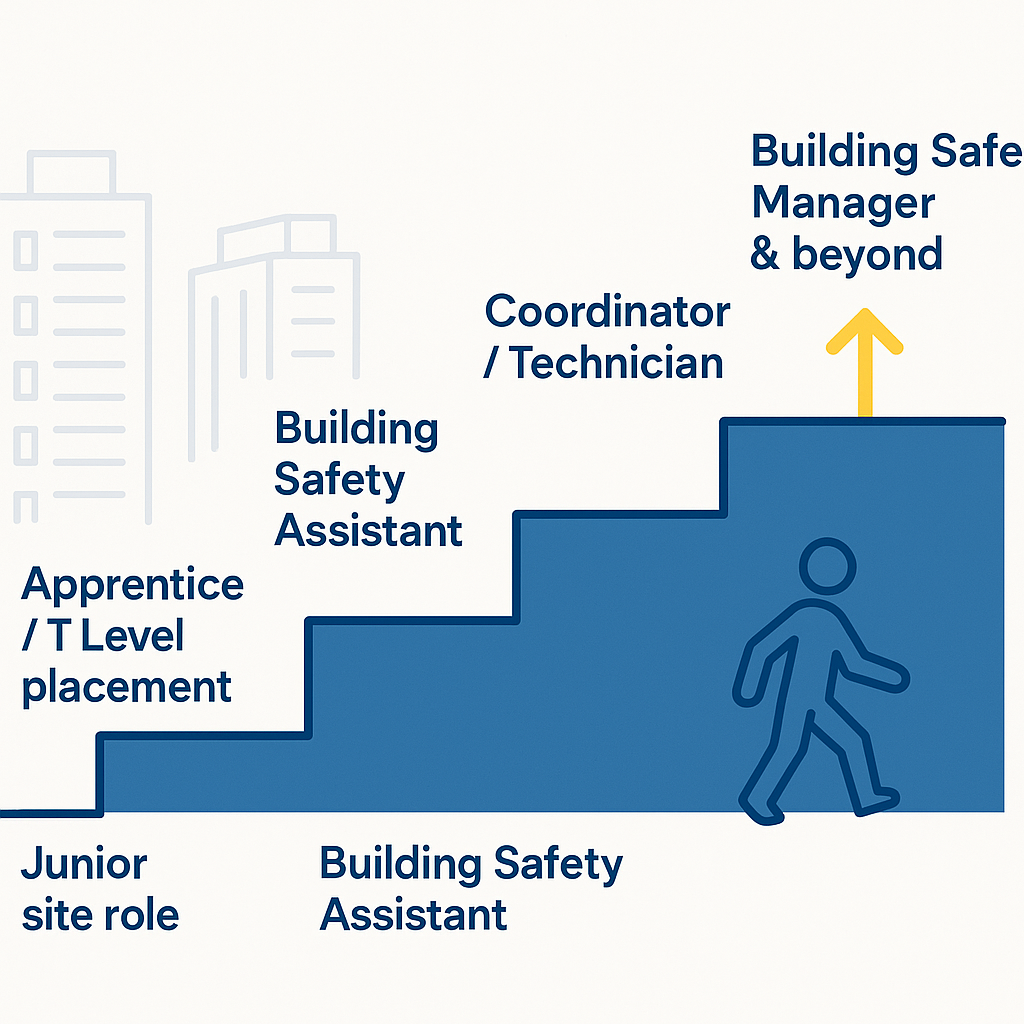
After 12–24 months of a T Level placement or Level 3 Building Safety Apprenticeships, with good logs and references, you can aim for:
- Building Safety Assistant / Coordinator (focusing on evidence, trackers, and resident notices).
- Junior Fire Risk Assessor (supporting sample surveys, with further training).
- Junior Data/Evidence Technician (managing Golden Thread admin and reporting).
- Junior M&E/Facilities pathway (if you enjoyed plant rooms and planned maintenance).
Furthermore, with continued study and mentoring, you can progress to Building Safety Manager, Safety Case Author, Fire Engineer (degree route), or Building Control Surveyor (degree route). Consequently, your career path is flexible.
Next Steps for Building Safety Apprenticeships
- Apply for a T Level placement or a Level 3 Building Safety Apprenticeship that matches your interests (SHE Technician, Fire & Security Systems, or Data Technician).
- Book your CSCS test and CITB Health & Safety Awareness course. Also, check if your college or employer can fund or support this.
- Create a simple evidence log template with columns for date, task, location, standard, files linked, and supervisor sign off. Then, start using it on your next practical session.
Final Note
Small Habits Make Big Careers. Turn up on time, wear the right kit, label every file, write clear notes, and treat residents with respect. These simple habits build trust quickly. Because of this trust, people will teach you more and that is how you grow into the professional who keeps buildings and communities safe.