A Guide to Building Safety Apprenticeships: Investing in Early Careers

We need skilled professionals in building safety now. Specifically, this demand is growing fast. Firstly, new rules and digital needs cause this change. However, the current talent pool is too small. As a result, it cannot meet this important need. Consequently, the best organisations are creating structured career routes. For this reason, these routes include T Level placements, internships, and building safety apprenticeships. Indeed, these programs build real skills over two to three years.
This guide is a simple, employer ready plan. Furthermore, it covers working with colleges and trade groups. Moreover, it also explains how to use the Apprenticeship Levy fund. Finally, you will learn to design simple mentoring schemes. This truly develops your people.
Why Invest in Early Careers: Securing the Future of Building Safety Apprenticeships
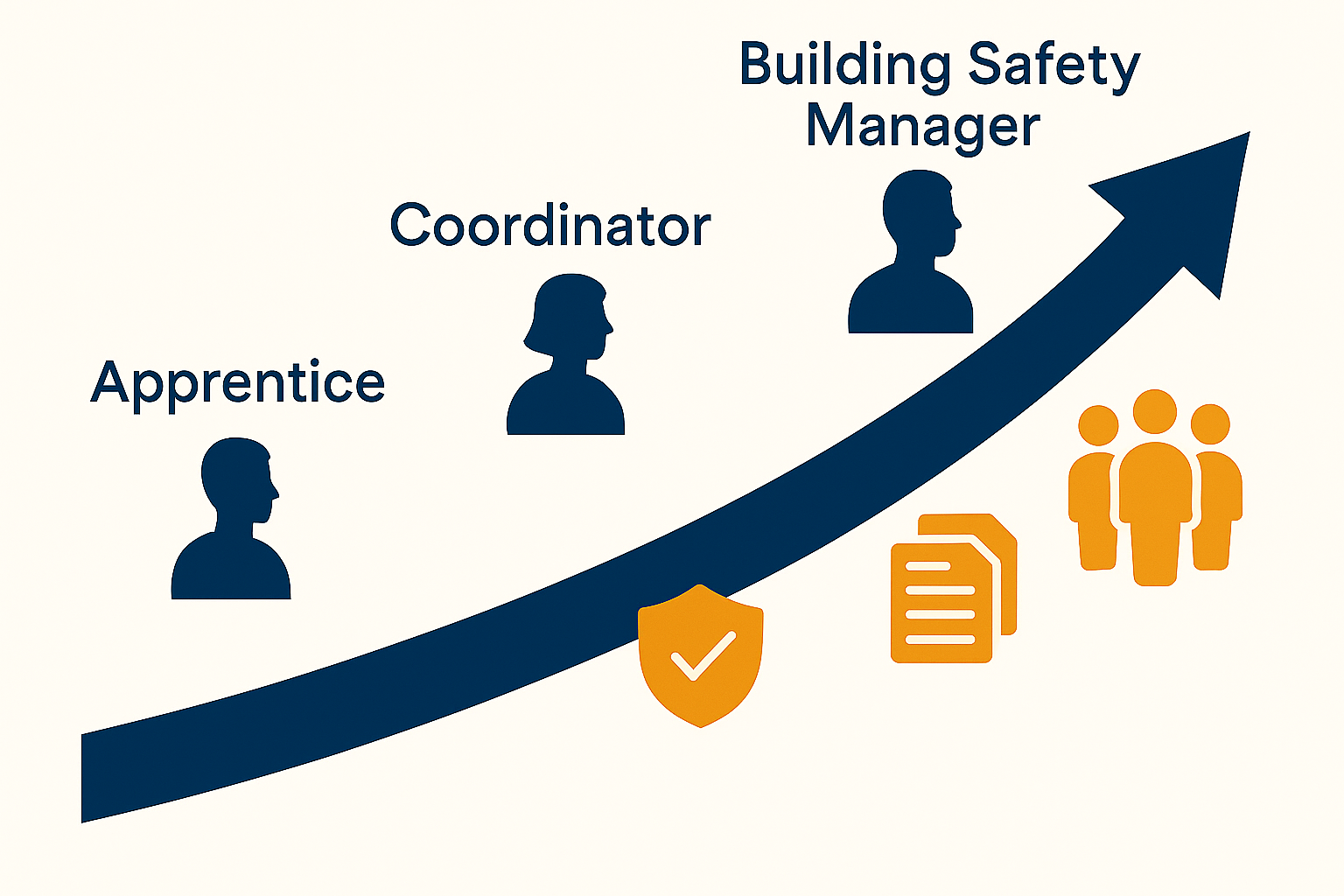
Planning for early careers helps a lot. In fact, hiring experienced staff quickly is often harder.
Talent Strength: You use fewer outside experts. Ultimately, you create a steady, home grown talent team. This team handles roles like Building Safety Manager through building safety apprenticeships.
Skill Match: You train people to your exact needs. As a result, apprentices learn your systems and culture from day one. For example, this includes your paperwork style and how to talk to residents.
Diversity and Trust: Early career routes welcome women, career changers, and others. Crucially, diverse teams talk better with residents. Thus, they try new digital tools faster.
Designing Your Building Safety Apprenticeship Pathway
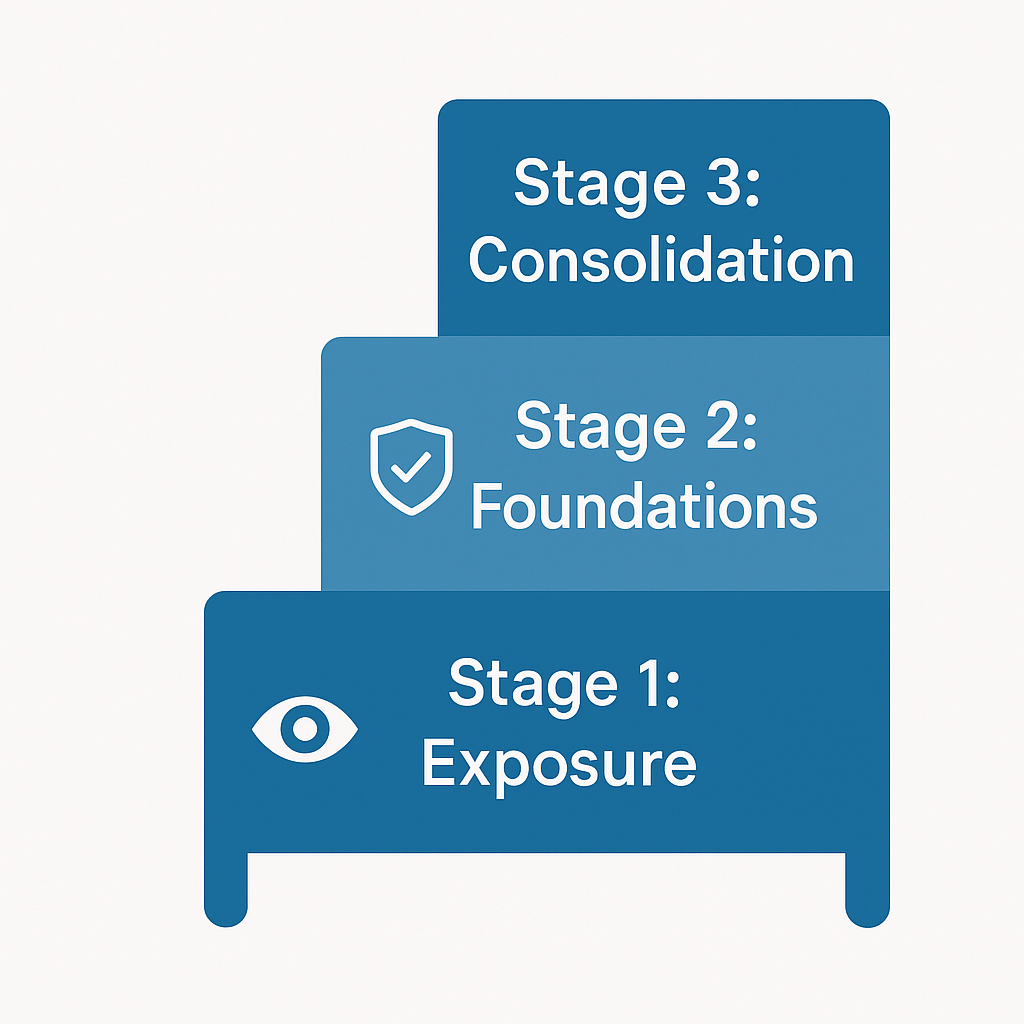
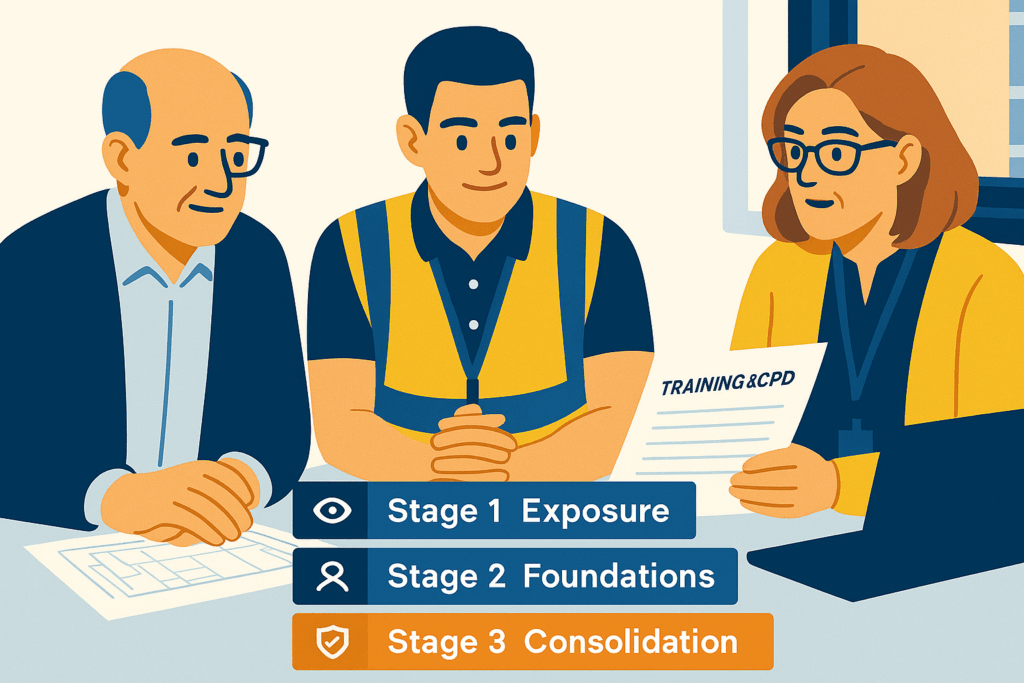
Think of this pathway as a simple, three step plan.
Step 1: Get Started (6–12 weeks) Give apprentices safe chances to see real work. For instance, they can visit plant rooms, check control panels, and watch resident meetings.
Goal: Build confidence, give context, and finish one simple task. Therefore, this might be sorting the papers for the Golden Thread.
Step 2: Learn Basics (12–24 months) This stage uses Level 3–4 building safety apprenticeships or internships. These require one study day a week. Meanwhile, the focus is on core skills. Specifically, these skills include basic fire safety, risk rules, and good asset data quality.
Goal: Track progress with a logbook, do supervised tasks, and help with one small project.
Step 3: Finish Training (24–36 months) The apprentice moves to a higher level or degree apprenticeship. Above all, this matches your future job needs.
Goal: Create evidence ready for the Regulator, and be able to run a small check cycle. In conclusion, the apprentice is ready for a professional review.
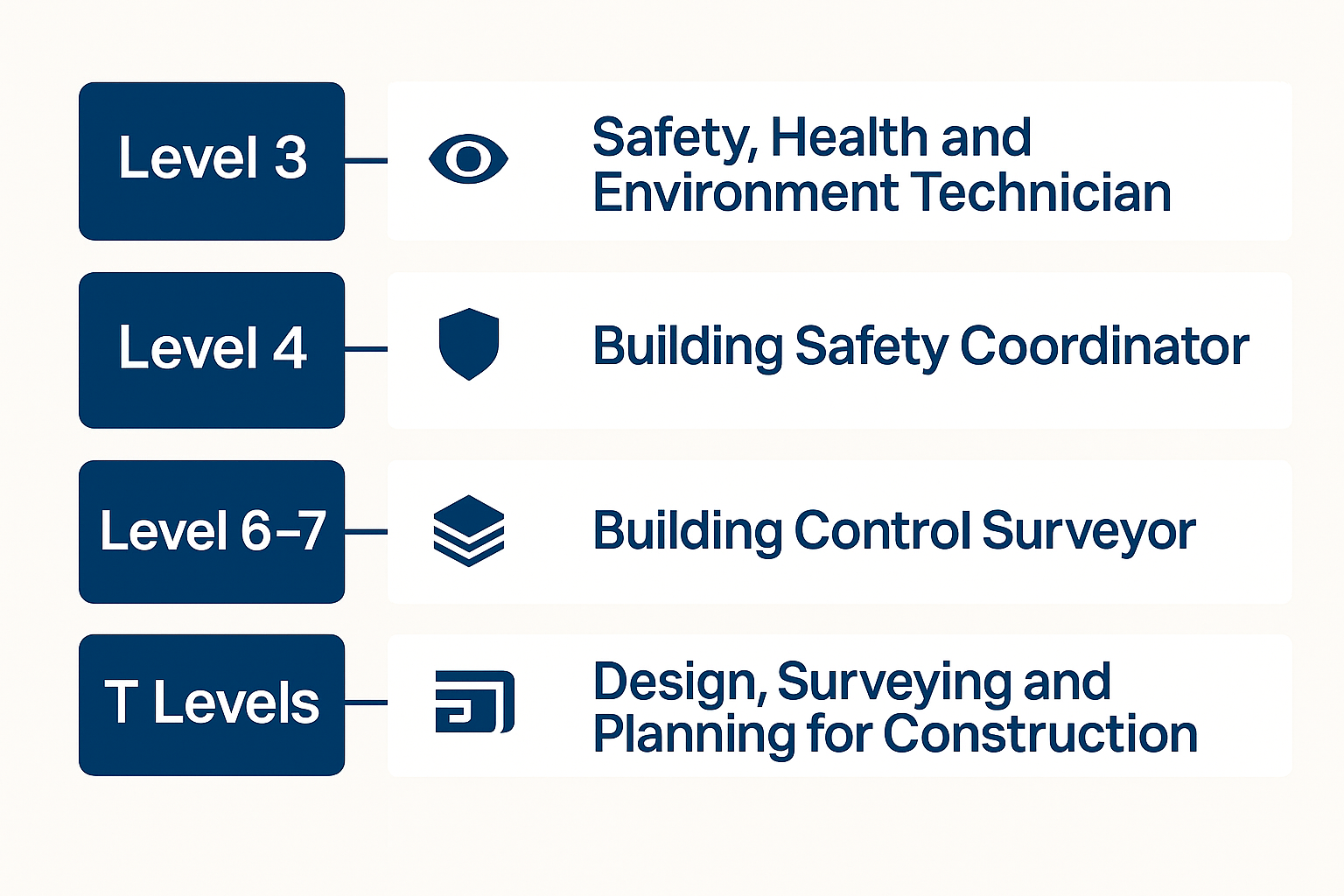
Which Standards and Routes Fit Building Safety Apprenticeships
| Level | Relevant Standards | Application in Building Safety |
|---|---|---|
| Level 3 | Safety, Health & Environment Technician; Fire Emergency & Security Systems Technician; Data Technician. | Core skills in risk, safety systems, and evidence quality (Golden Thread data) for building safety apprenticeships. |
| Level 4 | Fire Safety Inspector; Construction Site Supervisor; Facilities Management Supervisor. | Check ups, site control, and managing safety systems. |
| Level 6–7 (degree) | Building Control Surveyor, Building Services Design Engineer, Construction Quantity Surveyor | High Rise Building (HRB) rules, Heating and electrical systems, Money management |
| T Levels | Design, Surveying and Planning for Construction, Building Services Engineering for Construction, Digital Production, Design and Development | Technical knowledge, Systems understanding, Digital work skills |
Tip: Pair building safety apprenticeships with short trade courses. Furthermore, this helps cover specialist topics. For example, this includes fire doors, room barriers, and evidence management.
Partnering with FE Colleges and Trade Associations for Building Safety Apprenticeships
Six Steps for College Partnership Success
- Check your risks: Look at your high rise count, common problems, and digital tools. Next, you can plan.
- Pick the right courses: Focus on Level 3–4 safety, building services, or digital engineering. Notably, T Levels work best for short work placements.
- Help design the course: Add your rules for evidence and file names. Also, show them your Golden Thread system.
- Sign a simple agreement: Cover student safety, tools (PPE), supervision ratios, feedback, and legal rights (IP).
- Set a placement calendar: Two groups a year help spread the team’s supervision time.
- Check every cycle: Get feedback from the apprentice and their manager. Afterward, change the modules and tasks. This process, therefore, ensures constant improvement.
Trade Associations and Apprenticeship Value
IFE, IFSM, CABE, CIOB, ASFP, FIA, CIBSE, BESA, APS: Use these groups for training and outside mentors. Specifically, their short courses plug knowledge gaps fast. In short, they add great value.
Funding Building Safety Apprenticeships: Using the Levy

Guidance for Employers Who Pay the Levy
A funding route exists for everyone.
Levy employers:
- Do: Manage funds on the digital service. Use all funds before they expire. Crucially, share funds with your supply chain.
- Check: How many apprentices finish. Check the quality of their projects and reports.
Non levy employers:
- Do: Access co-investment. Alternatively, get a levy transfer. For instance, this can come from a local council or housing group.
- Protect time: The time for off the job study must be kept safe. Therefore, include it in rotas and manager goals (KPIs).
Picking an Apprenticeship Provider
Priority criteria: Check for relevant standards. Look for learning that matches your evidence needs. Demand experienced tutors. Also, check sample work and clear employer reports. In essence, choose wisely for the best fit.
Designing Apprenticeship Groups for Quick Value
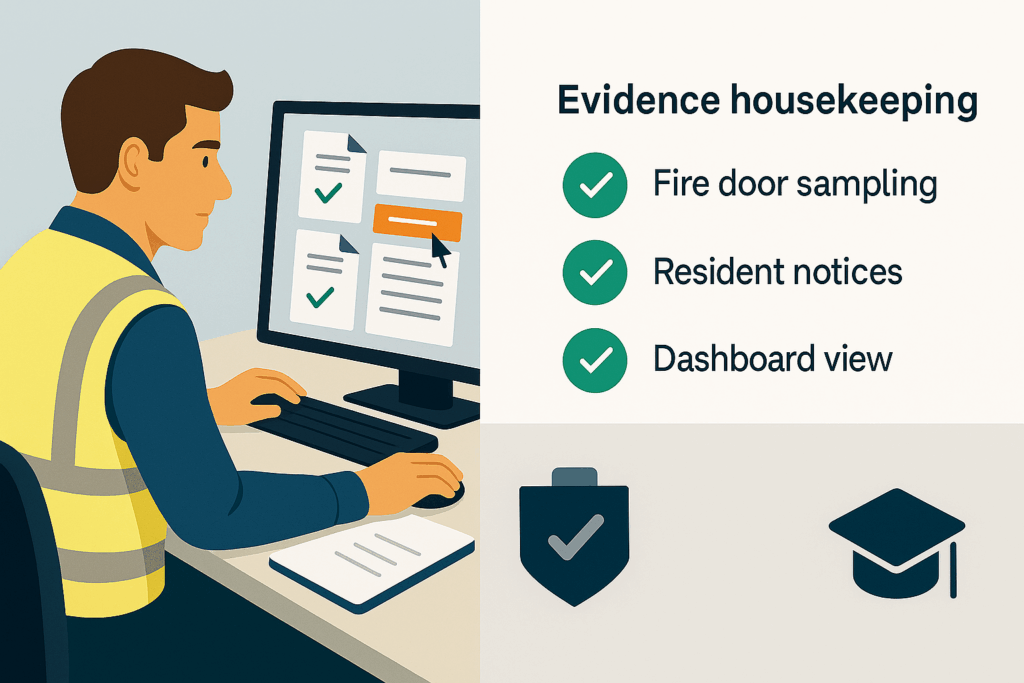
You can see safe value quickly. This happens with small, clear goals.
- Evidence Clean up: Fix a set of certificates for one building to meet your standard. In addition, add data tags (metadata) and use correct naming.
- Checking: Run a supervised fire door check. Then, load the results into your tracking system.
- Resident News: Write three safety notices. Also, draft simple answers (FAQs) for common questions for approval.
- Tracking: Build a simple report view of late tasks for one building type. Afterward, suggest how to fix the process.
Set these goals at the start. Crucially, provide templates and a clear idea of what is ‘done’. Give each task to a supervisor with clear sign off times (SLAs). This ensures accountability and speed.
Structure and Delivery: Rotations for Building Safety Apprenticeships
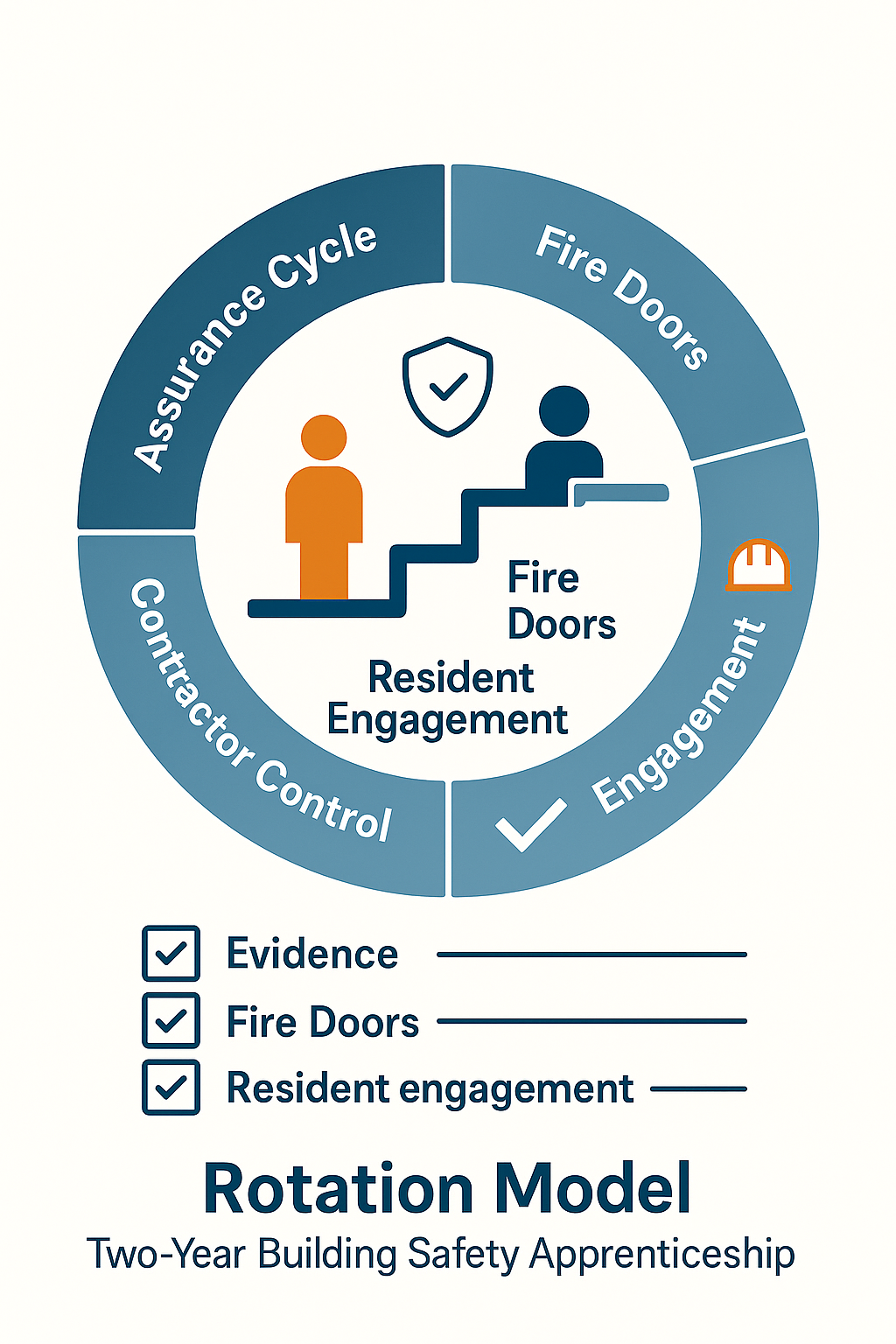
Suggested Two year Apprenticeship Rotation Plan
| Quarter | Focus Area | Deliverable |
|---|---|---|
| Q1–2 | Evidence & Data Golden Thread, certificates, naming rules, data tags, file versions. | One building’s evidence pack updated to standard. |
| Q3–4 | Fire doors & room barriers On site checks with an expert, watching small fixes, writing resident messages. | On site checks with an expert, watching small fixes, writing resident messages. |
| Q5–6 | Plant rooms and smoke control Learn the systems, watch planned maintenance, check basic work permits. | Maintenance data review and problem report. |
| Q7–8 | Resident communication and incidents Watch meetings, draft notices, learn from safety events. | A 150 word template notice and a short report on what was learned. |
| Q9–10 | Contractor control and assurance Check risk forms (RAMS), confirm worker competence, improve site inductions. | Better site checklist and guide for supplier papers. |
| Q11–12 | Small safety check cycle Plan, do, check, and act on one building with mentor help. | Small safety report and presentation. |
Mentoring Schemes for Apprentice Development

A mentoring scheme fails if its goals are unclear. Therefore, build it like any safety plan.
Three Key Mentoring Roles
- Line manager (manages work and goals)
- Technical mentor (teaches the job skills and rules)
- Peer buddy (helps with daily tools and simple questions)
Mentoring Schedule and Frequency
| Timeframe | Frequency |
|---|---|
| Weeks 1–4 | Weekly mentor talks and daily buddy chats. |
| Months 2–6 | Twice a month mentor; weekly buddy. |
| Month 7+ | Monthly mentor; help only when needed before big tasks. |
Content: Use a Logbook from day one. Furthermore, every session must end with one thing to do. It must also include one reflection and one piece of evidence added.
Mentor Training: Give a short training on feedback and making people feel safe to speak up. Also, teach them to help apprentices turn routine tasks into good success stories (STAR method).
Measure: Track how often people meet. Check if the logbook is complete. In addition, measure apprentice confidence and run a quick survey after each rotation.
Selection and Outreach for Building Safety Apprenticeship Routes

What Apprenticeship Adverts Need
- Mission first: Explain who the work protects and why the job matters.
- Three–five must haves: Focus on job results, not just tasks. Instead, highlight chances to grow.
- Salary truth: Show the pay band, how pay grows, and if the job is flexible.
- Welcome: Clearly invite career changers and people returning to work.
How to Assess Apprentices
- Writing task (15 minutes): Write a 150 word note to residents about a two hour system shut down. Grade for clear words and tone.
- Data task (10 minutes): Find and fix problems in a list of sample papers. Thus, check for attention to detail.
- Interview: Use the same main questions for everyone. Score for fairness. This ensures consistent evaluation.
Access and Inclusion for Apprenticeship Routes
- Offer options: Video or in person; send topics ahead of time.
- Adjustments: Offer help right away. Track what worked to improve future rounds. In this way, you promote fairness.
- Schedule fairly: Try to avoid times when parents pick up kids from school.
Safeguarding and Supervision in Safety Roles
New staff must always be watched. They must not make safety critical decisions alone. This is vital for safety.
- Job limits: Create a simple chart (RACI) for them. This chart defines what they can do and what they must ask about.
- Site safety: Give them safety gear (PPE) and a full induction. Be sure they know the risks before site access. Crucially, tasks must match their skills with a responsible person nearby.
- Data protection: Make them do security training. Limit their system access. Check what they download.
KPIs for Apprenticeship Progress and Governance
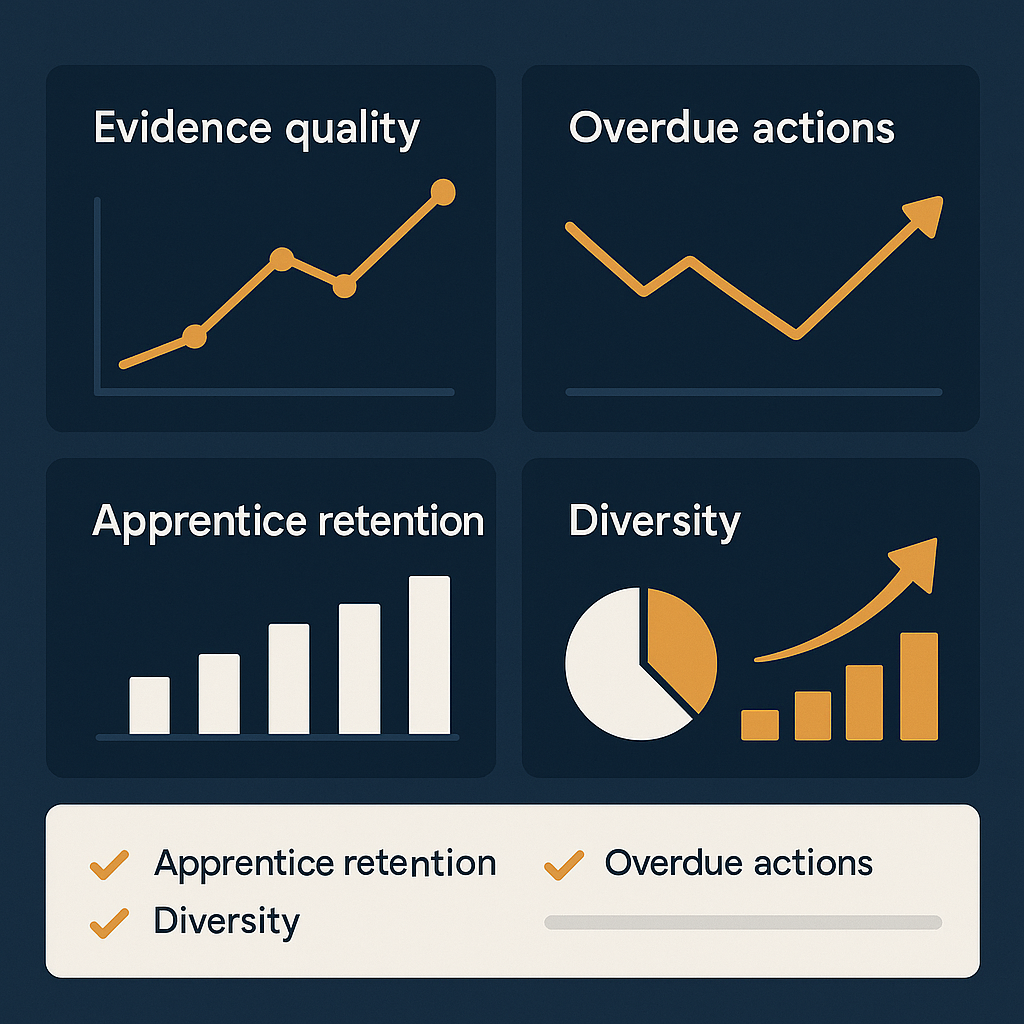
Measure what truly improves safety and trust. In short, focus on the real impact.
| Area | KPIs |
|---|---|
| Pipeline | Applications per job opening, job offer acceptance rate, time to start. |
| Progress | Program success rate, rotation finish rate, logbook quality scores. |
| Impact | Paperwork completeness, fewer late tasks, resident satisfaction with notices. |
| Inclusion | Diversity across applicants, interviews, job offers, and first year retention. |
| Satisfaction | Quarterly surveys from apprentices and mentors with comments. |
Report every three months to your safety team and board. Provide a one page story: what got better, what slowed down, and where help is needed. As always, be clear.
Working with Your Supply Chain on Apprenticeships
Help your suppliers too. For example, share your knowledge.
- Levy transfer: Give expiring funds to smaller contractors. They must agree to use your supervision and paperwork rules. Prioritise those on your riskiest buildings.
- Shared staff: Co-host apprentices with a trusted consultant or contractor. Share supervision, keep one logbook, and switch every three months. This increases job experience.
- Framework rules: Add apprentice supervision to all contracts. Ask for named mentors and specific supervision hours.
Budgeting and Simple ROI for Apprenticeship Programs
Costs: Salary, training fees (mostly paid for building safety apprenticeships), safety gear, mentor time, professional fees.
Benefits: Better paperwork, fewer late tasks, more staff for routine checks, and clearer messages.
Show the value: Link apprentice tasks to money saved. Also, show faster audit closure and fewer questions from the regulator. Thus, you justify the investment.
A 12 month Roadmap to Launching an Apprenticeship
| Month | Activities |
|---|---|
| 1–2 | Get boss approval. Define jobs and goals. Set up the fund service account. Pick providers. |
| 3–4 | Sign deals with colleges and trade groups. Finalise rotations. Write adverts. Train mentors. |
| 5–6 | Hire the first group. Buy safety gear. Get logbooks and reports ready. Start training with provider and mentors. |
| 7–9 | Run rotations one and two. Collect survey data. Hold a mentor meeting. Present early success to the board. |
| 10–12 | Review the course. Plan the next group. Share a short success note with residents and staff. |
Templates you can lift and use
Apprentice role purpose; Help us keep residents safe. Specifically, you will create trusted evidence under the Building Safety Act. In fact, you will also improve data quality and help with site checks. You will learn to manage the Golden Thread. Furthermore, you will help with Safety Case evidence and talk to residents.
Three Interview Questions for Apprentices
- Evidence quality: Why is it key in building safety? How would you keep it high every day?
- Resident notice: Write a short update. It should cover a two hour planned shutdown of the smoke control system next Tuesday.
- Learning: Tell us about a time you learned something hard. What helped you? How would you use that here?
Mentor session agenda (45 minutes)
- Review: Talk about last week’s task and the evidence created.
- Introduce: Share one new idea or safety rule.
- Agree: Set one practical task and define ‘done’.
- Reflect: Write one key thought in the logbook.
Supervisor checklist for a new apprentice
- Access: System logins and site training done.
- Safety: Safety gear given; site rules clear.
- Governance: Job limits (RACI) reviewed; sign off steps are clear.
- Delivery: First rotation tasks set with due dates.
- Support: Buddy and mentor meetings scheduled; survey dates booked.
Risk Controls for High Quality Apprenticeship Outputs
- Write down choices: Every big decision must be recorded. Therefore, write down what was decided, who decided it, and why. Use your tracker and make sure naming rules are used.
- Limit work by skill: Only allow bigger tasks after safe, repeated work. Only give wider scope after proof of good performance.
- Protect learning time: Block out time for managing paperwork and studying. Avoid filling every day with unexpected tasks. Otherwise, quality suffers.
Conclusion: The Mandate for Building Safety Apprenticeships

The sector cannot fix its skills shortage by only hiring senior staff. Instead, the successful employers build their own talent. They use building safety apprenticeships, internships, and T Levels. These are clear, well managed routes into important safety jobs.
When you work with colleges, use the funding (Levy), and run a good mentoring plan, you create a growth cycle. Consequently, each new group improves your evidence. Furthermore, they also help with resident talks and safety checks. Most importantly, some of those learners become the managers you will trust later on.
Build the team. Give them time. Celebrate their wins. That is how you secure the next generation of safety professionals.